
 E-Paper


Trump makes big statement on US birthright citizenship, rips apart ‘dumb' judges: ‘Not for rich people from China'
Trump condemned judges before the Supreme Court hearing, arguing that birthright citizenship is meant for the descendants of slaves, not affluent foreigners.

 Prefer HTon Google


Ahead of the Supreme Court's hearing, President Donald Trump slammed “dumb judges and justices,” stating that birthright citizenship “is not about rich people from China, and the rest of the world”.
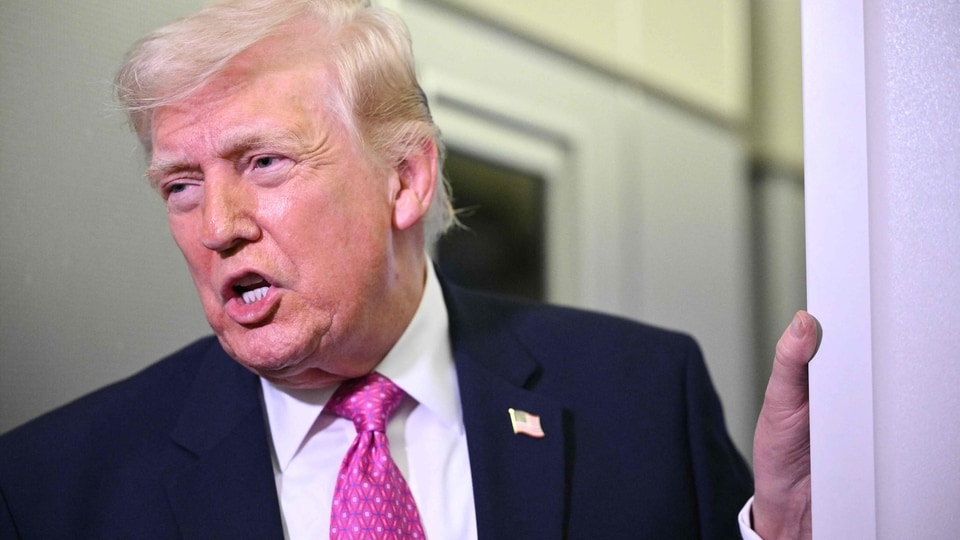
The statement comes as the apex court is scheduled to hear arguments on Wednesday regarding the question of whether every child born in the country is entitled to automatic citizenship.
In a post on Truth Social, Trump said that US birthright citizenship is meant for the babies of slaves .
“Birthright Citizenship is not about rich people from China, and the rest of the World, who want their children, and hundreds of thousands more, FOR PAY, to ridiculously become citizens of the United States of America. It is about the BABIES OF SLAVES!”
“We are the only Country in the World that dignifies this subject with even discussion. Look at the dates of this long ago legislation - THE EXACT END OF THE CIVIL WAR!” he continued.
“The World is getting rich selling citizenships to our Country, while at the same time laughing at how STUPID our U.S. Court System has become (TARIFFS!). “Dumb Judges and Justices will not a great Country make!”,” he added.
Also Read: Trump shares surprising letter imagining his own death amid Iran war: ‘Shed blood of…’
What does the Constitution state?
In the United States, birthright citizenship was incorporated into the Constitution in 1868 as a measure to safeguard the rights of recently emancipated slaves.
This was established through the ratification of the 14th Amendment. The first section of this amendment articulates:
All individuals born or naturalized in the United States, and subject to its jurisdiction, are citizens of the United States and of the State in which they reside, it says.
However, President Trump has targeted birthright citizenship, issuing an executive order on the first day of his second term to prohibit it.
Directed at immigrants who enter the country unlawfully, the Trump administration contends that the clause in the Constitution is antiquated and has been misused.
Is birthright citizenship a prevalent policy?
Around thirty-six nations globally, primarily located in the Western Hemisphere, offer automatic birthright citizenship.
The legal terminology for this practice is jus solí, which is Latin for "right of soil." Its origins can be traced back to colonialism, especially in South America and Africa, when Western European nations sought to increase their labor force and outnumber indigenous populations in those regions. Numerous African nations discontinued this practice following their independence.
An American flag is displayed outside the Supreme Court in Washington, D.C., in November. This week, the Supreme Court will hear oral arguments regarding a case that may alter the criteria for U.S. citizenship.
In recent decades, other nations have also eliminated this practice. Ireland abolished it in 2005 after approximately 80% of voters opposed it. The United Kingdom, Australia, New Zealand, India, and Pakistan have similarly done away with it.
Many countries instead grant citizenship through jus sanguinis, or "right of blood," meaning through family lineage. However, this month, Italy has further tightened the criteria for eligibility.


