
 E-Paper


US to target Indian researchers, doctors and professors? New rules proposed to J-1 Exchange Visitor Program regulations
The US State Department has proposed new regulations for the J-1 Exchange Visitor Program, focusing on termination reasons.

 Prefer HTon Google


The US Department of State has issued a Notice of Proposed Rulemaking that suggests various updates to the regulations governing the J-1 Exchange Visitor Program. These updates include new reasons for terminating exchange visitor programs, more stringent timelines for extension requests, and a more efficient process for rectifying records in the Student and Exchange Visitor Information System (SEVIS).
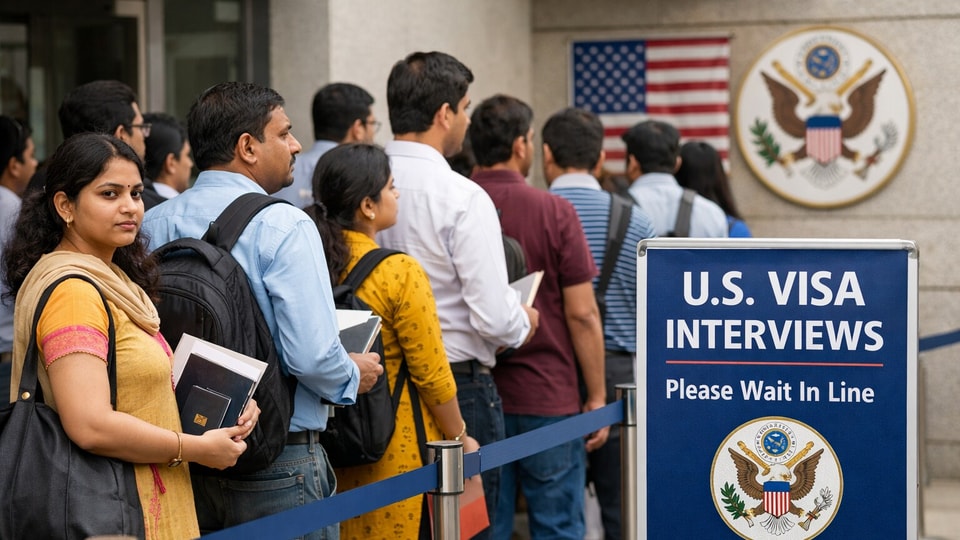
The proposal could impose stricter compliance requirements on thousands of Indian researchers, doctors, professors, and trainees traveling to the US on J-1 exchange visitor visas.
This move comes only weeks after the Trump administration completed a distinct regulation that abolishes the long-standing ‘duration of status’ visa system for J-1 exchange visitors. It replaces this system with fixed admission periods lasting up to four years, necessitating that numerous participants apply for visa extensions if their exchange programmes extend beyond this timeframe.
J-1 Exchange Visitor Program: What will the new grounds for termination?
New grounds for termination and enhanced authority for the State Department. The proposal mandates that J-1 program sponsors terminate exchange visitors who submit false or incomplete information during the application process or while participating in the program. The State Department would have the authority to terminate a participant’s program if their visa is revoked or canceled immediately, or if the participant engages in unauthorized employment. Participants facing termination would have the right to contest the decision through a newly proposed procedure.
J-1 Exchange Visitor Program: Streamline extension process
The proposal clarifies and simplifies the extension process, including the establishment of a deadline for filing extensions. It would replace the current rules governing extensions and set a deadline for submitting specific extension requests. Sponsors wishing to extend beyond the maximum duration of a J-1 category must submit their requests through SEVIS and provide necessary documentation at least three months prior to the start of the requested extension period. No exceptions will be made for late submissions.
J-1 Exchange Visitor Program: Modifies SEVIS corrections and reinstatement
The proposal aims to "simplify" the requirements and record-keeping associated with the SEVIS system.
It seeks to reduce the timeframe for addressing minor infractions from 120 days to merely 30 days, enabling sponsors to rectify specific SEVIS status errors directly without needing approval from the State Department. Should a correction be unfeasible within the 30-day window, sponsors will be required to submit a formal reinstatement request. Furthermore, the department intends to synchronize reinstatement eligibility with the policies of the Department of Homeland Security, which currently permits the consideration of requests made within five months following a lapse in status.
New definition for valid program status
This regulation will introduce a new definition for "valid program status" and will formally articulate the term "unauthorized employment" using terminology that is consistent with the policies of the U.S. Citizenship and Immigration Services.
Additional Information
The State Department has stated that these modifications aim to enhance program integrity, improve data accuracy, ensure participant oversight, and bolster national security, all while updating regulations that have remained largely unchanged since 1999. The proposal is available for public response for a period of 60 days.
H-1B visa vs J-1 visa
In contrast to the H-1B visa, which serves as an employment visa, the J-1 visa is designed to foster educational and cultural exchange. In fiscal year 2024, more than 12,000 J-1 visas were granted to Indian nationals, making it a popular choice among Indian postdoctoral researchers, scientists, university professors, medical professionals in residency or fellowship training, as well as teachers, interns, and trainees involved in programs sponsored by U.S. universities, research institutions, and teaching hospitals.


