E-Paper


What is Section 122? Trump announces new 10% global tariff after Supreme Court ruling
After the Supreme Court struck down his emergency tariffs, President Donald Trump announced a new 10% global tariff under Section 122.

 Prefer HTon Google


After the Supreme Court of the United States struck down key tariffs imposed under emergency powers, President Donald Trump announced new trade action.
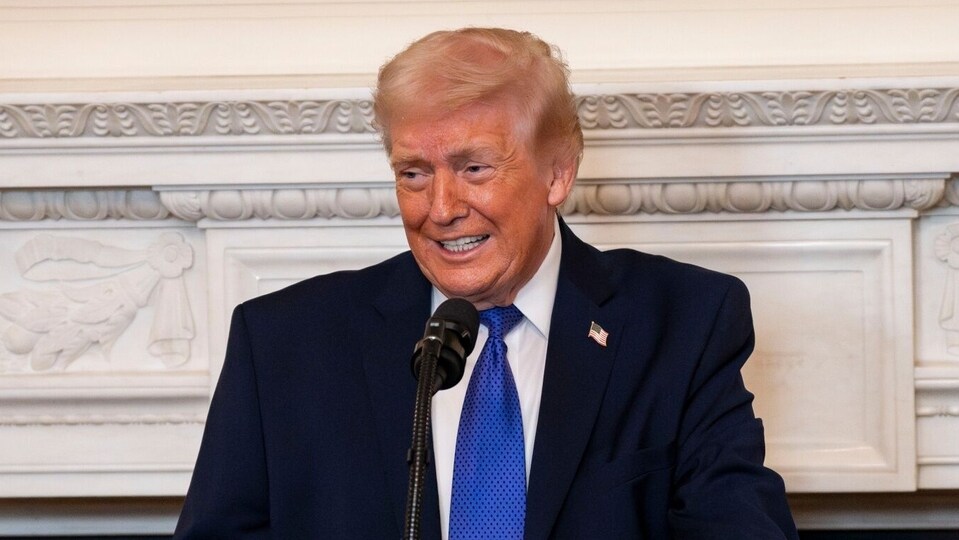
Speaking at a briefing, Trump said, "Today I will sign an order to impose a 10% global tariff under section 122.”
Trump also slammed the six Supreme Court justices, saying he was ‘ashamed of certain members of the court’ and said some of the justices were ‘frankly a disgrace to our nation’.
What is section 122?
The section 122 law allows a US president to impose tariffs of up to 15% for a period of 150 days to deal with what it describes as “large and serious United States balance-of-payments deficits.” This situation happens when a country imports far more goods than it exports, creating a trade deficit.
After the 150-day period ends, the tariffs can remain in place only if Congress approves them.
Unlike some other trade laws that require a formal investigation before higher tariffs can be imposed, Section 122 does not require advance review. This means the president can act quickly and put new tariffs on imports without delay.
Also Read: Trump tariff news: What are Sections 232, 301 and 122? Additional 10% tariff reveal sparks buzz
How is section 122 different from IEEPA?
The International Emergency Economic Powers Act (IEEPA), passed in 1977 is designed to give the president powers during a declared national emergency involving unusual and extraordinary foreign threats. It has mainly been used to impose sanctions, freeze assets and restrict financial transactions.
Unlike Section 122 of the Trade Act of 1974, IEEPA requires a formal declaration of a national emergency. It was not created as a tariff law.
The Supreme Court has ruled that IEEPA does not authorize the president to impose tariffs. Section 122, however, clearly allows temporary tariffs of up to 15%, though only for 150 days unless Congress extends them.