E-Paper


Why was there a 40-minute blackout in NASA’s Artemis II mission? Explained
NASA's Artemis II faced a planned communication blackout for nearly 40 minutes as Orion passed behind the Moon.

 Prefer HTon Google


NASA’s Artemis II experienced a brief communications blackout during its journey around the Moon, leaving mission control without contact with the Orion spacecraft for nearly 40 minutes. While the moment may sound alarming, it was a planned and well-understood part of the mission.
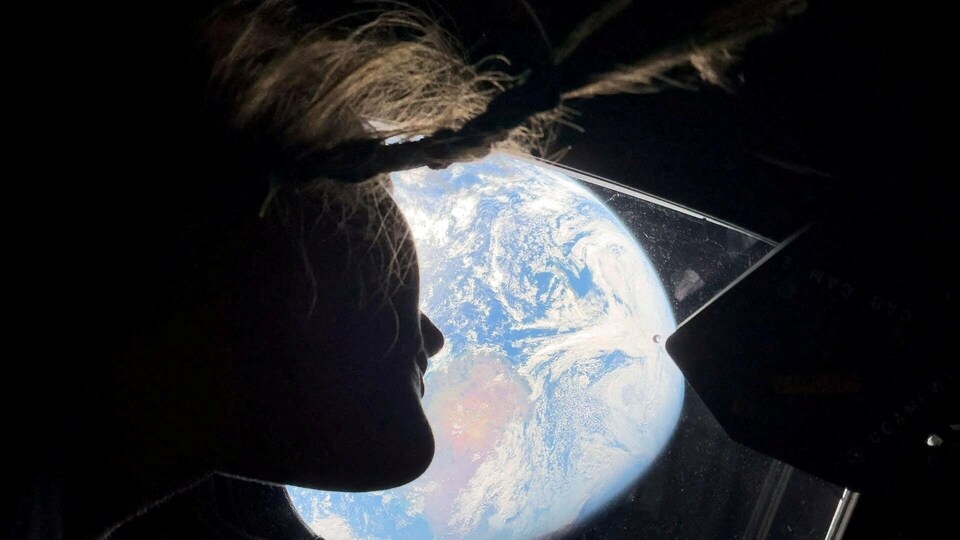
According to The Sunday Guardian, the communication gap occurred as Orion passed behind the Moon during its lunar flyby. At this point, the Moon itself blocked the direct line of sight between the spacecraft and Earth, preventing radio signals from being transmitted.
Since there are currently no relay satellites positioned around the Moon’s far side, communication becomes temporarily impossible whenever a spacecraft moves into that region.
NASA had anticipated this blackout and built it into mission timelines, predicting the loss of signal to begin around 6:44 pm ET and last approximately 40 minutes.
During this period:
- Voice communication between astronauts and mission control was completely cut off
- Telemetry and spacecraft data could not be transmitted
- Ground teams had to wait for Orion to reappear from behind the Moon
Also Read: Artemis 2 Moon flypast today, Netflix to livestream: All about Nasa mission's big day
What happened while Orion was out of contact?
Despite the silence on Earth, the spacecraft continued functioning normally. The crew followed pre-planned procedures while Orion relied on its autonomous systems to navigate and operate independently.
The blackout also coincided with a key phase of the mission: Orion’s closest approach to the Moon.
Once the spacecraft emerged from the lunar far side, communication links were restored, and normal operations resumed without any issues.
Similar blackouts were experienced during historic Apollo missions, including Apollo 13.
A milestone mission
The Artemis II crew: Reid Wiseman, Victor Glover, Christina Koch, and Jeremy Hansen, also set a new record during the mission, traveling farther from Earth than any humans before.
At its farthest point, Orion reached over 252,000 miles from Earth, surpassing the distance achieved during Apollo-era missions.
What happens next?
Following the lunar flyby, Orion is continuing on a free-return trajectory back to Earth.
The mission is expected to conclude with a splashdown in the Pacific Ocean near California after roughly 10 days in space.