
 E-Paper



US pinpricks China over strings attached ‘vaccine diplomacy’, packs in a warning
Antony Blinken has said the US and Japan will push back, if necessary when China uses coercion and aggression to get its way


US secretary of state Antony Blinken has set the tone for the first face-to-face meeting with senior Joe Biden administration officials and their Chinese counterparts to be held in freezing Alaska this week, lashing out at Beijing for its use of “coercion” with neighbours and its version of vaccine diplomacy that appears to tie access to vaccines to politics.
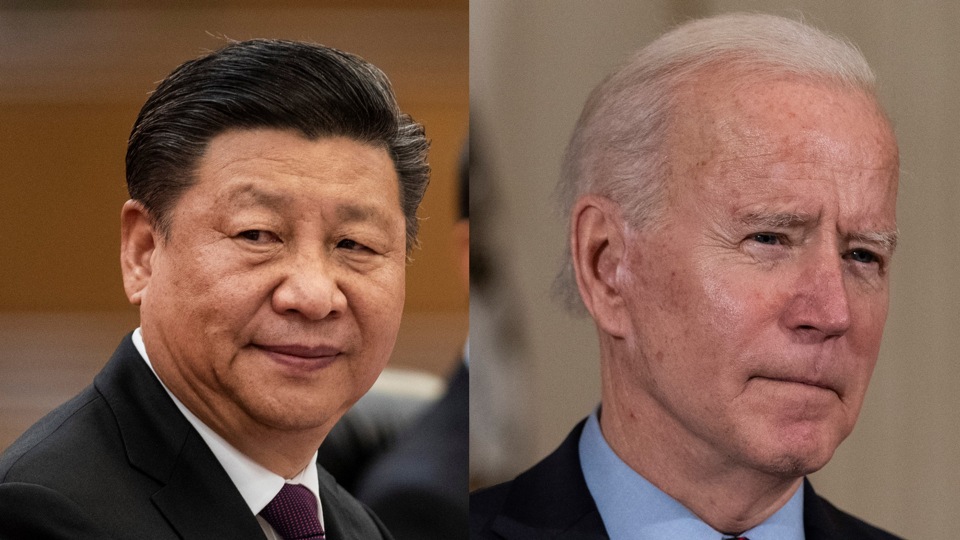
Blinken’s comments, made during a visit to Japan, come right before he and national security adviser Jake Sullivan are slated to meet Chinese foreign minister Wang Yi and the foreign affairs chief of the Chinese Communist Party, Yang Jiechi, in Anchorage, Alaska, on Thursday.
“We will push back, if necessary when China uses coercion and aggression to get its way,” Blinken said, according to a Reuters report, soon after he and defence secretary Lloyd Austin wrapped up their “2+2” format talks with their Japanese counterparts.
China had come up again and again in their conversation. In a joint statement released after the talks, the two countries expressed concern at Beijing’s human rights violations in Xinjiang, “unlawful” maritime claims and activities in the South China Sea and “unilateral action” to try to change the status quo over the East China Sea islands controlled by Japan but also claimed by China.
Beijing has built artificial islands in the South China Sea and positioned military equipment to claim most of the sea’s waterways. In the East China Sea, China claims the Japanese-controlled Senkaku Islands, called Diaoyu in China, and has lately increased activity in this area.
The two members of the Biden administration later headed to Seoul. Defence secretary Austin will fly to New Delhi after the Seoul leg. By all accounts, the visits are part of the Biden administration’s efforts to mobilise support for pushback on China’s aggressive policies and reassure the US’ key regional allies.
In a conversation with journalists in Tokyo before flying out to Seoul, Blinken made pointed references to China’s effort to engage in so-called vaccine diplomacy, underlining that this policy came with “strings attached”.
“We shouldn’t tie the distribution or access to vaccines to politics or to geopolitics,” Blinken said, according to Nikkei Asia.
This policy comes with “strings attached... And that certain requests are made, and maybe stronger requests are made of countries in order to receive the vaccines,” Blinken said, emphasising that he hoped that the vaccine rollout was being done because it’s in the overall interest of humanity.
Blinken didn’t refer to the Vaccine Initiative signed off by Quad leaders last week but the contrast was implicit. The Quad plan commits members of the four nation-grouping to pool resources to make the vaccine available to millions across the region. India will, under this initiative, produce up to 1 billion doses of Covid-19 vaccines by 2022, financed by the US and Japan, for last-mile distribution by Australia in the South-East Asian nations of the Indo-Pacific.
Meeting in Alaska
Blinken’s sharp remarks directed at President Xi Jinping’s China are in line with the signals from the White House that President Biden would mostly continue with the hardline on an aggressive China. The meeting in Alaska, a symbolic reference to the US’ enduring Pacific power, will be an opportunity to reinforce this messaging. To be sure, White House officials have indicated that there wasn’t an awful lot that the two sides may end up agreeing on. News agency AP said no major announcements are expected at the end of the talks.
Evan Medeiros, an Asia specialist in the Obama administration who now teaches at Georgetown University, told news agency Reuters that the Alaska talks were like “the first round of a boxing match”. It was unlikely to resolve any major issues, but could lower the chance of future miscalculations between the rivals, Medeiros said.
NSA Sullivan, Reuters said, made it clear last week that the United States would use the meeting to convey to China its strategic intention and concerns with China’s actions, including the rollback of democracy in Hong Kong, human rights abuses in Xinjiang, strains across the Taiwan Strait, economic coercion over Australia, and harassment in waters disputed with Japan around the Senkaku islands. Those are areas where Beijing says Washington shouldn’t meddle.
Lloyd Austin’s trip to India
US defence secretary Lloyd Austin’s visit to New Delhi on the last leg of his three-nation tour signals the considerable strategic significance that the Biden administration places on ties with India. Austin, who will hold talks with Prime Minister Narendra Modi, defence minister Rajnath Singh and external affairs minister S Jaishankar, among others, had described cementing the US’ alliances and partnerships as the thrust area for his visit. He lands in Delhi on Friday.
Military-to-military cooperation, defence trade, the Indo-Pacific region and the situation in Afghanistan will be on the agenda. The two sides are expected to discuss strengthening their presence in the Indo-Pacific and a proposal to buy 30 Predator armed drones - 10 each for the army, navy and the air force - that would cost New Delhi nearly $ 3 billion.


