
 E-Paper



Veteran politician Sher Bahadur Deuba elected Nepal PM for fourth time
Veteran politician Sher Bahadur Deuba was on Tuesday elected Nepal’s prime minister for the fourth time with the support of nearly two-thirds of the members of the


Veteran politician Sher Bahadur Deuba was on Tuesday elected Nepal’s prime minister for the fourth time with the support of nearly two-thirds of the members of the 593-strong Parliament.
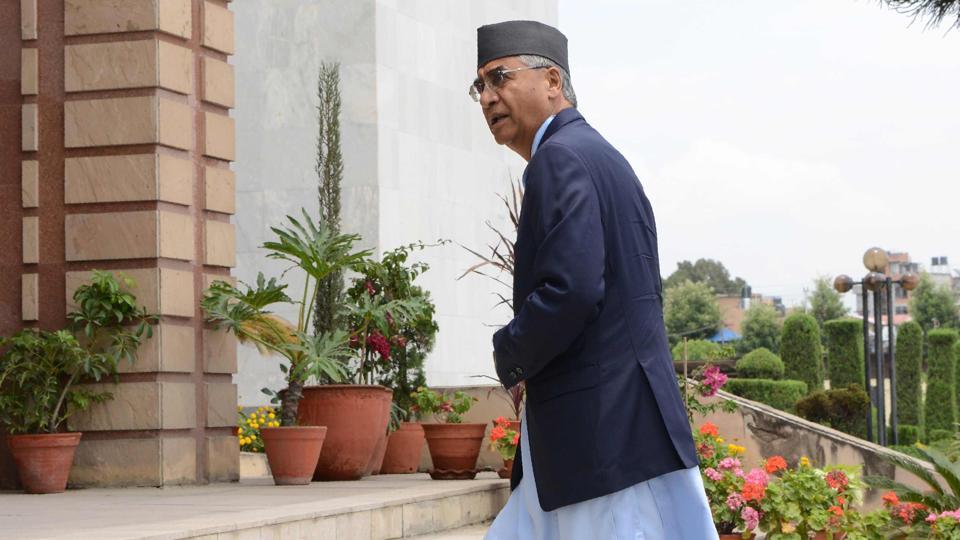
The 70-year-old Nepali Congress president returned to the top post 12 years after he was removed by then King Gynendra Shah.
Deuba was the sole candidate in the election for the post of prime minister as the main opposition Communist Party of Nepal-UML and other parties did not put up candidates.
He received 388 votes while 170 votes were cast against his candidacy. A total of 558 were cast and Deuba needed 297 votes to prove his majority.
Immediately after his election, Deuba said his priorities would be holding elections to local government bodies and implementing the new Constitution. On the foreign policy front, he said he would maintain good relations with India and China.
The election became necessary after Communist Party of Nepal-Maoist Centre leader Pushpa Kamal Dahal “Prachanda” quit the post of prime minister last month under a power-sharing deal with Deuba’s Nepali Congress, the largest party in Parliament.
“As the nation needs advanced political agreement to complete some historic tasks and keep the political and moral ground intact, I am supporting the candidacy of Deuba as per the understanding reached with the Nepali Congress,” said Prachanda.
Deuba received wide-ranging political support during the voting and his victory was almost certain. Among the parties that backed Deuba, who has long-standing democratic credentials, were CPN-Maoist Centre and Madhes-based parties.
He became Nepal’s 40th prime minister. He earlier served as prime minister during 1995-97, 2001-02 and 2004-05. Deuba was sacked by King Gyanendra Shah in 2005 for failing to hold elections and to bring the Maoist rebels to the negotiating table.
Earlier, the CPN-UML decided to end its obstruction of the proceedings in Parliament after the ruling parties agreed to hold elections to local government bodies in four provinces on June 28 and the provincial and parliamentary elections by January 2018.
Deuba is expected to form a small Cabinet on Wednesday and some Madhesi parties are likely to join the coalition.
In addition to facing huge domestic political challenges, Deuba will have to build on the work done on the foreign policy front by Prachanda, who had almost brought relations with India and China back on track.
Two Madhes-based parties clinched separate deals with Deuba and Prachanda on Tuesday. Though they agreed to vote for Deuba, the parties are yet to decide on joining the government.
The former research fellow at the London School of Economics will lead Nepal for nine months and experts say this could be the most challenging phase of his political career.
Born into a simple family from the far west of Nepal, Deuba is widely considered as one of the luckiest political leaders in the country. A long-time member of the socialist movement, he has strong political connections to India and the West.


