E-Paper



Hamas files reveal it spied on everyday Palestinians' love lives, probed them over 'immoral acts'
The secret police force allegedly surveilled Palestinians and built files on people, including journalists, who questioned the government

 Prefer HTon Google


Several internal documents reviewed by The New York Times revealed that Hamas leader Yahya Sinwar has been overseeing a secret police force in Gaza for years now. The police force surveilled Palestinians and built files on people, including journalists, who questioned the government.
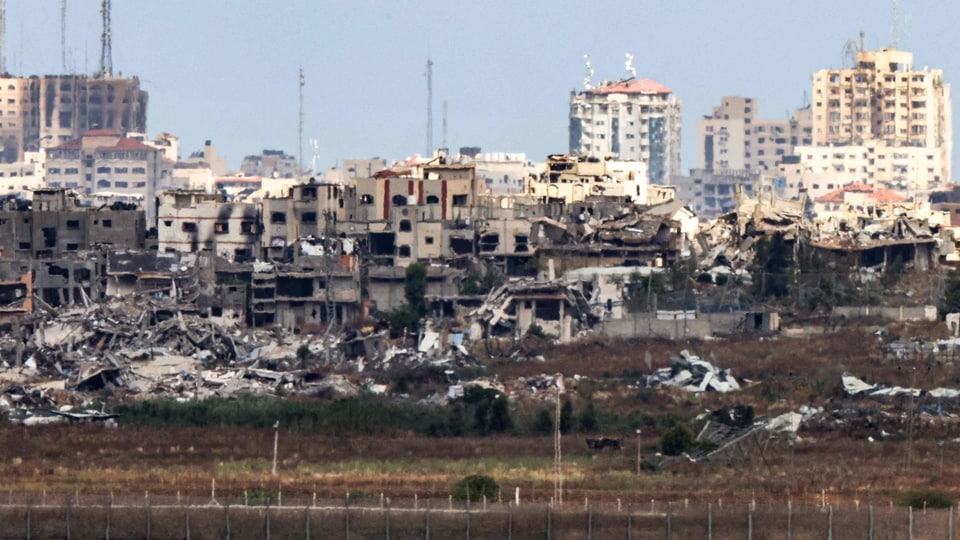
The unit is known as the General Security Service. Their network of Gaza informants kept them updated; this included people who reported their neighbours to police. People who publicly criticised Hamas or participated in protests landed in the files. On some occasions, authorities allegedly followed people to find out if they had romantic relationships outside marriage.
“We’re facing bombardment by the occupation and thuggery by the local authorities,” said Ehab Fasfous, a journalist in the Gaza Strip. Fasfous’ name appeared in the General Security Service’s files, having been labelled as one of “the major haters of the Hamas movement.”
The outlet got access to the files after they were handed over to it by officials in Israel’s military intelligence directorate. The files were reportedly seized during raids in Gaza. The documents include seven intelligence files ranging from October 2016 to August 2023.
What is the General Security Service and what does it do?
While the General Security Service functions like part of the government, it is actually formally part of the Hamas political party. One Palestinian individual with knowledge of the happenings said that this was one of the three extremely powerful internal security bodies in Gaza, the others being the Military Intelligence and the Internal Security Service.
Records revealed that the unit comprised 856 people, of which over 160 people were paid to spread Hamas propaganda. At present, the status of the unit is unknown.
Three Israeli intelligence officials confirmed that Sinwar directly oversaw the unit. A 62-slide presentation on the General Security Service’s activities, which were delivered weeks before the Hamas’ attack on Israel on October 7 last year, revealed a lot of information on the unit. The officials said that the slide show was prepared specifically for Sinwar.
While certain slides focused on Hamas leaders’ personal security, some discussed how protests – such as the We Want to Live demonstrations – could be stamped out. Operatives from Palestinian Islamic Jihad, a militant group that partners with Hamas sometimes, were tracked by security officials.
“Undertaking a number of offensive and defensive media campaigns to confuse and influence adversaries by using private and exclusive information,” the document read.
The reports said, and Fasfous confirmed, that his phone was seized and he was asked to leave while on his way to a protest last year. He said he was approached by plainclothes officers. “We advise that closing in on him is necessary because he’s a negative person who is full of hatred, and only brings forth the Strip’s shortcomings,” the document said.
In fact, Fasfous alleged that the officers snatched his phone and used it to send flirtatious messages to a colleague in order to “pin a moral violation on me.” While the report does not mention that, it does say that ways to deal with Fasfous included “defaming” him.
“If you’re not with them, you become an atheist, an infidel and a sinner,” Fasfous said, acknowledging that he criticised Hamas online. He added that the people in Israel he was in touch with were actually Palestinians who owned food and clothing companies. He helped run these people’s social media accounts.
“This General Security Service is just like the Stasi of East Germany,” said Michael Milshtein, a former Israeli military intelligence officer who specialises in Palestinian affairs. “You always have an eye on the street.”
Analysts revealed that Palestinians in Gaza are afraid to express dissent, and live in fear. “There are a lot of people practicing self-censorship,” said Mkhaimar Abusada, a professor of political science from Gaza City. “They just don’t want problems with the Hamas government.”
The General Security Service investigated a tip in December 2017 that a woman was acting immorally with a man. Without presenting any evidence of wrongdoing, the report proposed that “relevant parties” address the matter. Further, an October 2016 report described men and women performing “immoral acts” at a Palestine Liberation Organization office in Khan Younis. The acts, however, were not specified. The files also revealed that Hamas suspected certain foreign organisations and journalists.
Fasfous said that he complained to a government official in Khan Younis, but was asked to stop reporting and “destabilizing the internal front.” “I told him I was reporting on the truth and that the truth won’t hurt him, but that fell on deaf ears,” Fasfous said. “We can’t have a life here as long as these criminals remain in control.”