
 E-Paper



What products are exempted from Donald Trump's new 10 per cent tariff? Explained
Donald Trump signed executive orders late on Friday to impose new tariffs starting on Tuesday under Section 122 of the Trade Act of 1974.

 Prefer HTon Google


US President Donald Trump moved swiftly on Friday to replace tariffs struck down by the country's Supreme Court with a temporary 10 per cent global import duty for 150 days.
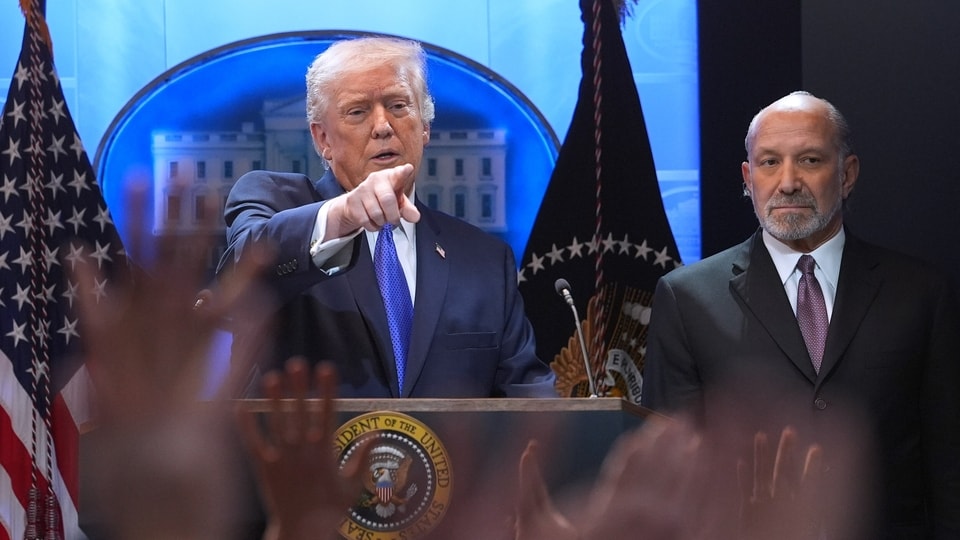
Trump's new executive order came just hours after a full nine-judge bench of the US Supreme Court ruled, in a 6-3 split verdict, that the tariffs imposed by his administration under the International Emergency Economic Powers Act of 1977 were an overreach of authority.
Trump signed executive orders late on Friday to impose new tariffs starting on Tuesday under Section 122 of the Trade Act of 1974, partly replacing tariffs of 10 per cent to 50 per cent under the IEEPA. He also ordered new investigations under other laws that could allow him to reimpose the tariffs.
While this tariff has been imposed on all countries, including India, it still offers some exemptions.
The exemptions for the new Donald Trump tariffs
Donald Trump's executive orders on a new 10 per cent tariff continued exemptions already in place for a range of products.
These include aerospace products; passenger cars and some light trucks; goods from Mexico and Canada that comply with the US-Mexico-Canada trade agreement; pharmaceuticals; and certain critical minerals and agricultural products.
According to a White House fact sheet, some goods will not be subject to the tariffs due to the needs of the US economy or to ensure the duties more effectively address the “fundamental international payments problems.” Certain critical minerals, metals used in currency and bullion, energy, and energy products fall in this category.
The fact sheet further clarified that natural resources and fertilisers that cannot be grown, mined, or otherwise produced in the United States, or that are not produced in sufficient quantities to meet domestic demand, are also exempted.
Many agricultural products, including beef, tomatoes, and oranges, as well as pharmaceuticals and pharmaceutical ingredients, and certain electronics, are exempted.
Passenger vehicles, certain light trucks, certain medium and heavy-duty vehicles, buses, and certain parts of passenger vehicles, and certain aerospace products will also not be taxed.
The same applies to books, donations, and accompanying baggage.
The justification of a 10 per cent tariff
The never-used Section 122 of the 1974 Trade Act allows the US President to impose duties of up to 15% for up to 150 days on any and all countries to address "large and serious" balance-of-payments issues. It does not require investigations or impose other procedural limits. After 150 days, Congress would need to approve their extension.
"We have alternatives, great alternatives. Could be more money. We'll take in more money, and we'll be a lot stronger for it," Trump said of the alternative tools after the Supreme Court ruling.
The 10 per cent tariff order justified the use of Section 122, noting that the US had a "large and serious balance of payments deficit" and that the situation was worsening.
While the administration will likely face legal challenges, the Section 122 tariffs would likely lapse before any final ruling is issued.


