E-Paper



A year after major quake, threat of another big one looms in Nepal
As Nepal marks one year of the quake which killed over 9,000 people, there are fears that another big quake could hit the country.


Bimala Tamang used to be a sound sleeper. But last year’s devastating earthquake and subsequent aftershocks changed that for this 23-year-old Kathmanduite who works as a salesgirl in a mall.
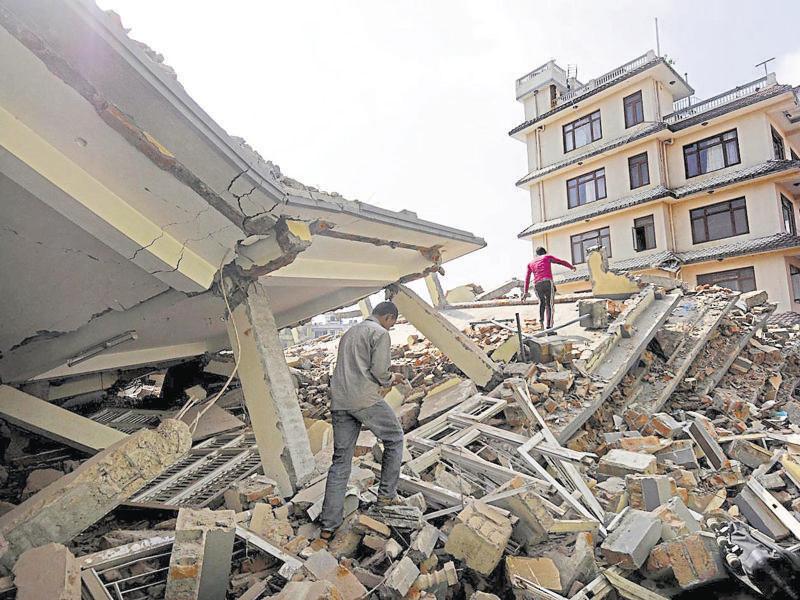
The April 25 quake, which killed nearly 9,000 people, damaged her rented home and destroyed several belongings both she and her taxi driver husband had acquired. The couple was lucky to escape unhurt.
“I still wake up at night by the slightest noise from gusts of wind or thunder, fearing it could be another quake,” said the resident of Chandol locality.
Her fears are not unreasonable. Nepal witnessed another mild tremor on the wee hours of Sunday, a day before the first anniversary of the 7.8-magnitude quake.
This one, having 4.2 magnitude with epicentre in Nuwakot district, was the 451st aftershock measuring over 4.0 since the first one on April 25, whose epicentre was at Barpak in Gorkha district.
According to Nepal’s National Seismological Centre, there have been over 30,000 aftershocks of lesser magnitude recorded in 12 districts since the big one in April last year.
On Sunday, Nepal marked one year of the quake which also injured more than 22,000 and destroyed over 800,000 houses. But there are fears another big quake could hit the country.
The temblors in Nepal occurred on the Main Himalayan Thrust (MHT), the fault line along which the Indian plate is pushing against the Eurasian plate at the rate of 2 centimetre per year, causing accumulation of stress.
But only a fraction of the energy accumulated for decades between the two plates got released in the April 25 quake. Experts say the residual energy could cause another quake.
A study published in Nature Geoscience in August last year says there is possibility of a large earthquake of over 8 magnitude in the near future.
The April 25 quake moved eastward from the epicentre, but the next one could affect western Nepal, where no major quake has been recorded since 1505.
“In case it happens, it would be more disastrous as the earthquake will be shallower next time,” Bishal Nath Upreti, a senior geologist at Nepal Academy of Science and Technology told The Himalayan Times.