E-Paper



After two disaster-hit seasons, climbers ready for fresh Everest bid
Thirty-five deaths in the past two years because of an avalanche and an earthquake have failed to dampen the spirits of climbers from around the globe who have gathered in Nepal for fresh attempts on Mount Everest this spring.

 Prefer HTon Google


Thirty-five deaths in the past two years because of an avalanche and an earthquake have failed to dampen the spirits of climbers from around the globe who have gathered in Nepal for fresh attempts on Mount Everest this spring.
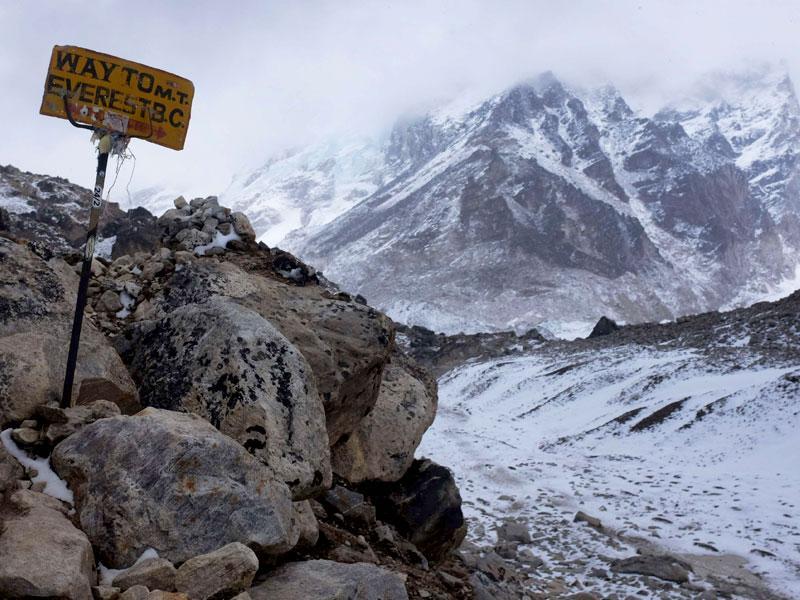
In 2014, the season came to a halt even before climbers started ascending the world’s highest peak due to the deaths of 16 Sherpas, who were preparing the route, in an avalanche.
Last April, all expeditions were called off when 19 people were killed at the base camp by a 7.8-magnitude earthquake that claimed nearly 9,000 lives across Nepal.
The incidents highlighted the dangers of climbing in the Himalayas. But they haven’t deterred thrill seekers from planning new expeditions to the 8,848-metre peak.
“There are lots of inquiries from teams who had to postpone their attempts in the last two years and also from new expeditions,” said Ang Tshering Sherpa, president of the Nepal Mountaineering Association.
But there’s uncertainty as well since the Nepal government is yet to officially extend the permits of 357 climbers who abandoned their attempts following the earthquake.
Last year, the government extended the permits of 334 climbers who were forced to postpone their Everest dreams because of the 2014 avalanche. They can make fresh attempts at any time till 2019.
“If the government extends the permits of 2015 within the next few days, we can expect nearly 38 expeditions to Everest this year. If that doesn’t happen, the number could drop to nearly 20,” Sherpa said.
The finance and tourism ministries have already agreed to extend last year’s permits for another two years, and the cabinet is expected to give its green signal for the move within the next few days.
Read: 22 Mt Everest climbers die in Nepal earthquake
Sherpa, who owns Asian Trekking, a Kathmandu-based expedition operator, hopes to send three teams to the Everest this season from both the south side in Nepal and the north side in Tibet.
“Despite the tragedies of earlier seasons, there’s enthusiasm among climbers. We are planning one expedition each from the north and south sides,” said Thupden Sherpa of Arun Treks and Expeditions.
On Saturday, 10 “icefall doctors” – Sherpas who prepare the routes over Khumbu Icefall till Camp 2 for climbers – left for the Everest Base Camp from Namche Bazaar to start work for the coming season.
In 2014, Chinese climber Wang Jing had reached the peak after the avalanche. But there was controversy about her climb as she skirted the Khumbu Icefall by using a helicopter.
Read: Uncertainty persists over Everest climbing season after avalanche deaths
Despite problems on the Nepal side, expeditions on the Tibet side went ahead and 125 climbers scaled the peak.
Last spring, all expeditions on the north and south sides were abandoned following the quake. Japanese climber Nobukazu Kuriki had attempted to climb the peak during the autumn season in September.
But the experienced climber, who lost nine fingers to frostbite during earlier attempts, had to give up at 7,600 metres because of deep snow.
Read: Kashmiri-origin mountaineer Renu Fotedar dies in Everest avalanche
Last year was the first since 1974 when no climber reached Everest’s peak from either the north or south side.
A total of 658 climbers reached the peak from both sides in the spring of 2013, when climbing was overshadowed by a fight between Sherpas and western climbers over continuing to climb while the route was being prepared.
Following the earthquake, the Nepal government had said that rules would be put in place to prevent inexperienced climbers or those who are too young or too old from climbing major peaks.
The rules were expected to make routes to the Everest and other major peaks less crowded and safer. But no such decision has been taken yet.
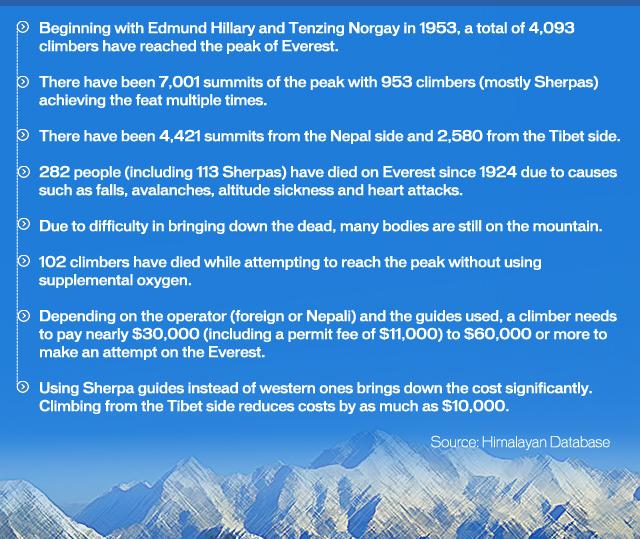
As in previous years, record breaking attempts are expected this season too.
Alyssa Azar, a 19-year-old from Queensland who failed in 2014 and 2015 due to the avalanche and quake, will make her third bid to become the youngest Australian to summit the Everest.
On the other hand, a 68-year-old former engineer from Malaysia, Lee Chong Meng, will make a solo bid to become the oldest man from his country to reach the peak.
“In my opinion, the recent tragedies will not stop the desire to climb Everest or other high mountains as most people who climb accept the risks,” noted US climber and Everest chronicler Alan Arnette wrote in his blog this month.
Like many, he is hoping climbers will return to Nepal this spring to provide work and income to the Sherpa community and help rebuild the country after the quake.
Expeditions to the Everest take nearly two months from beginning to end, with time given for acclimatisation. Usually they begin in early April and climbers make a bid for the peak towards the end of May, depending on weather conditions.