
 E-Paper



Black box batteries dying, Australia sees long haul in hunt for MH370
The search for the missing Malaysia Airlines jetliner resumed on Saturday, five weeks after the plane disappeared from radar screens, amid fears that batteries powering signals from the black box recorder on board were about to die.


The search for the missing Malaysia Airlines jetliner resumed on Saturday, five weeks after the plane disappeared from radar screens, amid fears that batteries powering signals from the black box recorder on board were about to die.
The co-pilot of the missing jet, meanwhile, made a desperate call from his mobile phone moments before the jet went off the radar, reports claimed.
The call from co-pilot Fariq Abdul Hamid's phone, however, ended abruptly, but not before contact was established with a telecommunications sub-station in Penang state, the New Straits Times reported on Saturdar.
The call was made as the jet was flying low near Penang Island on Malaysia's west coast, the morning it went missing.
"The telco's (telecommunications company's) tower established the call that he was trying to make. On why the call was cut off, it was likely because the aircraft was fast moving away from the tower and had not come under the coverage of the next one," the paper said, citing unnamed sources.
The paper said it was unable to ascertain who Fariq was trying to call as sources chose not to divulge details of the investigation. The links that police are trying to establish are also unclear, said the report.
Investigators are poring over this discovery as they try to piece together what had happened moments before the Boeing 777 Flight MH370 went off the radar, some 200 nautical miles northwest of Penang, the paper said.
Fariq's last communication through the WhatsApp Messenger application was about 11.30pm on March 7, just before he boarded the jet for his six-hour flight to Beijing.
In Australia, Prime Minister Tony Abbott said signals picked up during the search in the remote southern Indian Ocean, believed to be "pings" from the black box recorders, were "rapidly fading".
"While we do have a high degree of confidence that the transmissions that we've been picking up are from flight MH370's black box recorder, no one would underestimate the difficulties of the task still ahead of us," Abbott told a news conference in Beijing.
We have "very considerably narrowed down the search area, but trying to locate anything 4.5 kilometers beneath the surface of the ocean about 1,000 kilometers from land is a massive, massive task, and it is likely to continue for a long time to come," Abbott said.
Abbott appeared to step back from his comments Friday when he voiced great confidence that signals from the black box had been detected - his most upbeat assessment so far that triggered speculation that a breakthrough was imminent.
Retired air chief marshal Angus Houston who heads the hunt from Perth, had quickly issued a statement clarifying that there had been no breakthrough.
On Saturday, Abbott repeated his confidence in the search, but put the accent on the challenges ahead.
Malaysia Airlines Flight MH370 disappeared soon after taking off on March 8 from Kuala Lumpur bound for Beijing with 227 passengers and 12 crew on board, triggering a multinational search that is now focused on the Indian Ocean.
Search officials say they are confident they know the approximate position of the black box recorder, although they have determined that the latest "ping", picked up by searchers on Thursday, was not from the missing aircraft.
Batteries in the black box recorder are already past their normal 30-day life, making the search to find it on the murky sea bed all the more urgent. Once searchers are confident they have located it, they then plan to deploy a small unmanned "robot" known as an Autonomous Underwater Vehicle.
"Work continues in an effort to narrow the underwater search area for when the autonomous underwater vehicle is deployed," the Australian agency coordinating the search said on Saturday.
"There have been no confirmed acoustic detections over the past 24 hours," it said in a statement.
The black box records data from the cockpit and conversations among flight crew and may provide answers about what happened to the plane, which flew thousands of kilometres off course after taking off.
The mystery has sparked the most expensive search and rescue operation in aviation history.
Malaysia's government has begun investigating civil aviation and military authorities to determine why opportunities to identify and track the flight were missed in the chaotic hours after it vanished.
Narrowing search area
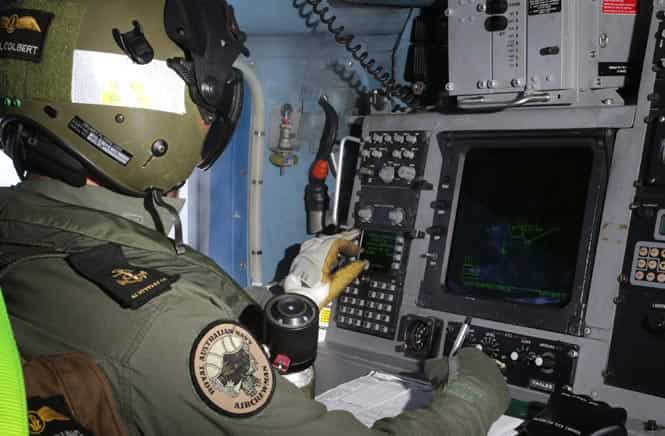
Analysis of satellite data has led investigators to conclude the Boeing 777 crashed into the ocean somewhere west of the Australian city of Perth. Four "ping" signals, which could be from the plane's black box recorders, have been detected in the search area in recent days by a U.S. Navy "Towed Pinger Locator".
Once the search area is narrowed down to as small as possible "it is our intention to then deploy the submersible, conduct a sonar search of the sea bed and, based on the sonar search, attempt to get a visual of the wreckage," Abbott said.
The US supply ship USNS Cesar Chavez has joined the Australian-led task force to provide logistics support and replenish Australian navy ships, a Pentagon spokesman said.
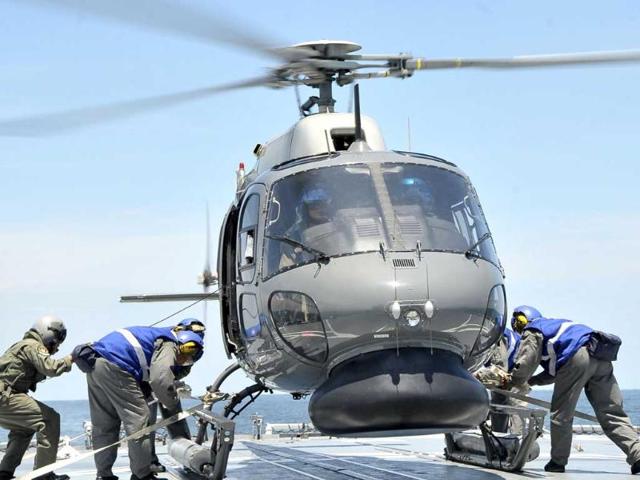
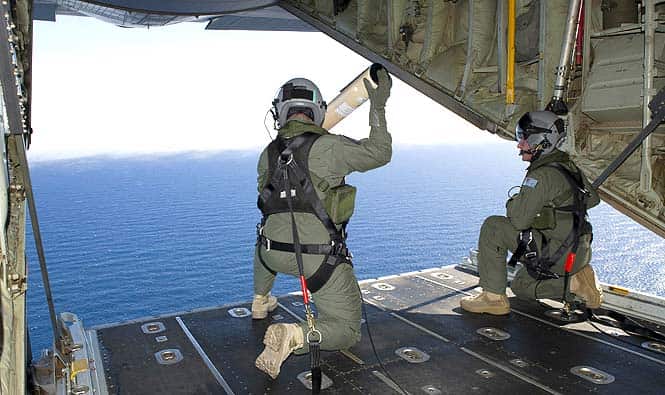
Up to nine military aircraft, one civilian aircraft and 14 ships were scouring a 41,393 sq km patch of ocean 2,330 km northwest of Perth.
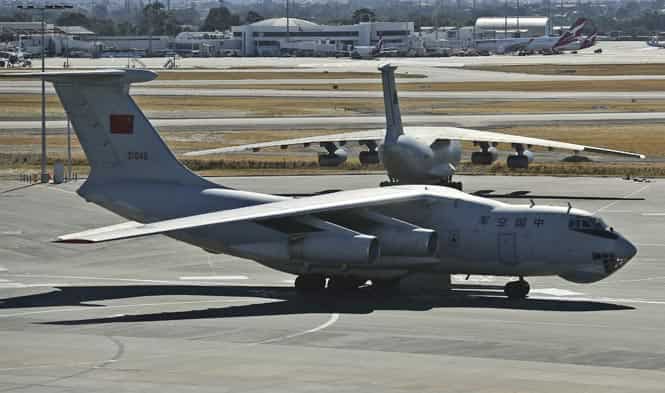
The extensive search and rescue operation has included assets from 26 countries.
Australia's Ocean Shield, which has the towed pinger locator on board, is operating in a smaller zone, just 600 sq km about 1,670 km northwest of Perth. That is near where it picked up the acoustic signals and where dozens of sonobuoys capable of transmitting data to search aircraft via radio signals were dropped on Wednesday.
Experts say the process of teasing out the signals from the cacophony of background noise in the sea is slow and exhausting.
An unmanned submarine named Bluefin-21 is on board the Ocean Shield and could be deployed to look for wreckage on the sea floor some 4.5 km below the surface once a final search area has been identified.


