
 E-Paper



Hafiz Saeed’s detention will achieve little, Nawaz Sharif should think long-term
That the ISI and its sponsored groups are the source of destabilisation in India, Afghanistan, Bangladesh and even far-off Maldives is well known to Washington and its security agencies.

 Prefer HTon Google


Pakistan leaders have always been tactically brilliant but poor long-term strategists. The move on Monday to place five Lashkar-e-Toiba (LeT) leaders, including its emir Hafiz Muhammad Saeed who has $10 million bounty on his head, under detention by Islamabad is a pre-emptive step aimed to counter any action by US President Donald Trump to put Pakistani nationals or people of Pakistani origin on the entry ban list.
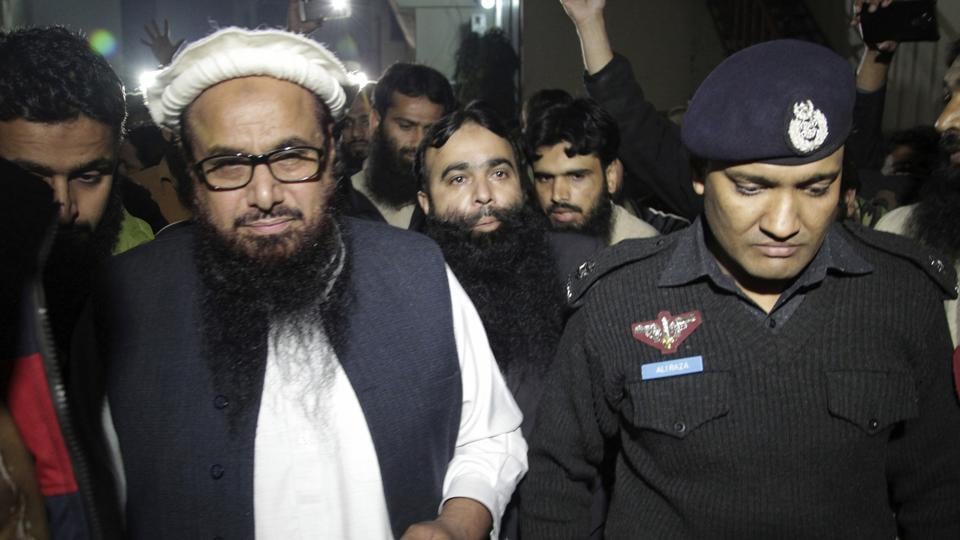
Given that most of the Pakistani elite prefer a different passport, any US action would be disastrous for the scions of Punjabi landlords living in US, Canada, Britain or anywhere in Europe. Even though Saeed, the mastermind behind the 26/11 Mumbai terror attacks, was placed under a UNSCR 1267 or al-Qaeda sanctions committee within a fortnight of the attacks, the detention was for only eight months and since then has been out spewing vitriol against India without any sanction from Islamabad.
Read | LeT founder Hafiz Saeed, four aides placed under house arrest in Pakistan
Zafar Iqbal, co-founder of the LeT with Saeed, was put on a UNSCR 1267 in 2012 while other three — Abdullah Ubaid of Faisalabad, Abdul Rehman Abid and Qazi Kashif Niazi of Multan — are key operatives of the proscribed group that functions as the strategic arm of Pakistan Inter-Services Intelligence (ISI).
Saeed has been at the forefront of jihad in Jammu and Kashmir and on January 14 formed a new organisation called Tehreek-e-Azadi-Kashmir to handle its Indian operations. Saeed is the toast of Pakistan army generals and politicians with intelligence reports indicating time and again his close proximity to Punjab chief minister, Rawalpindi Corps commander and Lahore Corps commander. The other organisation working in tandem with the LeT is the Jaish-e-Mohammed, whose founder Masood Azhar has a new patron in the Chinese leadership with the latter blocking all Indian attempts to put the emir on the ban list.
Read | Pressure from US, China may have led to LeT founder Hafiz Saeed’s house arrest
It is to the ISI’s credit that it handles the LeT, which is based on Ahle-Hadis ideology, and diametrically opposite Deobandi ideology-based JeM with nimbleness and alacrity to target India depending on the global heat on each of these terrorist organisations. Both have global imprint with jihadi operatives based even the US and Britain.
Rather than use detention of LeT leaders as a tactic to deflect the heat on Pakistan as the global source of Islamist jihadists since the Afghan war, Pakistan Prime Minister Nawaz Sharif would be well advised to use this opportunity to dismantle terror networks operating in his country.
Read | ‘They killed 30 soldiers’: Hafiz Saeed says Pak mujahideen attacked Aknoor camp
That the ISI and its sponsored groups are the source of destabilisation in India, Afghanistan, Bangladesh and even far-off Maldives is well known to Washington and its security agencies. It is also true that these terror networks sometimes go out of control of their handlers and play freelancers in pursuance of their rabid ideologies. Classic examples would be the JeM’s Pathankot air base attack on January 1, 2016, which was planned on Christmas Day when Prime Minister Narendra Modi reached Lahore, to the mysterious bombing in Kandahar on January 10, where five top UAE diplomats were killed. Both incidents have soured the relationship between Pakistan and the victim country.
The agenda of the Let and JeM is no different in Kashmir as they are part of the ISI’s ambitious strategy to annex the Valley, and will not allow any other resolution that is brought to the table. Like the 1999 Kargil war and January 12, 2002 statement proscribing the two terror groups, Pakistani rulers have shown the same tactical ability by detaining the LeT leaders with the hope of some kudos at Capitol Hill.
Read | Saeed asks Pak govt not to forge friendship with India
But this time Sharif should think long-term unlike his bête-noire General Pervez Musharraf by using this opportunity to take action against terror networks and bring the 26/11, Pathankot and Uri attack perpetrators to justice. A stable Pakistan is in global interest, not a region that is perpetually restive and on the boil.


