
Sign in

Car buyback policy in works, govt looks to put onus on automakers to recycle

The move is aimed at ridding India’s roads of millions of old cars, trucks and buses that are a major source of pollution in the country.

Updated on: Dec 19, 2016, 08:48:51 IST
Hindustan Times, New Delhi | By
Share
Share via
  • facebook
  • twitter
  • linkedin
  • whatsapp
Copy link
  • copy link

The government will soon make it mandatory for automakers and their agents to buy old and unroadworthy vehicles, and recycle them.
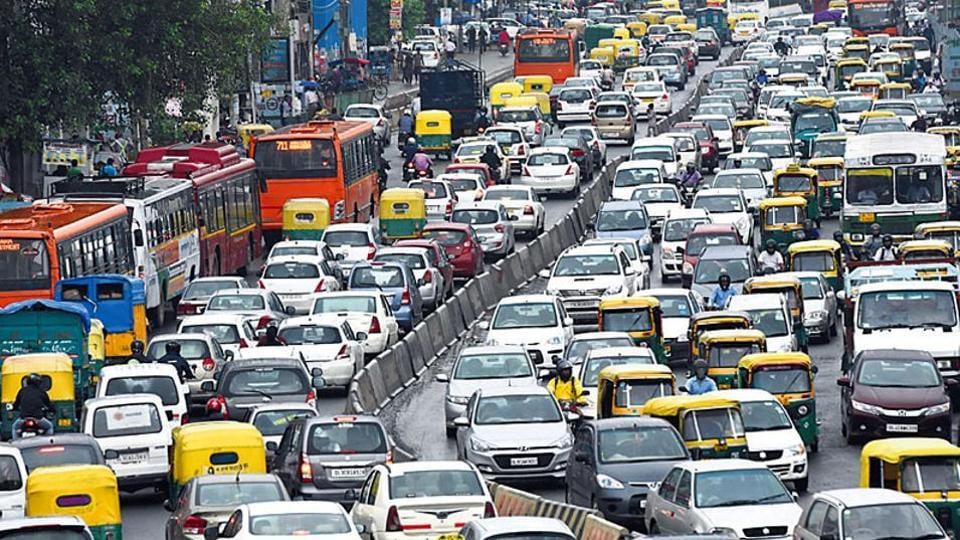
The move is aimed at ridding India’s roads of millions of old cars, trucks and buses that are a major source of pollution in the country. (Vipin Kumar/Hindustan Times)

The move is aimed at ridding India’s roads of millions of old cars, trucks and buses that are a major source of pollution in the country, including the worst smog for decades that choked the Capital in November.

India doesn’t have a recycling policy for end-of-life cars, leaving an unorganised sector such as private scrapyards at Mayapuri in New Delhi to profit from selling parts and metal from dismantled vehicles.

Legal framework in other countries

Automakers in EU, China have to take back old vehicles and recycle them.

US, Canada, Australia have notified recycling under existing environment rules.

Russia, Mexico, Turkey and Vietnam are preparing to introduce laws on recycling systems.

The new rule, which is likely to kick in after the environment ministry notifies it next year, will be on the lines of the recycling policy for electronic goods that fixes responsibility on the manufacturer.

Read | Automakers fear big losses after NGT curbs diesel car sales

The producer-responsibility principle makes it mandatory for the maker of an item to take back the product once it is declared unworthy for use or exceeds the length of time for which it remains usable.

Automakers will get enough time — between one and three years — follow the new norms and set up dismantling and recycling centres across India.

In most countries around the world, the association of automakers jointly sets up these units. China has around 800 centres across its big cities.

How buybacks are done elsewhere

Taiwan: The owner has to give vehicle with de-registration certificate to authorised service centre, which sends the vehicle to notified recycler. Owners are given incentives to hand over old vehicles to dealers.

Japan: Vehicle manufacturers are required under law to take back the vehicle and recycle 90% of it. The vehicle owner has to bear the recycling cost.

Automakers like BMW, Volkswagen, Toyota and Nissan have stations to take back and dismantle vehicles in various parts of the world.

India had 8.7 million end-of-life vehicles in 2015, and the number is expected to rise to 21.8 million by 2025, according to a Central Pollution Control Board (CPCB) estimate. Around 80% of them would be two-wheelers.

Read | NGT asks Delhi agencies to identify sites to dump old diesel vehicles

The pollution board-prepared guidelines, pending approval, say recycling would cut down pressure on “primary resources” such as ores for metal, and reduce the “environmental impact” of old vehicles.

About 70% of old and damaged vehicles in India are dismantled in an informal sector and reused or sold to manufacturers, environment ministry officials said.

There are two categories of unroadworthy vehicles — damaged in accidents or certified as unfit by transport authorities.

A vehicle, both commercial and private, is registered for 15 years in India. The road transport ministry wants to modify the motor vehicles rules and reduce the registration of commercial vehicles to 10 years, government officials said.

“Allowing a vehicle after that (15-year) period is the discretion of the transport department, which gives permission to run them on a yearly basis,” said SP Singh, a transport expert. “In India, it is not difficult to buy a fitness certificate.”

Read | Delhi NGT ban: No incentives for abandoning old diesel vehicles

Besides, Singh said the proposal is an indirect incentive for automakers as it would end the practice of reselling commercial vehicles in smaller towns and rural areas, which keeps the manufacturing volume of new cars in check.

The draft rule says once the transport department declares a vehicle unfit it should be sent for recycling. But the decision to dispose of a vehicle will rest on the owner.

Regional transport officers have to be empowered to deregister vehicles so that an effective scrapping mechanism can function, the draft says.

Authorised service stations will be declared collection centers for old cars, and the manufacturer will be responsible thereafter to send these vehicles to a dismantling centre.

“We hope the manufacturer will provide incentives to owners of old cars,” an environment ministry official said. “Around 90% of vehicle components can be reused.”

The global norm is to pay the cost of vehicle’s steel to the owner.

The official said the policy, to be tagged along the environment protection act for compliance, would be notified once the law ministry cleared it. The transport ministry has given its consent already.

Also read | Ban on diesel cars is corporate death penalty: Toyota tells NGT

  • Chetan Chauhan
    ABOUT THE AUTHOR
    Chetan Chauhan

    Chetan Chauhan is the National Affairs Editor looking into all aspects of news and features from across India. A Chevening scholar with over three decades of experience in reporting and news management, Chetan has extensively covered all important aspects of the social sector, political economy, environment and climate change nationally and internationally. He did a journalism course at the Reuters Institute of Journalism in Oxford and Digital Media training at Nanyang Technological University in Singapore. He started as a reporter with The Statesman in 1996 and joined the Hindustan Times in 2000 in the metro bureau covering environment, crime and Delhi politics. He covered hot local news, from the Jessica Lal murder case to the rebellion of Delhi Congress MLAs against then Chief Minister Sheila Dikshit, to the replacement of toxic vehicle fuel with cleaner compressed natural gas (CNG) in the national capital. Some of his stories on air pollution became part of the Supreme Court’s landmark MC Mehta versus Government of India case in the National Capital Region (NCR), forcing the government to take corrective measures. As part of the national political bureau since 2004, he covered important central sectors such as environment, education, social justice, labour, rural development, water resources, renewable energy, agriculture, broadcasting and the Planning Commission for more than a decade producing several exclusive and investigative breaking stories. His specialisation is the environment, having covered at least a dozen United Nations global conferences on climate change, biodiversity and wildlife including climate summits in Paris, Copenhagen and Bali. He also covered India’s two five-year plans ---11th and 12th and reported on drafting and execution of right based laws such as Right to Education, Right to Information and rural job guarantee law, MG-NREGA, now being introduced in new format as VG-RAM-G Act. He has in-depth knowledge of social sector issues. He was one of the first to report on tigers vanishing from Sariska and Panna wildlife reserves in 2004 and 2008, respectively, leading to the setting up of the National Tiger Conservation Authority (NTCA) and the introduction of stringent penal provisions for poaching. He has written extensively on the rising human-animal conflict in India and the degradation of India’s biodiversity hotspots because of mining and other activities. Since 2004, Chetan has covered Parliament comprehensively and participated in training on the nuanced coverage of Parliament proceedings. He has travelled extensively across India to cover national and provincial elections since 1998, especially in the Hindi heartland states, considered India’s road to power. He writes a regular column for Hindustan Times, Ecostani, on important national politics, economy, Himalayan ecology and environmental issues. His other responsibilities include providing inputs for edits and edit page articles for the publication, apart from managing news flow from across India.Read More