
 E-Paper



Is the DMDK worth all the hype?
The 2019 could be equally crucial for the DMDK – the party can either get its act together by joining the ‘grand alliance’ or be removed from the political scene altogether by deciding to contest alone

 Prefer HTon Google


When the AIADMK announced its alliance with the Bharatiya Janata Party (BJP) and Pattali Makkal Katchi (PMK), it appeared that the party was taking an early lead and could enjoy an edge in the polls. The DMK, back then, was yet to begin talks. But as they say, change is the only constant thing, more so in Tamil politics. The DMK has sealed its alliance, the All India Anna Dravida Munnetra Kazhagam (AIADMK) is yet to firm up its own and the Desiya Murpokku Dravida Kazhagam (DMDK) headed by actor Vijayakanth is still dragging its feet.
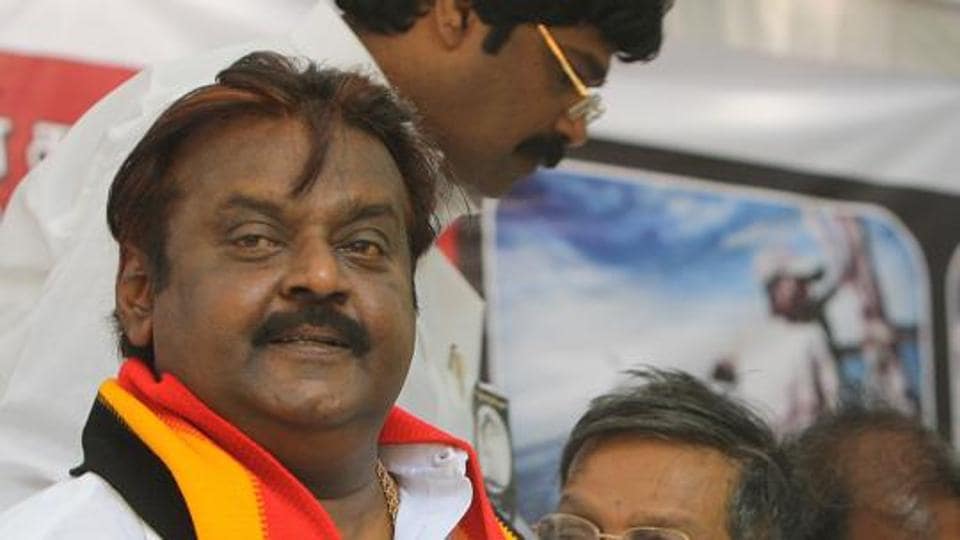
At one point, both the AIADMK and the DMK were engaged in talks with the DMDK. Much later, when the DMDK sought to approach the DMK after it couldn’t arrive at a consensus with the AIADMK, the former shut the door saying the party had no seats to offer. The DMDK drew flak for simultaneously holding negotiations with both the AIADMK and the DMK but the party remains undaunted. Addressing a press meet on Friday, DMDK treasurer and actor Vijayakanth’s wife Premalatha likened it to ‘girls of marriageable age inviting proposals.’
Whether the DMDK, which had to go with the National Democratic Alliance that neither had any of the Dravidian majors in the 2014 elections is worth all the hype remains a question that begs an answer.
When actor Vijayakanth launched the DMDK in 2005, he was holding out a promise of being the right kind of alternative. Perhaps tired of the DMK-AIADMK binary in which Tamil politics has been operating, Tamil society thought Vijayakanth would be a breath of fresh air – the much-needed change. He was the kind of hero that rural Tamil Nadu could identify with. Vijayakanth appeared as characters that stood against evil. He had often played a police officer or a military officer fighting against the forces that posed a danger to the country. This image came in handy when he launched his political party.
In 2006, less than a year after the party was launched, the DMDK contested 232 of 234 Assembly seats - a decision that required enormous courage. Surprisingly, Vijayakanth emerged the sole winner while the party registered an impressive 8.4 vote percentage. In 2009, the DMDK again went alone in the Lok Sabha elections contesting all 40 seats. The party failed to win any constituency but came up with a vote percentage of 10.3. For the first time in 2011, Vijayakanth’s DMDK entered into an alliance with the AIADMK and the former was allotted 41 Assembly constituencies. The DMDK won 29 seats, making it the second largest party in the State Assembly. The DMK was pushed to the third position and Vijayakanth became the opposition leader. By now, the DMDK lost its image as a change-maker in the State. The activities of DMDK MLAs in the State Assembly offered no hope of being agents of change. Besides, the party also had members of Vijayakanth’s family playing an active role – including Premalatha and her brother L K Sudheesh. Vijayakanth’s son is set to take the plunge next.
In 2014, the party contested the elections with the BJP, PMK and MDMK. Contesting in 14 seats, the DMDK not only lost all the seats but witnessed a dip in vote share. The party polled only 5.1% votes. In 2016 again, the DMDK entered into the people’s welfare alliance that also had the MDMK, Left and Viduthalai Chiruthaigal Katchi (VCK). Contesting in 104 seats, the DMDK did not win any seat and polled 2.41% of the votes.
For a party that made waves within two years of its launch, the downfall has been quick, made worse by Vijayakanth’s ill-health. In 2019, the DMDK is back into the limelight, with both the AIADMK and the DMK seeking to align with it. The DMK has now backed out, and it remains to be seen if talks with the AIADMK will be successful. In any case, 2019 could be equally crucial for the DMDK – the party can either get its act together by joining the grand alliance or be removed from the political scene altogether by deciding to contest alone.
Kavitha Muralidharan is an independent journalist
The views expressed are personal


