
 E-Paper



2000-year-old ancient tombs with utensils, seals and skeletons found in Mongolia
An archaeological team discovered a complex of tombs in Jungar Banner area and a sacrificial pit dating between the late Warring States Period and the early Western Han Dynasty. Animal offerings, including skeletons of goats, cattle and dogs, were found in nearly one-third of the 99 tombs.


A cluster of 99 ancient tombs dating back more than 2,000 years have been found in northern China’s Inner Mongolia Autonomous Region, according to local authorities. An archaeological team from the regional institute of cultural relics and archaeology discovered a complex of tombs in Jungar Banner, including 99 tombs and a sacrificial pit dating between the late Warring States Period (475-221 B.C.) and the early Western Han Dynasty (202 B.C.-8 A.D.).
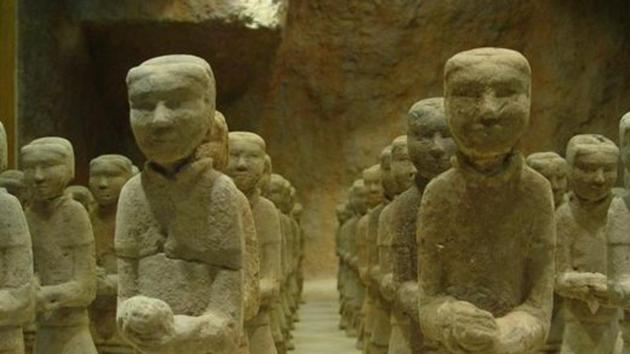
Most of the tomb owners were found without coffins in tombs that vary in size. The biggest measured about five metres in length, three metres in width and three metres in height, and the smallest was barely larger than a human body. Animal offerings, including skeletons of goats, cattle and dogs, were found in nearly one-third of the tombs.
Animal sacrifice was a common burial ritual among residents living along the Great Wall during the Warring States Period, according to archaeologists. The Great Wall wound through part of northern China at that time. Cooking utensils that dated back to the late Warring States Period, such as ceramic kettles, were unearthed, as well as 10 bronze government seals from the Western Han Dynasty. “This shows the area of the tombs that was under the control of the central government during the early Western Han Dynasty,” said Hu Chunbai, head of the archaeological team.


