
 E-Paper



John le Carré: The spy who loved a good story

 Prefer HTon Google


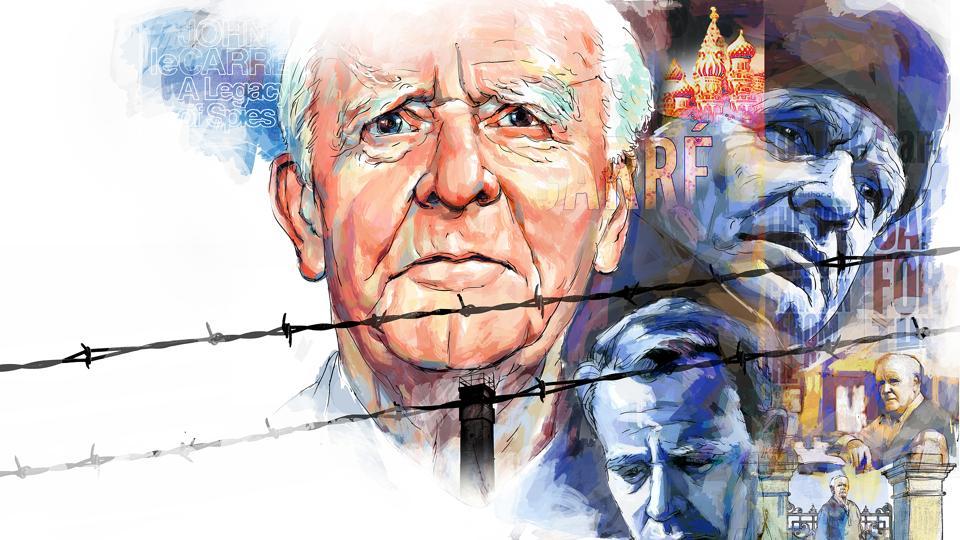
David Cornwell, aka John le Carré, died on December 12. He leaves behind more than a legacy of Cold-War fiction. As a writer, he exposed both British and Soviet intelligence as morally rotten systems. And he accounted for the human value and human cost of fighting the good fight. They don’t make agents like him anymore...
The two quintessential British spies in Cold War fiction would have been neighbours if they had actually lived. I recently went to Google Maps to figure out that it is a three-minute walk from 25 Wellington Square to 9 Bywater Street, the West London homes of James Bond and George Smiley respectively. Their homes may have been in the same neighbourhood; their personalities were miles apart.
In his first novel, published in 1961, this is how John le Carré, who died on December 12 at the age of 89, described Smiley: “Short, fat, and of a quiet disposition, he appeared to spend a lot of money on really bad clothes, which hung around his squat frame like skin on a shrunken toad”. Ian Fleming wrote his James Bond capers for a Britain that was exhausted by war, rationing and the loss of empire. His novels offered an escape from the dreary realities of his times. Le Carré put the same raw material to more profound use — to shine a light on the crooked timber of humanity.

The moral ambiguities of the Cold War come across most powerfully in the three novels on the battle of wits between Smiley and Karla, his arch nemesis and Russian master spy, who he first met in New Delhi. Le Carré once told an interviewer that their battle was akin to a moral Reichenbach Falls, as the two spies go down together into the abyss. The reference to the Reichenbach Falls comes from the descent of Sherlock Holmes and James Moriarty into the turbulent water, while still locked in combat, in The Final Problem, written by Arthur Conan Doyle and published in 1893.
Smiley is in one of the early novels described by a senior as combining the cunning of Satan and the conscience of a virgin. He has to walk into a world of deceit in order to protect those living more ordinary lives around him. “On Karla has descended the curse of Smiley’s compassion; on Smiley the curse of Karla’s fanaticism,” Le Carré wrote in Smiley’s People (1979). To a younger generation who has watched the cinematic trilogy by Christopher Nolan, this is akin to The Joker darkly hinting to Batman that they complement each other: “You complete me.”
Early spy fiction was what one writer has described as a slapdash mixture of naïve nationalism and boyish pranks. There was imperial arrogance as well, in books such as Rudyard Kipling’s 1901 novel, Kim. This was the era of gentleman adventurers such as Richard Hannay and Bulldog Drummond, written by John Buchan and H. C. McNeile respectively. Le Carré was closer in spirit to writers such as Somerset Maugham, Graham Greene and Eric Ambler, the trio that brought realistic spy fiction to the fore. The other major writer who followed the realist path was Len Deighton whose brilliant The Ipcress File was written just a year after Smiley made his debut.
The spies were different as well. “They’re a bunch of seedy, squalid bastards like me: little men, drunkards, queers, hen-pecked husbands, civil servants playing cowboys and Indians to brighten their rotten lives,” says Alec Leamas, the protagonist of The Spy Who Came In From The Cold, the 1963 novel that brought worldwide fame to le Carré. The eccentric Connie Sachs, who works in the research department of British intelligence, or the Circus, once tells Smiley that the spy game is all about half-angels fighting half-devils.
Le Carré is best known for his Cold War novels. However, he wrote on issues other than the great clash of the superpowers. His work in the first three decades — till the collapse of the Soviet Union in 1991 — included A Murder of Quality (’62), A Small Town in Germany (’68), The Naive and Sentimental Lover (’71), and The Little Drummer Girl (’83). Then there is A Perfect Spy (’86), which le Carré considered his best novel, which has a strong autobiographical streak. The protagonist Magnus Pym has a conman father, a legacy he shared with the writer.
The end of the Cold War took le Carré into new territory. He found new battles to write about — against arms dealers, terrorists, money launderers, pharmaceutical companies. His tone became angrier as well, and sometimes spilled over into real life, as in his sharp criticism of the American invasion of Iraq. Many believe his later novels did not match the tautness of his Cold War books, just as author Eric Ambler could never later reach the heights he attained during the 1930s, when Europe was hurtling towards another military conflict.
Le Carré returned to the days of A Spy Who Came In From The Cold in his penultimate novel. The 1963 classic features two interconnected betrayals in quick succession, with Leamas, Hans-Dieter Mundt, Joseph Fiedler and Liz Gold manipulated with cold cynicism by Smiley. In A Legacy of Spies (2017), the operation is questioned by the bright young bureaucrats who now run the Secret Service, with no memory of the uneasy truce during the Cold War, and no understanding of the compromises that were necessary to survive under the shadow of nuclear war. Smiley makes a comeback after 27 years, improbably alive after nearly four decades in retirement, spending his days in a library in a small town in Germany.
The last description of the aged spy is vintage le Carré: “The fluid contours of the face frozen, the brow tipped forward, shadowy eyelids lowered. A forefinger rises absently to the bridge of his spectacles, checking that they are still in place. Until, with a shake of the head as if to rid it of a bad dream, he smiled.” The Cold War spy now seeks hope in the European project rather than Brexit Britain.
The le Carré novels are full of fascinating characters, major and minor. They are united in a common struggle to maintain their humanity in a world of deceit. Smiley tells a bunch of young spies undergoing training, in The Secret Pilgrim (’90), that there is always a price of pay for living the life of a spy, and that price is oneself.
The characters often seek redemption in individual acts of commitment rather than in politics, a ray of hope that penetrates the dark world of spy craft. Leamas sacrifices his life at the Berlin Wall only to hold his dead girlfriend in his arms for one last time. Justin Quayle courts certain death when he decides to go back to the spot where his wife Tessa Abbot was killed, in The Constant Gardener (2001). Even Karla is eventually trapped into defecting because of his love for his troubled daughter.
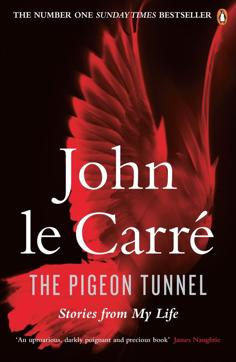
Le Carré wrote in his autobiography, The Pigeon Tunnel: Stories From My Life that truth lies not in facts but in nuance. It is a philosophy that permeates his novels — and one that made him one of the finest writers on the human condition.


