
 E-Paper



Delhi assembly election 2020: Way to CM’s office goes via New Delhi
Incumbent CM Arvind Kejriwal is contesting from thie New Delhi seat for the third consecutive time


In its name and character both, New Delhi constituency is a representative of the city-state. Politically, it has been the constituency of the Delhi Chief Minister since 1998 (when it was part of then Gol Market constituency). Demographically, it has a cross section of Delhi’s population, the movers and shakers in the power corridor—the VIPs, top government officials, middle-class babus, the working class, the urban villagers and the sanitation workers.
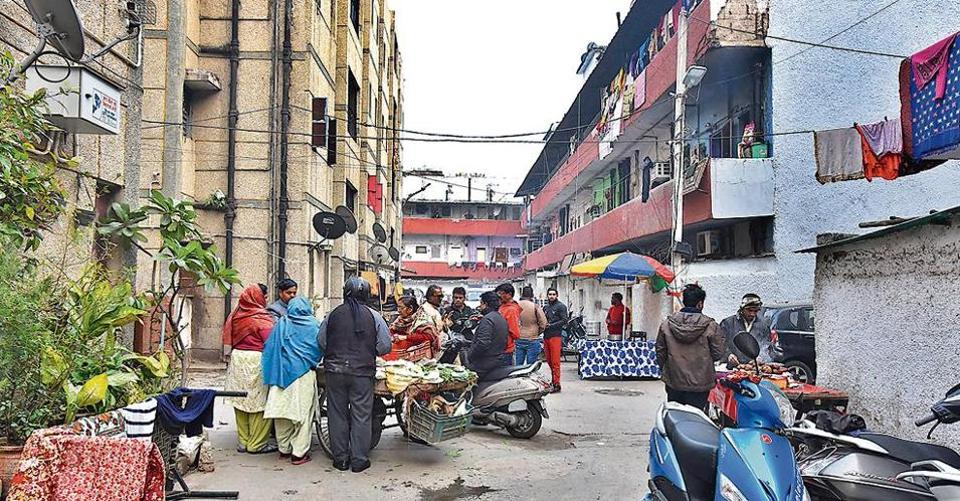
It is also peculiar in its governance character because the area comes under one of the richest civic bodies, the New Delhi Municipal Council and, therefore, voters’ dependence on their legislator is limited.
Having launched his electoral career from this seat, beating then chief minister Sheila Dikshit, Arvind Kejriwal is contesting from New Delhi for the third consecutive assembly polls. His rivals are both rookies, as Kejriwal was when he had defeated the heavyweight Dikshit.
While the BJP has fielded Sunil Yadav, president of the Delhi unit of BJP’s youth wing Bhartiya Janata Yuva Morcha (BJVM), the Congress’ Romesh Sabharwal is a former president of the party’s student wing, National Students’ Union of India (NSUI).
Kejriwal, the face of the AAP and the party’s tallest leader, while filing his nomination papers had said: “The Congress and the BJP want to fight Kejriwal and defeat Kejriwal, but I want to fight and defeat corruption.” Both his rivals, however, are pitching it as a battle of “locals versus an outsider”.
Yadav, resident of BK Dutt Colony, is a graduate from Delhi University’s Kirori Mal College, and is planning to woo voters of the reserved category voters in JJ clusters and servant quarters with his OBC background. “I will remind the people of the works done by the BJP government at the Centre. People here have never seen Kejriwal visiting the constituency. Why would they re-elect him? On the other hand, I am their son,” Yadav said.
Sabharwal, a resident of Connaught Place, is calling himself the “son of government servants” to make himself more relatable to the voters. An engineer, who also has an MBA degree, Sabharwal was a director of Central Bank of India before he decided to join politics. “Why should parachute candidates represent the people of New Delhi? Do they understand our problems? Both my parents were government servants and I understand what it means to grow up here,” Sabharwal said.
Before Kejriwal, who was a resident of Uttar Pradesh’s Ghaziabad when he fought his first election in 2013, Dikshit was also called Congress’s “parachute” leader because of her husband’s roots in UP.
But many voters in the area said despite being the chief minister, Kejriwal’s office is always in touch with the resident welfare associations (RWAs) to address their problems.
History
The New Delhi constituency, formed in 2008 after delimitation, is known to have been the seat of chief ministers. In 2008, Congress’s Sheila Dikshit won the first elections from the New Delhi seat with a vote share of 52.20%, defeating BJP’s Vijay Jolly to become the CM for the third time. The constituency has 137,924 voters (76,065 male and 61,858 female).
From 1998 to 2008, Dikshit had fought and won from the Gol Market constituency, a major part of which now constitutes the New Delhi seat. In 2013, Kejriwal defeated Dikshit by around 20,000 votes (53.46% vote share). BJP’s Vijender Gupta stood third with a vote share of 21.68%.
In 2015, pitted against Congress’ former minister Kiran Walia and BJP’s Nupur Sharma, Kejriwal won by nearly 30,000 votes. Along with being a hub of government servants, the constituency is a mix of posh neighbourhoods in Jor Bagh and Lutyens’ Delhi and poor families living in areas around Mandir Marg and Kali Bari Marg.
Campaign
The AAP campaigners are talking about the development works done by the party in its five-year tenure. Among plans for the constituency, they are promising permanent appointments for contractual workers in the over 2 lakh vacant government posts.
However, along development issues, voters are also talking about BJP’s pitch of “nationalism” and posters blaming the AAP and the Congress for using “anti-national” protesters at Shaheen Bagh for vote bank politics.
Besides a mixed demography, areas such as Sarojini Nagar, Kidwai Nagar, Laxmi Bai Nagar and parts of Lodhi Colony are dominated by central government employees.
What people want
The New Delhi constituency might have been the war ground for the city’s greatest political contests in the past, but when it comes to its voters’ basic demands their dependence on the area legislator is limited. The roads, water and health care facilities in this area is primarily managed by the central government agencies, New Delhi Municipal Council (NDMC) and the Central Public Works Department (CPWD).
However, despite this, subsidies in electricity and water are a hit among voters here, especially among residents of government colonies and the servant quarters. The voters are also talking about the installation of CCTV cameras and WiFi in many localities.
“Five CCTV cameras were installed in the colony two months ago. In government neighbourhoods, we do not have security guards and theft is a major issue. It is too early to say if the number of thefts will go down, but it is definitely an assurance,” said Sunil Sarathi, the president of Gol Market central government quarters’ RWA.
While in his meetings in the constituency over the last five years, Kejriwal has spoken extensively about his government’s work in Delhi government schools and the expansion of healthcare facilities through Mohalla Clinics, this is all ‘grass on the other side’ for these voters since they depend on government dispensaries or the NDMC’s Charak Palika Hospital at Moti Bagh.
In Pilanji, the only village in the constituency, though voters hailed BJP MP Meenakshi Lekhi for the work done there, youngsters appreciated the AAP government for installation of free WiFi services.
“Our village was adopted by our MP and a lot of work is done by her. But that said, the installation of WiFi is a great help to everyone,” said Hardeep Basoya, 29-year-old, a resident of a Pilanji.
The residents want that the new MLA to address the problem of parking on priority.
“We have made repeated requests to both the governments to provide us with space for parking our vehicles. When the ground next to the Sanjay Lake park is occupied for weddings, we have to move our cars and many cars have been stolen,” said Praveen, a resident of the village
The constituency also encompasses Balmiki Colony, a small neighbourhood of sanitation workers, which has been the go-to place for political heavyweights for their campaigns. Prime Minister Narendra Modi launched the Swachh Bharat Campaign from here and even Kejriwal took his party’s election symbol, the ‘broom’, from the occupation of the residents here.
However, residents say it has not made any difference to their lives. “When a soldier dies or a policeman dies in the line of duty, he is praised and his family is given crores of rupees as compensation. But when a sanitation worker dies, cleaning the sewers, the state and the central government is quick to turn a blind eye,” said Cheena Maharaj, the head priest of the Balmiki temple in the complex.
Here, at least four families share one quarter with one toilet, and have divided their house with curtains. They say while everywhere else people are getting free water and electricity, they are getting hefty electricity bills of R4000-5000 every month because of multiple families occupying a one house.


