E-Paper



Children ‘caned’ for not paying Rs 20 for Teachers Day celebration in Ashok Nagar school
After the incident came to the fore the authorities assured action would be taken against the erring teachers and school management.


Over a dozen children were allegedly caned and made to squat as “murga” under the scorching sun in a private school in Ashok Nagar district of Madhya Pradesh for failing to come to school on Teachers Day with Rs 20.
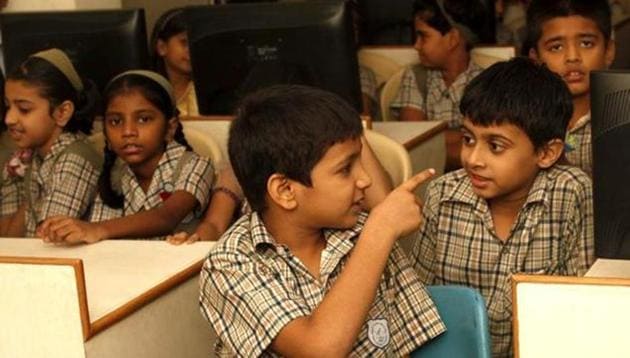
After the incident came to the fore the authorities assured action would be taken against the erring teachers and school management.
District education officer Aditya Narayan Mishra termed the act ‘inhumane.’ He said: “Action will be taken against school authorities after an inquiry is conducted over the incident. Based on the findings of the inquiry an FIR will be lodged against the school owner for the corporal punishment given to the children and affiliation of the school may also be cancelled.”
Ashok Nagar superintendent of police Santosh Singh Gaur said, “Police are investigating in the matter.”
The school’s owner Jagdish Barya could not be contacted for his comment despite repeated attempts.
Narrating the incident, a class 5 student Misha Sahu (name changed) said, “We had not gone to the school on Tuesday. When we reached the school on Wednesday, the teacher first scolded us and then took us to the terrace and made us squat in the ‘Murga’ posture (Holding one’s ear with the hands passing between the legs). The teacher also caned us.”
“Such punishments were meted out in the past also,” a local resident who lives in the neighbourhood said.
Though corporal punishment is strictly no-no in schools, the menace continues unabated in the state. According to a media report the Madhya Pradesh Commission for Protection of Child Rights (MPCPCR) received some 40 complaints of such incidents in past one year from both private and government-run schools.
The rules framed under the Right to Education (RTE) Act defines corporal punishment as physical or mental harassment.
The National Commission for Protection of Child Rights also issued a set of guidelines on corporal punishment and measures to end the practice.
The commission’s guidelines states that the responsibility of safeguarding children from punishment lies with teachers and management of the education institutions.
The Supreme Court too has banned corporal punishment in educational institutions. The Union ministry for women and child development too has issued a set of guidelines to ban corporal punishment.