E-Paper



Labs to monitor mercury levels around Rihand dam
A committee of the National Green Tribunal set up to assess the environmental and health impact of pollution has recommended setting up of three labs to monitor the mercury levels in and around the Rihand Sagar area.


A committee of the National Green Tribunal set up to assess the environmental and health impact of pollution has recommended setting up of three labs to monitor the mercury levels in and around the Rihand Sagar area.
The committee, in its latest report has recommended that the monitoring labs be set up at suitable locations in Singrauli area by the industries on ‘polluter pays principle’.
The committee has asked central pollution control board and state pollution control boards of Madhya Pradesh and Uttar Pradesh to guide and help the industries to identify the locations where these monitoring stations could be set up.
The report says, “…the levels of mercury in ambient and ground and surface water are reported to be one of the major problems in Singrauli area.
“Therefore, it is essential that at least three continuous …systems for mercury monitoring in the …air and surface and ground water should be installed at suitable locations in the Singrauli area by the industries on a ‘polluter pays principle’”.
The committee has also pointed out that the existing network of monitoring system air quality in both the districts — Singrauli in Madhya Pradesh and Sonbhadra in Uttar Pradesh — needs to be strengthened and expanded to get the representative air quality status of Singrauli area.
The committee’s final report was submitted to the principal bench of the National Green Tribunal in Delhi on Monday during a hearing of a case filed by advocate Ashwani Dubey.
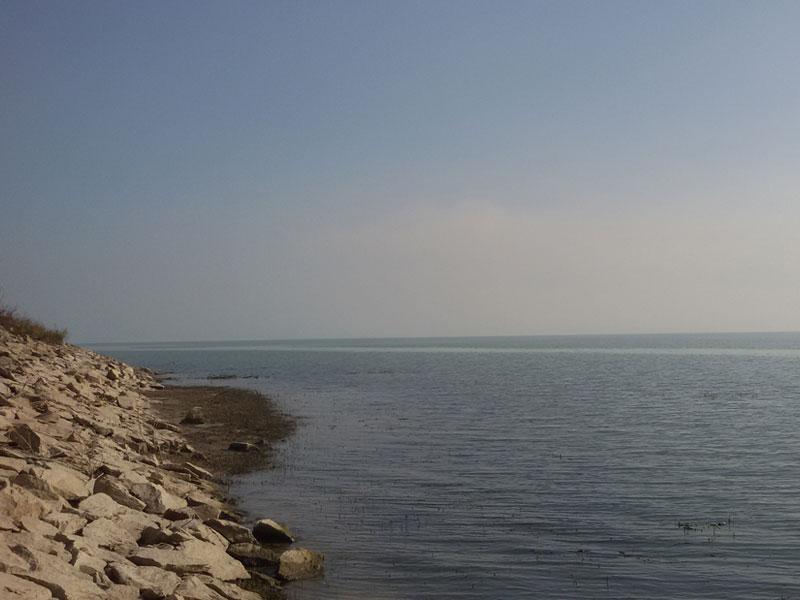
Rihand Dam built on the Rihand River— a tributary of the Son River — is located in Sonbhadra district of Uttar Pradesh. Its reservoir — Govind Ballabh Pant Sagar (Rihand) — spread over 466sqkm in Madhya Pradesh and Uttar Pradesh.
Speaking to HT over phone, Dubey said that the setting up the labs for continuous monitoring of would give authorities a clear idea about the extent of the mercury pollution in the Singrauli region.
“Such data will help authorities to lessen the mercury pollution in the area. A long term study is required to learn how high levels of mercury have affected the health of residents and to what extent,” he said.
Matter of concern
Places in and around Singrauli area where high concentration of mercury was found in groundwater samples that were collected
Jatipur
Jayant Colony
Khairahi
Kusmaha
Govindpur
MPCC Colony
Parsavar-Raja
Sirsoti, Dibulganj
Kirwani
Parasi
Harrahwa
Naktu
Chilkadand