E-Paper



Leopard electrocuted, three tiger deaths reported in Madhya Pradesh this month
Earlier this month, three tiger deaths were reported in Madhya Pradesh, and the population of tigers in the state has come down to 233 from 308 in 2015.

 Prefer HTon Google


A seven-year-old male leopard was electrocuted on Friday when it came in contact with a live electric wire set up by a farmer around his farm in Seoni district, a forest official said.
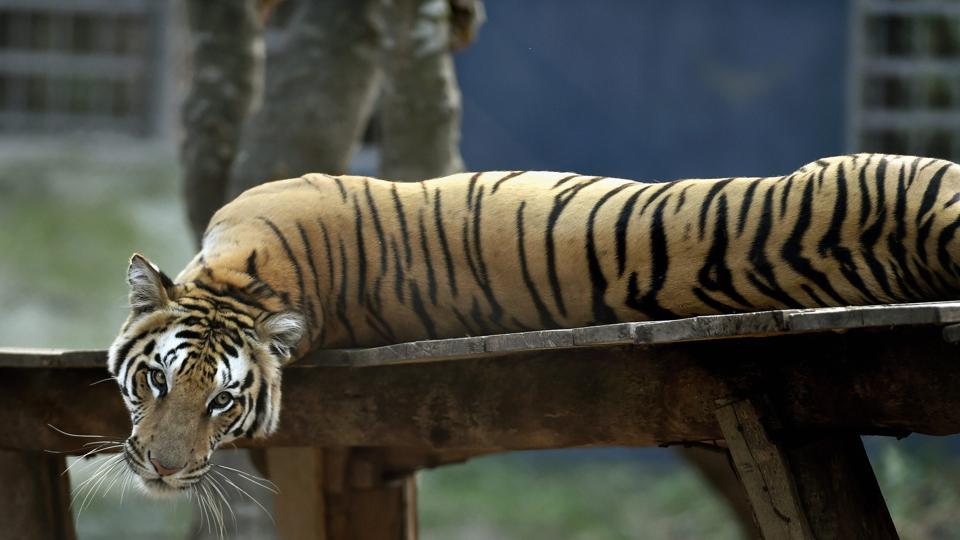
The farmer Raj Kumar (27) had set up the electric fence to protect his farm from wild animals in Zilpur village. He was arrested and a case lodged against him, TS Suliya, divisional forest officer (DFO) Seoni south, said.
Raj Kumar has been booked under the Wildlife Protection Act. Electrocution cases are also treated like poaching cases.
Building an electric fence is illegal. Villagers are also known to lay such wires for killing wild animals especially for their meat.
Forest officials have also found the carcass of a seven-year-old tigress in Satpura Tigre Reserve (STR) on Thursday.
The reserve’s field director L Krishnamurthy said the tigress bore no injury marks. “We have sent the samples of its internal organs to the animal forensic labs at Jabalpur, Sagar and one in Uttar Pradesh. Only after we get reports from the labs, we can say with certainty about the exact cause of its death.”
Krishnamurthy said the tigress was brought from Kanha Tiger reserve to the Satpura reserve in 2015.
Satpura tiger reserve deputy director A K Mishra said samples of a deer kill, spotted over a kilometre from the site where the tiger’s carcass was found, have also been sent to the forensic labs.
“Though it is unlikely that the tigress was poisoned, it is part of the protocol. So we have sent the samples of the deer kill to see if anyone had tried to poison it,” he said.
Earlier this month, three tiger deaths were reported in Madhya Pradesh. A tiger ostensibly killed a tigress in Kanha Tiger reserve’s Kisli range over a week ago. On January 13, a badly decomposed carcass of a tiger was found in Keolari range of south Seoni, with its paws missing. It was poisoned by poachers, who were later arrested by the forest department. On January 3, the carcass of another tiger was found inside a well in Balaghat district.
The population of tigers in the state has come down to 233 from 308 in 2015.