E-Paper



MP, Tamil Nadu record highest number of tiger deaths in 2014
With the death of 15 tigers in Madhya Pradesh in 2014, the state has recorded the highest tiger mortality in India along with Tamil Nadu. MP's tiger deaths amount to 22% of India's total tiger mortality.


With the death of 15 tigers in Madhya Pradesh in 2014, the state has recorded the highest tiger mortality in India along with Tamil Nadu.

This is not good news for the state, especially at a time when MP government is claiming to be making efforts to reclaim the 'tiger state' tag, which it lost to Karnataka in 2010. On December 24, MP tourism minister Surendra Patwa had admitted that losing the tag had affected the state's tourism sector to some extent.
MP's tiger deaths amount to 22% of India's total tiger mortality this year, reveals the data of National Tiger Conservation Authority (NTCA).
Overall, 2014 has not been a good year for big cats in MP. As compared to nine tiger deaths in 2013, 15 tigers have died in the state because of various reasons ranging from natural death, infighting, radio-collar infection and poaching, in 2014.
According to the figures of Tigernet, the official database on tiger mortality in India, which is maintained by NTCA, of the total 64 tiger deaths reported in India in 2014, 14 are from MP. With the death of a white tiger in Indore recently, the toll has reached 15.
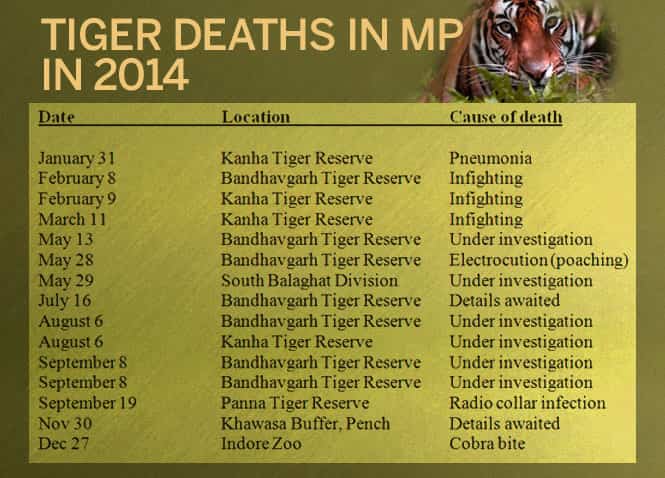
Of the 15 tiger deaths, six have been reported from Bandhavgarh alone. Over the years, many tigers have died in Bandhavgarh, mostly due to territorial fights and poaching, leaving wildlife experts and activists worried about the future of the animals, in what is considered among the safest sanctuaries for tigers in India. This has prompted the NTCA to ask its regional office in Nagpur to look into the cause of growing tiger deaths in Bandhavgarh.
MP's chief wildlife warden Narendra Kumar attributes the highest tiger mortality due to natural reasons and territorial fights. "Apart from these reasons, there have been some cases like poaching by electrocution, death due to radio collar infection and so on, which are being investigated," he said.