E-Paper



Sewage from residential areas flowing into Bhopal Lake, admits CM
Chief minister Shivraj Singh Chouhan on Tuesday admitted that sewage from residential areas were flowing directly into the Upper Lake, Bhopal, which was also a major source of drinking water.


Chief minister Shivraj Singh Chouhan on Tuesday admitted that sewage from residential areas were flowing directly into the Upper Lake, Bhopal, which was also a major source of drinking water.
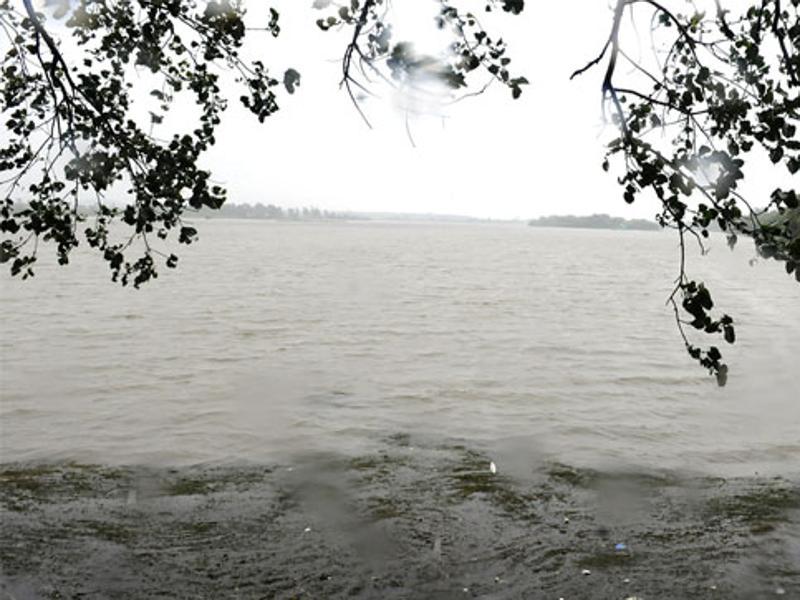
Chouhan, in a written reply to a question raised by MLA Vishwas Sarang in the state legislative assembly, admitted that sewage was flowing into the Upper Lake, a wetland of international importance, from Nehru Nagar nullah, Naya Basera, Shireer nullah, Khanugoan, Halalpura, Rahul Nagar, Sanjay Nagar, Rajendra Nagar and Bairagarh nullah.
Chouhan has also admitted in the reply that of the four sewage treatment plants — constructed in 2005 with Rs 13.90 crore under the Bhoj Wetland Project — three were not working to the full capacity.
The lake not only is the lifeline of Bhopal, but is also considered the largest city-based lake in the country, spread over 35 sq km, with a shoreline of over 52 km and catchment area of 362 sq km.
Over years, there has been a lot of rhetoric on the conservation and protection of the Upper Lake, but no comprehensive measures have been taken for its conservation.
There has also been an inordinate delay in making the master plan for the lake public. The master plan was supposed to be made public during the tenure of the previous mayor. According to sources, the report has already been submitted to the state government by the Gujarat-based Centre for Environmental Planning and Technology (CEPT) University, which was commissioned to prepare it.
On Tuesday, the NGT ordered the state government to submit the CEPT report on December 14. The report will be taken up during the next hearing in the case.
Last year, after getting rapped by NGT, the Bhopal Municipal Corporation finally submitted the summary of the detailed project report (DPR) for conservation, management and development of Upper Lake to NGT.
The report makes it clear that the Upper Lake is slowly dying.