
 E-Paper



The Way We Were: Cafes, art shows, a hug and movie dates from the ’70s
Asking her out in the age of bouffants and drainpipe trousers was no simple affair. But films from the period paint an innocent age in the backdrop of the big city.


I’m not sure what the dating scene is like at the moment, but how great can it be in the middle of a raging pandemic? That did set me thinking, though — how did middle-class people date in our metros in the 1970s? I’m looking at the ’70s because if the ’60s was a defining decade for the West, the ’70s was our breakout period.
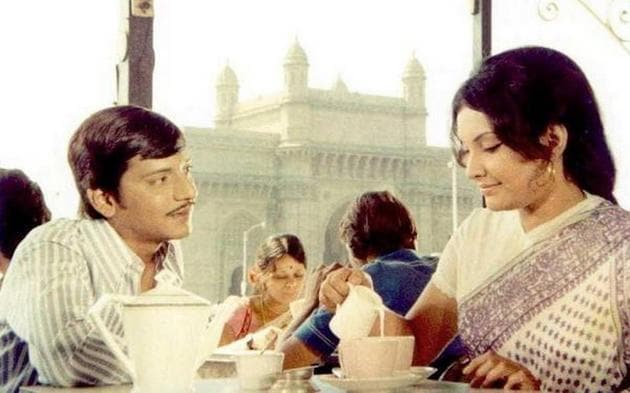
To find some answers, I turned to the lovely, middle-of-the-road, slice-of-life films of that era by directors such as Basu Chatterjee and Sai Paranjape. Apart from being utterly delightful, Chatterjee’s movies like Rajnigandha (1974) and Chhoti Si Baat (1976) are remarkable for their portrayal of unassuming young working women who fall in love in the bustling metropolises of Bombay and Delhi (“bustling” of course being a relative term; the scenes feel positively gentle compared to the way things are today).
Rajnigandha is set in both Delhi and Bombay — Deepa (Vidya Sinha) is doing a PhD in Delhi and travels to Bombay to interview for a lecturer’s post at Wadia College. In Delhi, she has a boyfriend named Sanjay (Amol Palekar). Things get complicated when she runs into an old flame, Navin (Dinesh Thakur), while in Bombay.
While together in Delhi, Deepa and Sanjay go to evening shows of movies or get a coffee at a coffee house, followed by a visit to India Gate. (It’s hard to think of anyone suggesting a date at India Gate today.)
In Chhoti Si Baat, set in Mumbai, Prabha (Vidya Sinha) wears floral-print saris with white accessories (handbag and sandals) and big hoop earrings, and presents a pretty picture of a young woman working with a private company (as opposed to a government office, school, college or hospital). Arun (Amol Palekar) is deeply enamoured of Prabha and his dream date with her is a film at Eros Cinema followed by tea at café Gaylord. But when he does pluck up the courage to invite her out, it’s for lunch at Samovar, the iconic Bombay restaurant at the Jehangir Art Gallery (that, sadly, shut in 2015). The combination of Eros and Gaylord would likely have been too expensive for the young fellow, while Samovar’s menu was designed for the impoverished artist.
Sai Paranjape’s two Delhi films, Sparsh (1980) and Chashme Buddoor (1981), also feature charming dates. In Sparsh, the visually challenged Anirudh (Naseeruddin Shah) invites Kavita (Shabana Azmi), who volunteers at his blind school, out for a Chinese meal. They go to a restaurant with dragons on the walls; there’s a live band and dancing. They order sweet-corn soup and Kavita remarks that the restaurant’s spring rolls are very famous. The date ends in a bit of a disaster because the waiter presents the bill to Kavita, enraging Anirudh.
In Chashme Buddoor, the studious Siddharth (Farooq Shaikh) woos Neha (Deepti Naval) by taking her to an open-air restaurant where they even develop a routine — he always has a coffee and she a tutti-frutti ice cream.
None of these dates features alcohol of any kind. Though the 1970s were the time to disco, our hero and heroine are never seen within a hundred feet of one. A movie, coffee or a meal at a sit-down restaurant made up the entirety of their dating world.
Our lovebirds travelled by bus, local train (if in Bombay), scooter (as the auto was called in Delhi then) and sometimes taxi. Or they had motorbikes of their own (Siddharth in Chashme Buddoor). The girls wore saris or churidar-kameezes (and sometimes bell-bottoms with blouses). The boys wore shirts over bell-bottoms (though the hip, bearded, chain-smoking Navin in Rajnigandha, who worked in an ad agency, often wore a kurta over drainpipe trousers). As for physical intimacy, it was restricted to holding hands or, at the most, a hug or two.
A movie and dinner might still be a common enough date, but that’s where any resemblance to its simple, innocent 40-year-old ancestor ends!


Get more updates from Bollywood, Taylor Swift, Hollywood, Music and Web Series along with Latest Entertainment News at Hindustan Times.


