
 E-Paper



Amitav Ghosh: “Terraforming is happening now”
On his new book, ‘Wild Fictions’, environmental disasters, migration, and the truth within speculative fiction

 Prefer HTon Google


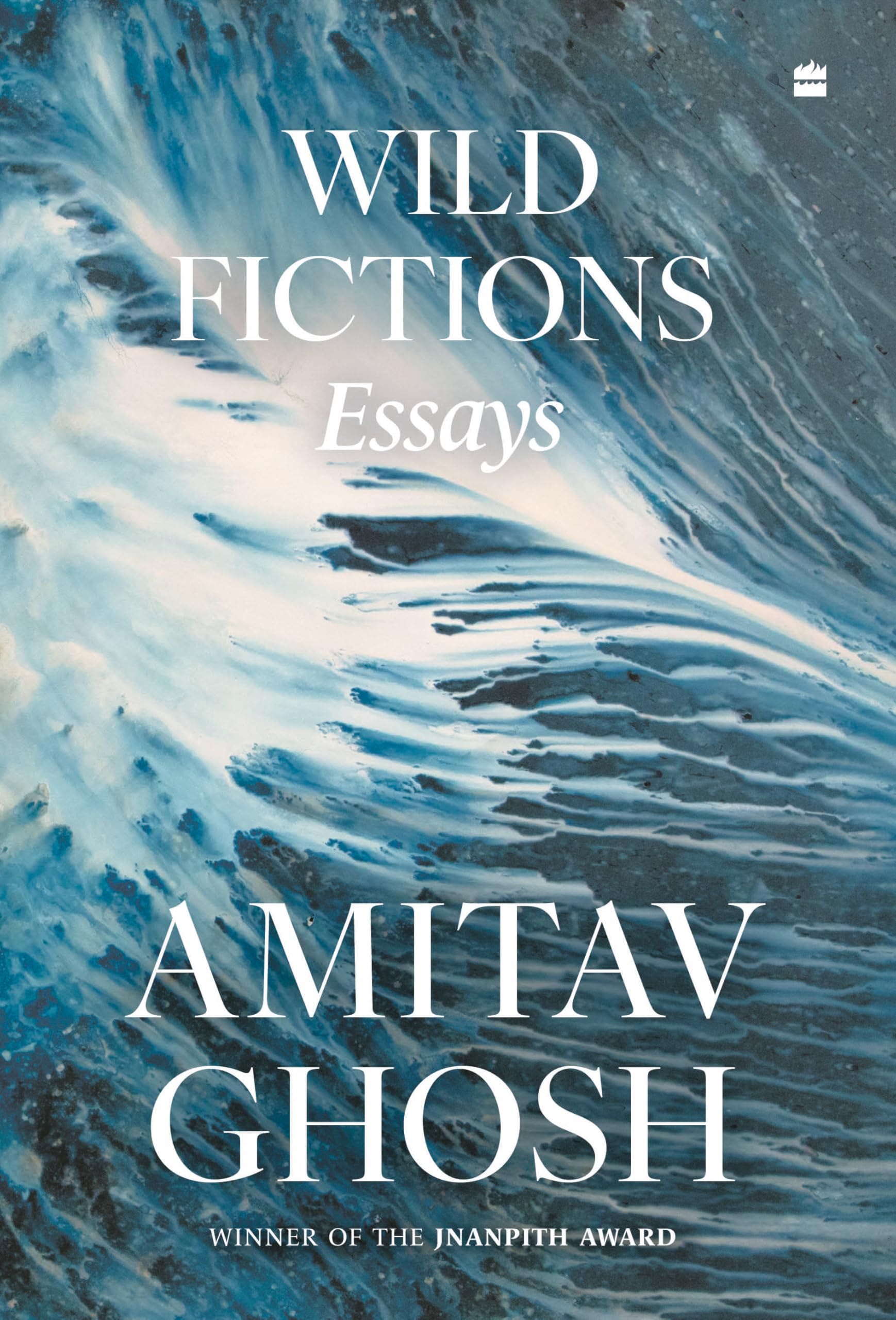
How did you curate the essays/correspondence/presentations that make up Wild Fictions? You mention how ‘bearing witness’ was a crucial thread that brought these works together. Please elaborate.
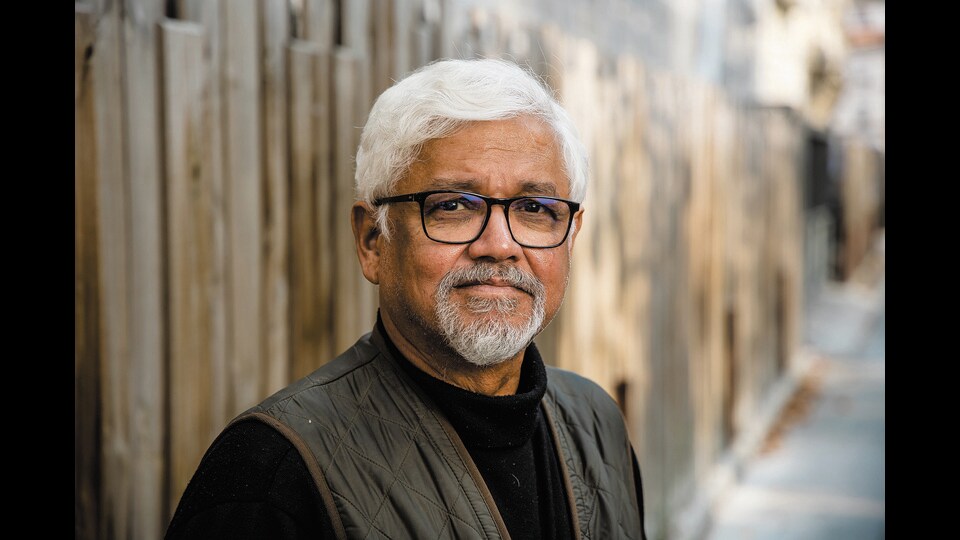
The process of curating Wild Fictions was deeply reflective, almost like sifting through sediments of time to uncover fragments that resonate with the present. The essays, correspondence, and presentations were not chosen arbitrarily; bearing witness to the events of our epoch was an important connecting thread. Many of the essays in the collection grew out of the imperative to confront the realities of our age.
You note how Hurricane Katrina was not only an environmental disaster but a “catastrophic convergence”, in Christian Parenti’s words, informed by social and historical factors. Would you say that the recent LA wildfires are also an example of this, in particular of terraforming?
Hurricane Katrina was indeed a “catastrophic convergence”, a moment where historical inequities, environmental degradation, and systemic neglect collided with devastating consequences. The recent wildfires in Los Angeles, too, can be seen through this lens. They are not merely natural disasters but the result of human actions — urban sprawl, the pursuit of profit by real estate developers, resistance to efforts to regulate building in risk-prone areas, and so on. Terraforming, the reshaping of the earth, is often thought of as a futuristic concept, but it is happening now, in real time. All of this, intersecting with intensifying climate impacts, created the conditions for the current catastrophe.
Another thematic concern is migration. What is the “global citizenry of desire” which, along with shared histories of colonial rule, is shaping contemporary migratory flows from the Global South to the North?
By “global citizenry of desire” I mean the homogenization of consumerist aspirations, hopes, and dreams. Today, almost everybody in the world aspires to buy the same goods, and participate in the same lifestyles. People from the Global South are often driven to the Global North not just by economic necessity but also by these desires and aspirations but their journeys often end in profound disappointment.
Writing on lascars aboard marine vessels you state how this diverse ‘cosmopolitan’ group was essentially a part of a ‘globalized workspace’, possibly the first of its kind. How has the research surrounding this heterogenous group which spoke different languages and came from vastly different geographical locations informed your fictional works, in particular The Ibis Trilogy?
The lascars, those seafarers who manned the ships of empire, were among the first globalized workers. They came from diverse regions — Bengal, Malaya, East Africa, Yemen — and spoke a babel of languages, yet they found ways to communicate and coexist. Their lives were a microcosm of the interconnected world that colonialism both created and exploited. Researching their histories profoundly influenced the Ibis trilogy. These men were not just footnotes in history; they were active participants in the making of the modern world. Their stories allowed me to explore themes of displacement, resilience, and hybridity, which are central to the trilogy. They reminded me that globalization is not a new phenomenon but has deep historical roots.
In The Great Derangement: Climate Change and the Unthinkable you laid out your concerns with the genre of science fiction and its subsets such as climate fiction, which you saw as limiting in their scope of literary representation. Have your opinions on the subject changed? How do you view works attributed to this genre that challenge narrative conventions when it comes to discourses surrounding gender, race, geopolitical inequalities and/or climate change?
When I wrote The Great Derangement, I expressed concerns about the limitations of so-called ‘serious fiction’ in addressing the complexities of climate change. Unfortunately, ‘serious’ or mainstream fiction can sometimes overlook the lived realities of the present because they focus entirely on individuals and their inner lives. Paradoxically, certain kinds of science fiction, speculative fiction and fantasy, are actually better indicators of what is happening in the real world.
One of your essays mentions how history may be a limiting condition of the novelist’s imagination even as it lays the foundation for characters and their predicaments which drive the narratives forward. What does this mean for works of historical fiction and how do you navigate this in your own fiction?
History is both a foundation and a constraint for the novelist. It provides the raw material for characters and narratives, but it can also limit the imagination by imposing the weight of what is known. In writing historical fiction, one must navigate this tension carefully. For me, the challenge is to remain faithful to the historical record while allowing the imagination to breathe life into the past. This often involves filling in the gaps, imagining the inner lives of characters, and exploring the silences in the archives. History may be a limiting condition, but it is also a source of endless possibility.
There are two accounts of Bengali men who participated in the First World War in the ‘Witnesses’ section of the book. Were there more works from other local sources that you encountered but haven’t written in detail about?
The two accounts of Bengali men in the First World War were particularly striking because they offered glimpses into some extraordinary and unexpected experiences. One of the men, Sisir Sarbhadikari, actually witnessed the Armenian genocide. I am sure there are many other yet undiscovered accounts of such experiences written by Indian sepoys.
Who are some of the South Asian authors of literary fiction you feel have been particularly prescient in their works? You mention Santanu Das. Are there any other literary critics whose works you would recommend to scholars?
There are many South Asian authors whose works I admire for their prescience and depth. Arundhati Roy, for instance, has consistently challenged the boundaries of fiction and non-fiction, addressing issues of social justice and environmental degradation. As for literary criticism, there are so many important voices from our part of the world that it would be difficult to compile a comprehensive list. But I would be remiss if I did not mention the two brilliant literary scholars, Sukanta and Supriya Chaudhuri, to whom the book is dedicated. Not only have they made important contributions to literary criticism, they have also nurtured and formed several generations of outstanding literary scholars (including Santanu Das).
What are you currently working on?
I am working on a novel that should be finished soon.
Simar Bhasin is an independent journalist.


