
 E-Paper



Biswapati Sarkar, writer: ‘Most young people today don’t connect with Bollywood’
The co-founder of Posham Pa Pictures and writer of shows like TVF Pitchers, Jadugar, Permanent Roommates and many others talks about creating viral content, working with Shah Rukh Khan and struggling with brand managers

 Prefer HTon Google


When and how did you first think of becoming a writer?

I would say the fantasy was always there. When you grow up in a small town, you don’t know what exactly it is to be a professional writer. But I used to read a lot. I spent all my time at a government library where I used to read books like Alice in Wonderland, Famous Five, books by Tom Hardy, and a few literary books too. But it was only after going to IIT that I learnt about writing professionally and about the opportunities it offered. That’s where I started writing plays. At that time, most of the plays that were staged in college were not contemporary. So when I wrote a play, a lot of people attended. It was a 1000-seater auditorium and there were people sitting on the stairs as well. They were responding to the jokes and about seventy percent of the jokes did land! As a first-time writer, it was a big deal for me. In 2010-11, YouTube had just started becoming a part of popular culture and some of my seniors were talking about starting a channel. In 2011, I came down to Bombay to explore if I could actually make a career as a writer.
It was an interesting time because there were very few or no references for sketch comedy at the time. There was SNL or there were some news articles by Onion and then a vague reference was The Great Indian Comedy Show. So there was this thought that why don’t we do sketches? So one of those nights, I wrote a sketch called Rowdies (A spoof on Roadies). That video went insanely viral. It was probably one of India’s first scripted virals. At that time, there was no paid promotion. When we put it up, our ambition was to get 50,000 views and guess what, it got 1 million views. It was unthinkable. Imagine, this was a time when there was no ‘share’ button on YouTube – people used to share the links on email! That was probably when my parents too began thinking that I could make something of what I had chosen to do. Nowadays, of course, YouTube is a legit career option but this was a very different world. That’s when writing graduated, for me, from being a mere fantasy into a genuine career option.
You have been one of the core members of the TVF team and TVF was one of the foremost channels with original YouTube content in India. Was the company’s journey in terms of the direction it took with content well planned from the beginning?
Well, I’d say, there was a vision from the beginning that we wanted to make something for the youth of India. Because the youth of India was not represented in any mainstream content at the time. For instance, when Rowdies came out and became a rage, there was also this kind of a fear because we were making fun of something so mainstream and popular. But you know, I always found what they were talking stupidly. And not just me, my friends used to laugh at them as well. So I was sure that there were people in other colleges who also found it stupid but nobody was talking about it.
Many people talk about making content for the “Indian youth”. What really is the sensibility of the Indian youth that TVF got so right?
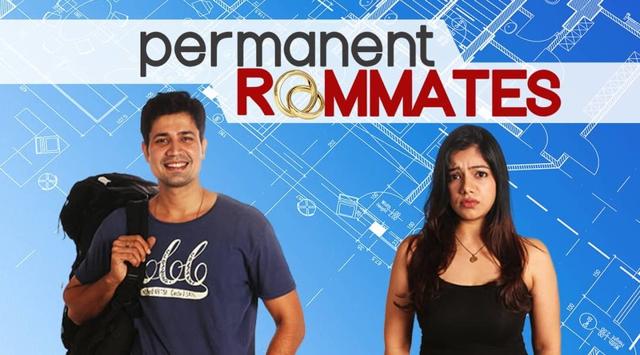
It’s very difficult to answer that question because 60% of India is youth and we’re talking about around 80 crore people. So it’s impossible that anyone can cater to all of them because it’s such a diverse audience. I think the majority of the Indian youth needs representation of some kind and by that I mean that the experiences and the problems that they have to deal with need to be presented. Some regional films in India have done that really well but Hindi cinema is so far behind. I think regional films are successful because they understand the audience better. The young people portrayed in Bollywood films do not exist in reality. That’s a fantasy. Most young people today don’t connect with Bollywood films because those films don’t surprise them anymore. What they want is freshness. When we made Permanent Roommates, the idea was to treat live-in relationships in a casual, everyday way – the way they actually unfold in this country. When we did Pitchers, it was because startups are a subject that a large section of the Indian youth is interested in. Similarly, we did many such shows based on the several worlds that the youth inhabit and are all around us but were never really shown in mainstream media. I think that was our idea and we stuck to it and that’s how we tried to see and then portray the Indian youth. Earlier days, most of the people I met, those who wrote and made Hindi shows, did not actually watch Hindi shows. I think everyone was doing it for the money. The kind of things that used to be discussed in meetings went like this: “Baroda mein athra saal ki Pinky hai. Will she relate to this story?” I used to say, “Man, I don’t know how this Pinky from Baroda thinks, but Biswapati from Rourkela can relate to this story and that’s why I think some others will as well.” After a point, you can’t take opinions of 100 crore people, you have to do what you think is right.
How much of a role has IIT played in your journey?
I think a huge one. I studied engineering because, for someone like me, engineering and medicine were the only viable careers I knew of. 10th, 12th and then engineering was the basic thing to do. In college, I met so many smart people and suddenly got exposed to so many ideas. I must have seen around 3000 movies in those five years at IIT. That’s where I got acquainted with world cinema.
TVF Pitchers is the first piece of long-form branded content in India. Tell me about it.
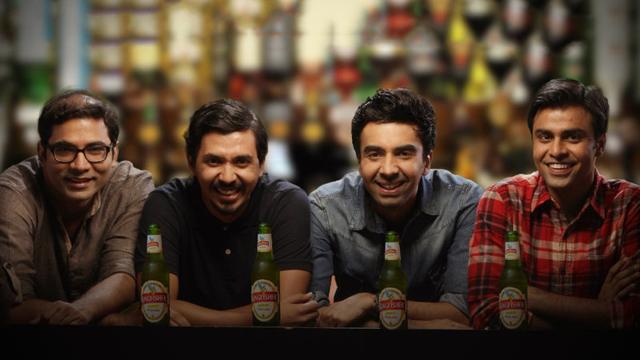
Arunab (Kumar) had discussed an idea with Amit (Golani). They had gone to Bangalore and they saw some guys discussing startups over a beer and they were talking about pitching some ideas. That’s where the name Pitchers came from. It was always a story of four people. I remember the first briefing where we cracked how to integrate Kingfisher as a brand into the show. I said, what if the character is drunk and says, “Tu beer hai… tu beer hai, bhend****” The scene eventually got very popular. The way we went about Pitchers is that we wrote two episodes and we shot them; then we wrote two more and shot them; and then the finale was written and shot. At that time, production was not quite our strength and we figured a way, thankfully, to work with the budgets we had.
Do you think the quality of branded content in India has grown worse over the last seven years? Has it gotten to where it could have after that great start with Pitchers?
No, I don’t think it is where it could have been. And I think it’s largely due to the fact that brand managers are usually scared. They want to save their jobs and rather than thinking, “Let’s do something crazy!” their first priority is damage control. This is the budget; this is the logo that needs to increase in size – that’s all they want. At the end of the day, for them, it is a screen shot on their PPT. They are not interested beyond that. I don’t think they really understand the potential of branded content. Also, I think most of them see it differently. They want the brand name to be said thrice, for instance, without understanding that it puts off the audience and that maybe it’s better to say it once and say it well. Even from a creator’s point of view, I’d say if brands are going to dictate the writing so much then you’d rather get dictated to by Netflix or some other OTT, who at least understand the business of content.
One of my favourite series of digital stories in India is Barely Speaking with Arnub. What made you write that and then act in it?
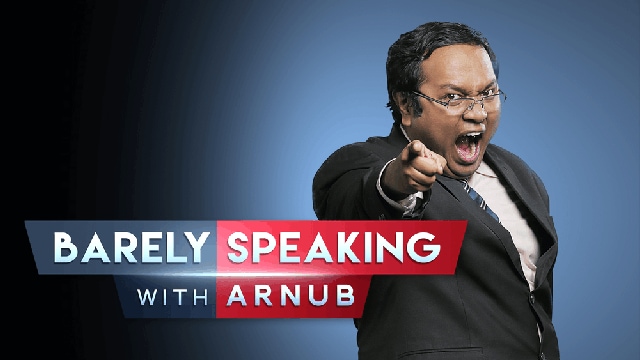
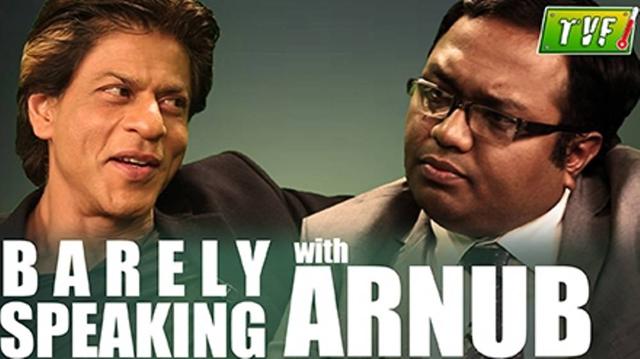
We did this video called Bollywood Aam Aadmi Party, which became a rage. I had written it and the actor who was supposed to play Arnub in it got a paid shoot on the same day. So Amit (Golani), who was directing it told me that I should play Arnub. I was quite apprehensive but eventually did it and that video became very popular. Then I think Happy New Year was coming out and Red Chillies had contacted us saying that we could get one hour with Shah Rukh Khan if we wanted to do something. The idea was that I’d write something and then we improvise on that set. Shah Rukh was late to the shoot – eight hours late – and I was a little pissed about it. But then when he walked in, everything changed. I was in awe of him and still absorbing the fact that I was sitting across Shah Rukh Khan – THE Shah Rukh Khan! And let me tell you, he is a such a nice guy! I have not met one person in my life who has met him and has had bad things to say about him. Within five minutes, he was a co-actor and very, very cooperative. I remember, when we started shooting, I fumbled in the first line because I was shooting with Shah Rukh Khan. Someone behind the camera shouted, “It’s okay, Bisso. He is just human.” So Shah Rukh turns around and says, “Now you’re pushing it.” That’s it. The ice was broken and I remember, at one point, he delivered a better punch line that the one I had written. That’s when I stopped looking at the script and we just improvised. After that video, it kind of became an idea that we should do it with more celebrities and I was increasingly reluctant because it’s very mean, it’s rude and I hate insulting people like that. But then, as you know, it happened!
What’s your process of writing?
You know, even when I meet younger writers, the only thing I tell them is stop thinking of this as art and think of it as work. When it comes to writing shows, I think it makes sense to develop a season arc. However, I am not a big fan of character sketches. In fact, I actively tell people not to do character sketches. I recently had a fight with someone who studied in film school who was making a sketch where he was writing everything about the character’s past, his father, his father’s father... How is that relevant? A character exists within the pages of the story. I don’t need to know his childhood trauma in advance, for instance. If, while writing the story, at some point, I feel that giving this character a particular childhood trauma will serve a purpose in the story then I would do it.
How did you handle your failures?
I think one particular thing that comes to mind is Bisht Please. This was in 2017. Nidhi (Bisht) was doing this show and I was really excited about the idea but unfortunately the show didn’t do well. That kind of broke me for two or three weeks because this event was after a string of successes. But then you sit and analyse what went wrong and you realise a few things -- sometimes writers have knee-jerk reactions like, “The audience didn’t get it!” and stuff like that. But I think that’s not the best way to process it. As they say in Hindi, this is a kind of ‘sadhana’ and beyond a point, the results don’t say much at all. As a writer, your only goal should be to tell the story honestly. We are part of a generation that is trying to do global stuff. We don’t have any mentors; we don’t have anything to learn from at least in our proximity, so we are bound to make mistakes.
What is your greatest strength as a writer?
I would say probably sincerity. That’s the only thing.
What’s your biggest limitation as a writer?
I am wondering which one to start with. I would say I am slightly better now but I need to be more disciplined, giving work definite hours every day. Then I would say procrastination. I used to be very jealous when I was starting out but now I am jealous in a very good way, I think. I genuinely call up writers of the films and shows I like and buy them lunch just to understand their process – I have made some very good friends doing this! Then, I would say I want to read more than I do right now. A thing I want to do is travel within India and pickup dialects that are spoken in different parts of the country. Some writers are very good at writing how they speak Hindi in Goa for instance or how they speak in a particular district in UP. I am not very good at that.
Pick a favourite from your own work.
I would say it would be between Pitchers and Jadugar. I think Jadugar because it was such a mammoth story that we pulled out during the lockdown; and Pitchers because I think, at that point, I was not sure. Had I not acted in Arnub, I would have enjoyed it a lot more. But that remains a crowd favourite.
Which films, shows and books have influenced you as a writer?
William Goldman, who has written films like Misery. When I read his books on cinema, I can relate to his world a lot. Kurosawa’s work I can watch any day. I love the show, The Wire. In comedy, I love Seinfeld. Then, I love books by Stephen King. There is so much good work happening. Of course, the bad stuff outnumbers the good stuff. But because of the Internet, you get access to the good stuff as well.
If you had to describe in a few words your journey so far, what would you say?
I have tremendous gratitude. Writing was my fantasy. To be a writer in this country and to be able to make money from it is a privilege for sure. Today, I am in a position where I can take two months off and explore a subject if I want to. I have a loving family; I am married to a great woman; I work with excellent people – I think I have a lot of gratitude.
Mihir Chitre is the author of two books of poetry, ‘School of Age’ and ‘Hyphenated’. He is the brain behind the advertising campaigns ‘#LaughAtDeath’ and ‘#HarBhashaEqual’ and has made the short film ‘Hello Brick Road’.


