
 E-Paper



Book Box: Hack Your Financial Life
Master the technicals of money, teach your children finance and understand the psychology of money with these 5 books. And meet Gautam Baid, author, The Joys of Compounding

 Prefer HTon Google


“What is your first memory of money?” my journalist friend asks me.
Her question takes me by surprise. I need to think. I watch a kingfisher flap its wings and glide away in the direction of white veshti-clad fishermen, heaving at their fishing nets. It is early December, and we are on a verandah on the Kochi backwaters, talking personal finance, with our book club.


I shift decades into the past and suddenly I see Soldiers of God, a slim 4-page booklet, with parables of Jesus and other stories. I see myself begging my mother for 25 paise to buy a copy of the weekly issue. She gives in, but grudgingly. “This is missionary propaganda, why pay for it," she says.
And therein lies the rub with our money - it is numbers, but managing these numbers is so much about decision making, of determining the worthiness of a cause and so much about psychology.
Read about managing money, on this first day of August, as you finish toting up your totals for the tax people. August is a good time to add these five fascinating books to your to-be-read list, one book a month, to fortify your financial fitness.
Book 1 of 5: Money and the Mind
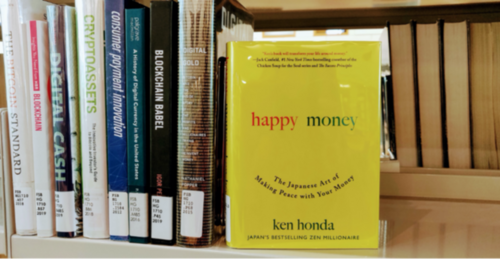
I used to be apologetic and awkward about money. And then I signed up for a Money and EQ workshop, where we were all made to read Happy Money: The Japanese Art of Making Peace with Your Money. Author Ken Honda is a Japanese billionaire and he has a positivity about money that is infectious. Be grateful for the money you have earned and appreciate the ways it has served you, he says. ‘Happy money’ is acquired through creating something of value. But if you have got your money by exploiting other people, it will probably cause you stress, he warns. If you enjoy this, a perfect companion book. is the bestselling The Psychology of Money.
Book 2 of 5: Money and Tech

Keep up with the latest money tech, with this contrarian look at big money. You may think your life is super convenient, as you swipe Gpay on your smartphone, but you’re really in the money version of the movie Matrix. Out of sight are the creeping controls, that map your every money move. Brett Scott writes persuasively, as he makes a case for cash and conventional monetary systems. Cloud Money: Cash, Cards, Crypto and the War for Our Wallets is full of fascinating anecdotes - from Canary Wharf to cannabis conventions! Also read Money Land: The Inside Story on Crooks and Kleptocrats Who Rule The World, a beautifully written and meticulously researched book on financial frauds by journalist Oliver Bullough.
Book 3 of 5: Money and Neuroscience
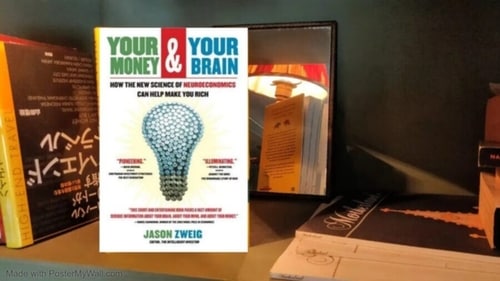
Behavioural economics is full of fascinating insights into our cognitive biases in the matter of money. We hold onto loss aversion, rating our possessions way higher than the market does. We are susceptible to ‘framing’ and make irrational choices depending on how the data is presented to us and so on. In Your Money and Your Brain, Zweig draws on all this research, using psychology, neuroscience, and economics to show us why we make wrong investment decisions and how we may rectify our cognitive biases. Also read Dollars and Sense: Money Mishaps and How to Avoid Them, on the same subject by behavioural economics guru, Dan Ariely.
Book 4 of 5: Practical Money

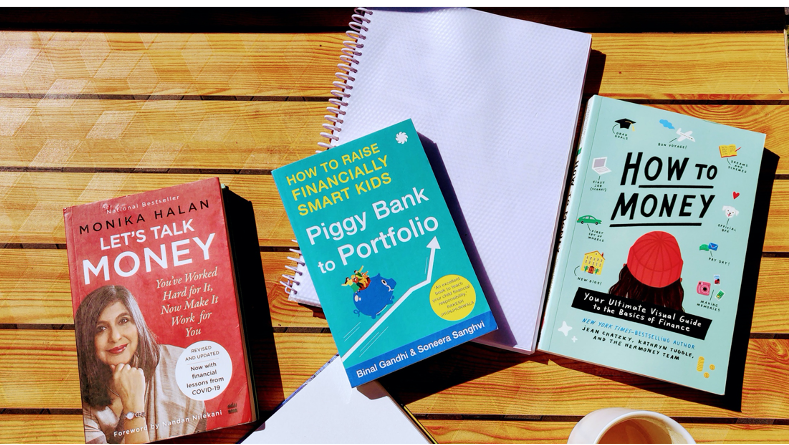
If you read just one book on personal finance, read Let’s Talk Money. Financial journalist Monika Halan melds technical expertise with an easy conversational style. “You keep hearing the Suits on TV talk about asset classes, portfolios, underlying deficit, interest rate corridors and get really intimidated. Get this straight. It is in the interests of the financial sector to keep things tough for you,” she declares. From how to choose the right medical insurance to general guidelines on budgeting, saving and spending, this book is a goldmine of advice.
Book 5 of 5: Money and Kids

If you teach your children finance, you are helping them to be successful and happy adults. Piggy Bank to Portfolio is the perfect starting point for this, with its mix of personal anecdotes, advice and practical suggestions on piggy banks and pocket money. Pain points like peer pressure and how to say no, are nicely covered. Buy this book if your children are tiny, and if you haven’t yet, buy it for your teenagers. For more, start with the Bunny books on money and follow this with Rich Dad, Poor Dad.
Moving onto a golden principle, that of compounding - meet Gautam Baid, author of The Joys of Compounding. Baid tells us all successful investors have one thing in common - “They just love to read all the time”. Edited excerpts of our email conversation.
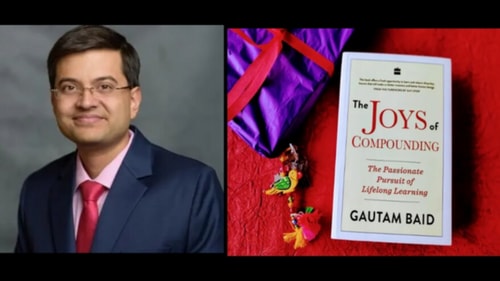
When did you start reading?
I was not much into reading in my childhood years, apart from my school textbooks. I began taking an active interest in reading for personal development and wisdom after learning about Warren Buffett and Charlie Munger in late 2013.
How important is it for an investor to read?
All successful investors have a common habit. They just love to read all the time. Warren Buffett and Charlie Munger estimate that they spend 80% of their day reading or thinking about what they have read. Therein lies the secret to becoming smarter. The way to achieve success in life is to learn constantly. And the best way to learn is to read, and to do so effectively. When someone asked Jim Rogers what was the best advice he ever got, he said it was the advice he received from an old man on an airplane: Read everything.
What book have you most given as a gift, apart from your own?
The Psychology of Money by Morgan Housel
What books have influenced you most?
1) Poor Charlie’s Almanack – A life-changing book for investors and non-investors alike
2) Seeking Wisdom by Peter Bevelin and More Than You Know by Michael Mauboussin – The finest books I have ever read on multidisciplinary thinking
3) All I Want To Know Is Where I’m Going To Die So I’ll Never Go There by Peter Bevelin – The best book ever written on the theme of inversion
And I would print out the Buffett Partnership letters and the Berkshire Hathaway letters separately.
Having read and learnt the core principles from the best books, I now spend more time re-reading my favourite books rather than reading new books.
What format do you prefer to read on?
Wherever I go, a book is not far behind. It might be on my phone or a physical copy, but a book is always close by. I love printed books. I just find something so calming and peaceful about reading a paperback or hardcover book. During my initial years in America, when I had to commute long distances to reach my workplace, I used to read books on my seat in the bus to ensure that not a single minute was wasted during my learning and development phase.
How long did it take you to write your book?
It took me around 1,500 hours in 2017 and 2018. I used to devote 3 hours regularly every day in the evening.
What is a review of your book you remember the most?
I received a hand-written letter from Warren Buffett in which he complimented my book after reading the manuscript.
Finally, tell us about a time you lost money.
There have been many small losses incurred in the course of my investing journey. What is important is that we learn from our mistakes and improve. I lost money on a regional FMCG company in 2016 because of a behavioural bias known as “liking bias”. In investing, always consciously separate the stock from the personality of the individual at the helm of the company. Concentrate on the merits and economics of the underlying business. Look at the facts and assess the situation objectively.
This will save you from making many costly mistakes. I wish I knew about these behavioural lessons before I made my investment in the stock of Virat Crane Industries in 2016. I felt emotionally attached to its founder, Grandhi Subba Rao, after I read about his life story of hardship, struggle, and perseverance. My strong liking bias for the promoter in turn drove confirmation bias, and I began to justify my entry into the stock by considering only the positive points and completely sidelining various negative aspects, such as low margins and related-party transactions, even though I was aware of them. Eventually, the fundamentals caught up with the stock and I exited it at a loss.
On that thought-provoking note, it’s a wrap for this week. And in the meantime, I’d love to hear about your favourite finance books.
Until then, Happy Reading!
Sonya Dutta Choudhury is a Mumbai-based journalist and the founder of Sonya’s Book Box, a bespoke book service. Each week, she brings you specially curated books to give you an immersive understanding of people and places. If you have any reading recommendations or suggestions, write to her at sonyasbookbox@gmail.com
The views expressed are personal


