
 E-Paper



Bora Chung: “We Asians are proud of our ghosts”
The author of The Midnight Timetable on her writing process, trusting her translator completely, and the jump scares in her stories

 Prefer HTon Google


How did The Midnight Timetable come about?
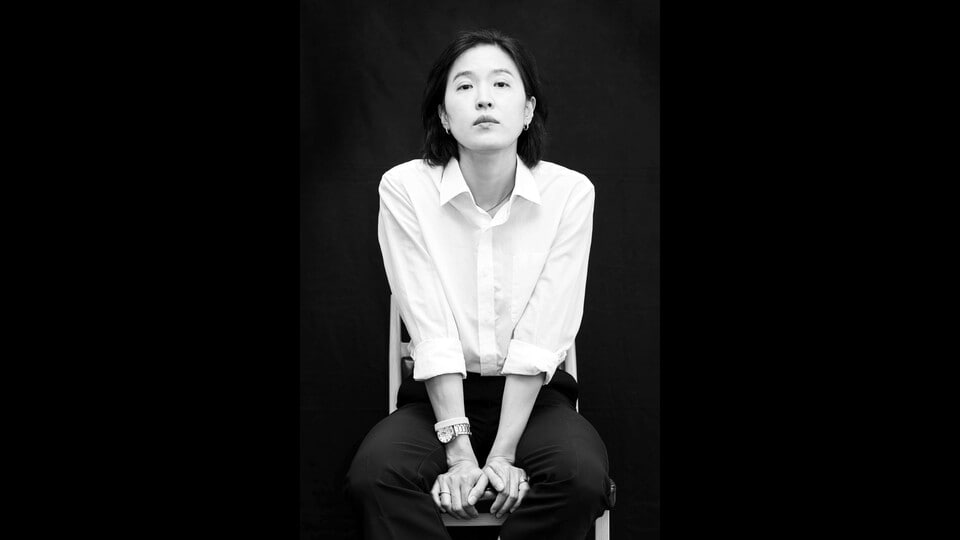
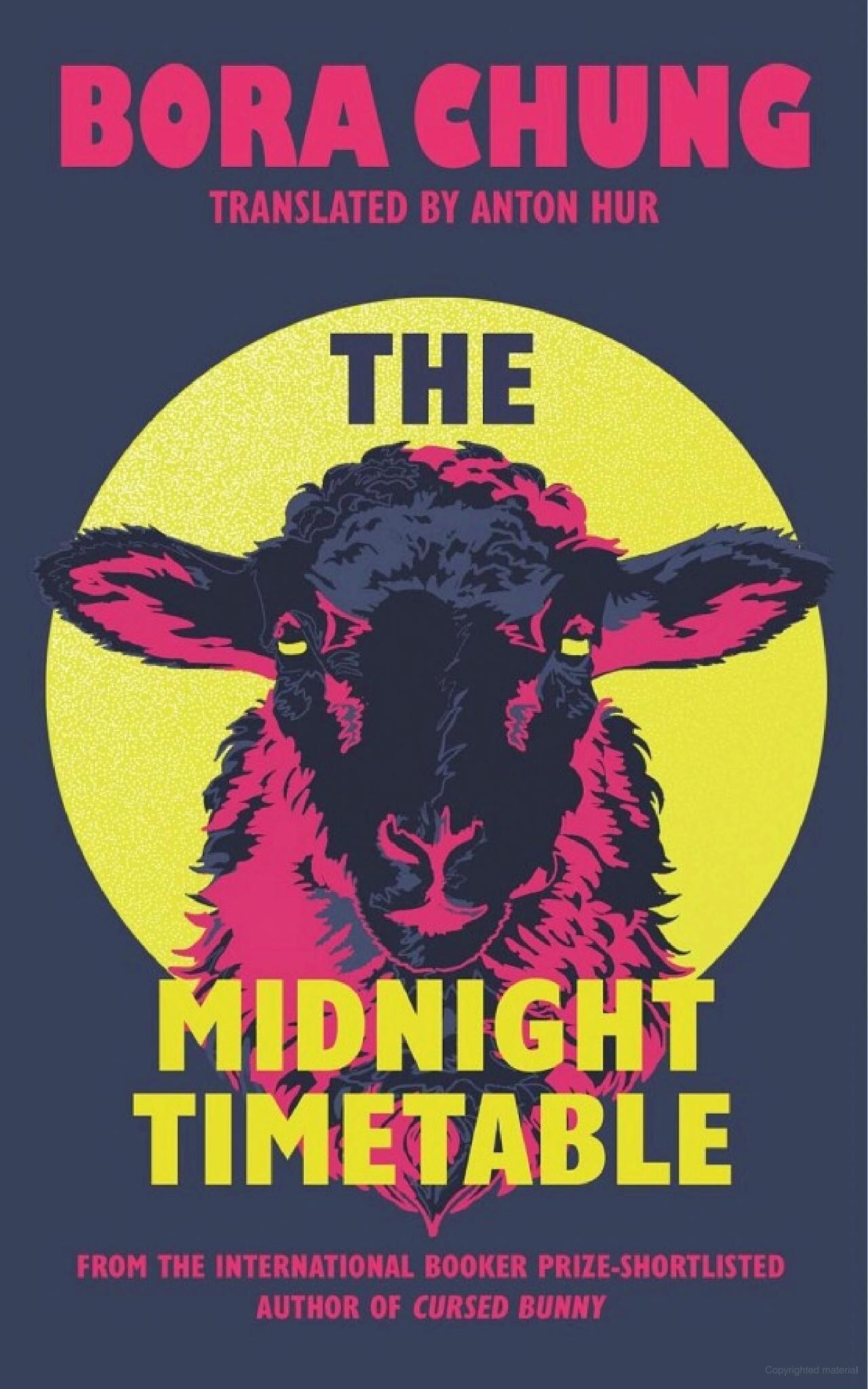
There are bits and pieces from all over the place. The title of it came from a small bus station near where I live. I live in a port town in South Korea, so because of foreigners the sign was also written in English. And instead of saying ‘Night Bus’, the sign read ‘Midnight Timetable’. I thought it was so intriguing and romantic, in a way. So, I took a picture and made a mental note that I’d use it as a title someday.
During COVID, everything was closed, and the whole atmosphere felt ghostly. The buses still ran, just very few. The emptiness felt eerie. And my university was also the same — classes were online, but us teachers still had to go in occasionally for meetings. The empty classrooms and corridors were very unsettling. That’s where the idea of ‘The Institute’ in the book came from.
Across Cursed Bunny, Your Utopia, Red Sword and now The Midnight Timetable, there seems to be a deep interest in how technology, capitalism, and the body intersect. Do you see them as connected, almost like parts of a larger project, or do you think of each book as its own separate experiment?
For me, they’re completely separate. They were written at different times and under different circumstances. Midnight Timetable is actually the first full-length book I wrote after quitting teaching and becoming a full-time writer.
Cursed Bunny, Your Utopia, and Red Sword were all written while I was still teaching, interacting with students. I felt grounded in that daily routine. My students kept me sane, so I think those books were better. [laugh] I’m not sure about this one!
Your writing is often called “horror”, “speculative” or “weird fiction.” Do you embrace these labels, or do you feel that your work gets limited because of these genre classifications?
I love being a horror writer. I am proud to be one. When I say I write ghost stories, other Asian people immediately start telling me their ghost stories — and that’s the best thing in the world! We Asians are proud of our ghosts — they’re connected to our history, our culture, our collective memory. They’re like this treasure trove of life, experience and points of view.
Every time I hear an Asian ghost story, I see a lot of commonality among all Asian people. So, I prefer to introduce myself as a horror writer, because it opens more doors for people to share their ghost stories with me.
Korean Literature has historically been associated with realism, but your work pushes into surreal and speculative territories. How has your Korean readership responded compared to your international readers?
They didn’t respond because I didn’t sell [laughs]. Nobody really knew me. We have a handful of diehard, bone-steady genre readers. I think, like, 12 people read me, and that was about it.
Post the whole International Booker craze, I was shocked because I never regarded my own literary endeavours so highly. For me, it was something I did for fun.
Your work has reached a massive audience across the globe through Anton Hur’s translations. Has the translation process and the whole experience of finding widespread readership shaped or transformed your work?
Yes and no. For the translation process, I don’t bother Anton — I trust him completely. He is a native Korean speaker, but he also grew up speaking English in many different countries. So, he knows his readership and I just dump [the novel] on his lap and don’t think about it.
As for the global readership, it’s really exciting to meet new ghost stories. I got to meet so many other authors at different festivals and events and hear about their writing life and routines. I also got more opportunities in a way because of it. I came across this Malaysian writer from Singapore, whose fantasy book I loved. So, I translated it into Korean. Same for another debut author from Poland.
The main thing that resulted was that now I get to meet people from other languages, cultures and time periods, which is very different from my very narrow scope of speciality. That is a blessing for me, as a reader and a writer.
You and Anton Hur have a unique connection — he’s translated your work into English, and you translated his debut novel, Toward Eternity, into Korean. How has it shaped your perspective on translation and collaboration?
In a way, it hasn’t. Anton and I, both have the same approach to being translated. We don’t bother our translators. But we do events together and that is a lot of fun.
You’ve translated contemporary Polish and Russian literature into Korean, bringing these voices to new readers in your country. How does immersing yourself in another author’s work and voice influence the way you think about and write your own stories? Do you feel your voice changing the more you translate someone else?
Yes, probably!? It’s like me walking and not counting every step, I know where I need to be and I am slowly making my way. I can’t say exactly how or how much I’m changing, but I’m pretty sure every single translation has changed me. I actually learned how to write fiction by translating and reading other people’s works. That’s probably why I didn’t sell in Korea, because everything I translated up to a point was very weird. [laughs]
Do you feel your work gets inspired by Korean literary traditions or by global speculative traditions? What writers, Korean, or otherwise, have influenced the strange, unsettling textures of your stories?
Both. I can’t pinpoint, well 49% this and 3% this and 48% that. I grew up reading a lot, reading without borders. I read a lot of Korean authors outside of the contemporary authors of my time. I also read lots of translated fiction from all over the world. Also, a lot of Russian literature, even though I grew up during the Cold War. Korean women writers have greatly influenced me. Park Wan-Suh, her work was the first time I saw a woman being presented as an ordinary person. She demystifies motherhood, womanhood. I could say something similar about Han Kang, who writes from a broader point of view. From beyond Korean, I love Lyudmila Petrushevskaya, who wrote about women surviving the collapse of the Soviet Union — mothers and grandmothers struggling to care for families in a new, chaotic economy. That everyday struggle is horror. Then, there’s Bruno Schulz, the Polish writer and painter who was killed by the Nazis. His stories are rich and surreal — childhood, time, and imagination all blending together. Zinaida Gippius, a Russian poet, fascinated me early on. Her poems were mysterious, sensual, and unapologetically feminine. She showed me that poetry could be enchanting. And, of course, Stanislaw Lem, the author of Solaris and The Cyberiad — I translated some of his shorter works.
Your stories often balance grotesque horror with dark humour. How important is humour for you in telling these stories?
I get that question a lot. I don’t consciously try to be funny all the time, but sometimes things are just… funny. I’m not saying that I’m funny, just that things are funny. The world can be a very funny place if you’re not so scared all the time.
In much of your writing, everyday objects or systems – bunny lamps, an elevator or a toilet — become uncanny and at times terrifying. What draws you to exploring horror through the mundane?
That’s where the horror is. That’s how you scare people. The jump scare comes in because it doesn’t look scary.
How has the recognition from the International Booker shortlist for Cursed Bunny shaped your career — in terms of readership, opportunities or more inwardly in your own sense of what’s possible?
I was greatly honoured and it was truly an experience of a lifetime. I got to meet amazing writers like Geetanjali Shree (twice!!!), so that was amazing. Other than that, I don’t see it as opening possibilities for me. I think people are going to forget about me in a year or two [laughs], so I have to grab everything while I can.
Your stories are so compact yet layered. Could you share more on what your writing process looks like?
With short stories, I start with the end. I have a clear ending in my mind. Sometimes even sentences and scenes, which I write down. Then I go to the beginning and try to decide the title. That’s the stage where everyday objects come in. It’s easier for me if I have a concrete object in mind or even better, in front of me. Once I have the ending, the title and the object, then I find the starting point, and then it becomes finding the path from that point to the ending point. The story then kind of finds itself.
What does your writing routine look like now that you’re a full-time writer?
When I was a teacher, my life was very structured. Everything was set around my classes. I had a set amount of work — grading, admin, teaching, etc — but now my life is a mess. I don’t have any structure at all. I don’t really have a routine. If I have a deadline, I write like crazy. But if I don’t, I’m sprawled on the couch and being useless, until something like this interview comes up. I do like writing on paper and notepads. I start writing by hand, if that counts as routine.
With four of your books now in English, what direction do you see your writing taking? Are there themes or forms you’re eager to explore in the future?
I recently wrote a short story in the form of a research paper. But I haven’t heard from my editor yet, and that is making me nervous. And right now, I’m collaborating with another writer in Korean. I don’t know if it’ll ever be translated. The way we’re writing it is, he writes one chapter, I write the second, and then he writes the third in response. It’s like ping pong and it’s been very fun.
Rutvik Bhandari is an independent writer. He lives in Pune. He is a reader and a content creator. You can find him talking about books on Instagram and YouTube (@themindlessmess).


