
 E-Paper



Catherine Chidgey: “Putting horror centre stage cheapens the story”
The novelist from New Zealand on writing novels set in Nazi Germany, her new book which is a foray into dystopian fiction, and the isolation of the Antipodean writer author

 Prefer HTon Google


What sort of research went into writing Remote Sympathy?
Remote Sympathy had its seeds last century when I was studying German in Berlin and lived there for three years in the early to mid-1990s. While I was there, our university professor took a group of foreign students on a trip to Buchenwald concentration camp, which is in the heart of Germany. It overlooks — and is part of — the beautiful town of Weimar, which is seen as the cradle of German culture and was the birthplace of the [short-lived] German democracy between the two world wars.
We stayed in the former SS barracks. The thing that stuck with me from that visit was the geography of the place. [I realised] that the citizens of Weimar, who form a chorus in the book, could not possibly say they didn’t know what was happening on the hill above their town. Yet they maintained [not knowing anything].
This town was cheek by jowl with these horrors. The officers, who were overseeing the camp, lived in a little collection of about 10 beautiful villas and raised their families there. When I went to the camp archives, I looked through [the] photo albums of those men. In it, their children could be seen playing in the gardens, learning to ride bikes, and going for outings to the camp zoo, which was established for the enjoyment of the officers’ families, when there was a human zoo right there that nobody seemed to want to know about. So that planted the seed: the idea of wilful ignorance and our human capacity to be able to look away from the things that cause us discomfort or make us feel guilty. The other thing that stayed with me from that visit was the Goethe oak.
When the prisoners cleared the hillside for the camp to be built, the SS ordered them to leave one tree standing. And that was an oak associated with the great poet Goethe. Supposedly when he went on his hill walks, he would sit under this tree and compose poetry. So, it was sacred to the SS as it stood for the kind of noble Germany they wanted to create. It was said that if that tree ever perished, then Germany would perish too. When the war started to turn, there was a precision bombing raid on armaments factories right next to the camp, sparks flew into that tree and it caught alight and burnt to the ground and had to be felled. So the stump of that tree is still there and I remember our professor showing it to us. And as a symbol, I knew that it somehow belonged in my work but I didn’t quite know how, so I tucked it away as something interesting that might speak to me sometime. Then, a couple of decades later, I was thinking about writing a novel set in a concentration camp about a doctor put in an impossible position who forges a strange power relationship with an SS officer who wants him to cure his wife of cancer. I remembered those details about Buchenwald, and it was through those real-world details that I built up that three-dimensional world.
You noted in an interview that you take great care to avoid “too much horror centre stage”. How do you do that and how different is violence when written by women?
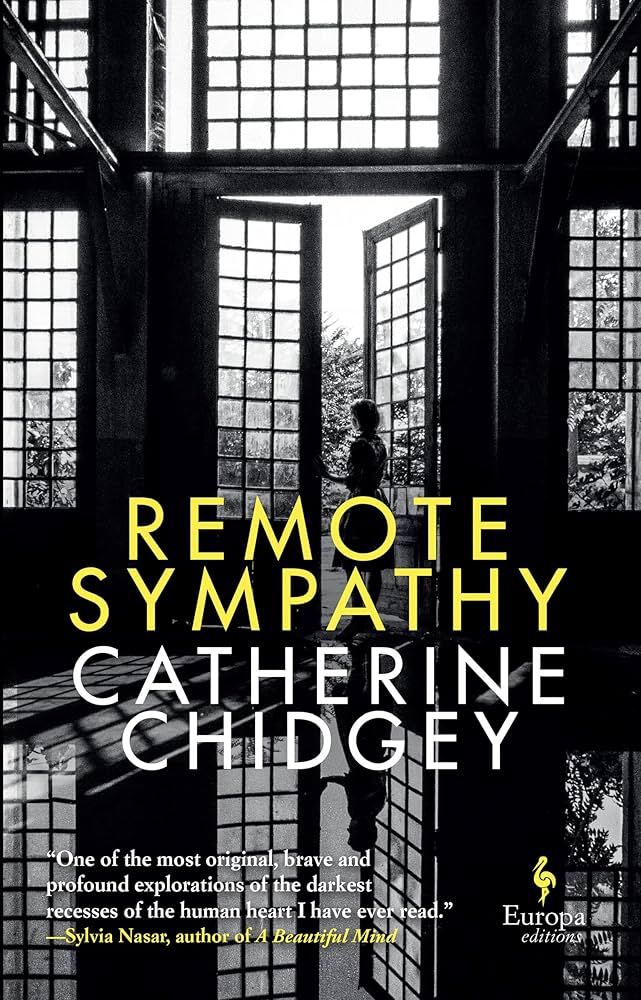
It feels like you’re cheapening a story if you put that horror centre stage, especially with the Holocaust. I’ve written two books set in Nazi Germany and with both of them, I didn’t want to put [horror] in the centre. There’ve been so many books written about that period where the horror is unrelenting. And we’ve the reader sitting in their comfortable home or lying warm in their bed reading about these atrocities. It leaves a bitter taste in my mouth to re-exploit those stories for a reader’s titillation. In my view, such violence can revictimize the people who were the object of those actions. So I make a conscious effort to keep it off-stage. Maybe that is a female choice; I haven’t really thought about it like that. But it’s definitely a conscious decision to gesture to and to hint at, which can be more chilling, I think, than showing the thing straight to [the] camera because our imaginations can then jump in and start to fill in the gaps.
There’s an inherent placelessness and complicated relationship with home in most of your works, particularly in Pet. Why do you consistently use this theme in your fiction?
I think it’s something that we feel as New Zealanders. We feel a certain rootlessness given we’re living at the bottom end of the world. We feel that isolation still, even when there’s such global connectivity today. It still seems as if everything else that’s exciting is happening somewhere else in the world. The 1980s in New Zealand was such an interesting time for me to write about because it really did feel like that isolation mattered.
It was a time before blue jeans or tracksuits were accessible in New Zealand. If you had a friend who went to Australia, they would come back with them and you’d think, oh my God, they’re so sophisticated, worldly, and international. How can I get them? That’s definitely the flavour of my childhood. I said in my session [at the festival] that it was a defining moment in our nation’s history when in 1983, Lorraine Downes won Miss Universe. There was such national pride and swelling of chests because suddenly we were on the world map for something as debatably unimportant as a beauty contest. The reason that I chose to set Pet then was because it did feel like things were starting to shift. In the Catholic Church as well, which I talk about in the book, it was a time of upheaval – they were getting rid of the Latin mass and wanting women to play more of a role in the church. There was the ‘old school’ [sect] who wanted to keep things the way they were. Then, people like the teachers at my school wanted to have altar girls and nuns to stop wearing their traditional habits. It felt like the ground was shifting under our feet. Therefore, that’s a really interesting backdrop for a story when the main character doesn’t quite believe her own memory or believe what she thinks she knows.
Is it still difficult for authors from New Zealand to be recognised by the global publishing industry?
It’s hard to get a foothold as an Antipodean writer in the rest of the world. I do feel like you have to make a lot more noise to get noticed. I think that’s changing gradually, but I know it’s still hard to get the same kind of review attention for your books. I know that my publisher was quite pleased when I said that I was setting a book in the UK rather than in New Zealand. I suppose the ratio is 1:1 — my books that are set in New Zealand and the ones that are set somewhere else. But I don’t make those decisions based on commercial viability. I write the story that is singing to me the loudest. I think probably as New Zealand writers, we do feel a pressure to look outward to that international market and think about those decisions in a more commercial way than a creative way, which is a shame.
As we saw with Keri Hulme’s The Bone People (1983) or with Eleanor Catton’s The Luminaries (2013), New Zealand stories can capture the world’s imagination because they are about being human and about what motivates us. And that’s what interests me the most, no matter where my books are set, to try to find those universalities.
What is your latest novel, The Book of Guilt, about?
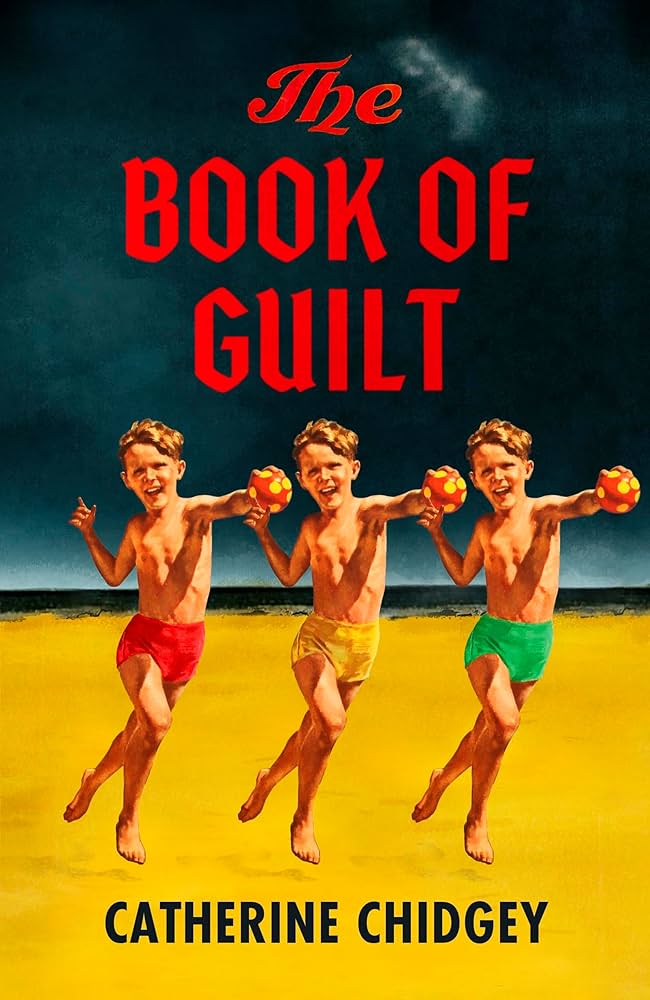
The Book of Guilt is my first foray into dystopian fiction. It’s set in a version of England in 1979 in a New Forest boys’ home. The boys are the last remaining residents of this particular home, but there are others like it scattered throughout the country. And when the new government comes to power, they decide that these last remaining homes will be closed and the children will be released into the community.
This is making the community quite nervous and the children don’t understand why that would be and neither does the reader until the story starts to unfold. The boys have been cared for all their lives by three women who go by the names ‘Mother Morning’, ‘Mother Afternoon’, and ‘Mother Night’. And these are the only parents the boys have ever known.
Part of the story is told from Vincent’s viewpoint, who’s one of these boys. Another part is told from the viewpoint of the ‘Minister of Loneliness’, who is a politician whose job is to oversee the transition of the children into the community. The third part is told from Nancy’s viewpoint. She is a 13-year-old girl who lives with her parents and has never been allowed to leave the house in her lifetime. So, gradually these three strands start to intersect and the reader as well as the boys begin to understand what the homes were and what their purpose was. And it’s a revelation that is terribly shocking to the children.
Saurabh Sharma is a Delhi-based writer and freelance journalist. They can be found on Instagram/X: @writerly_life.


