
 E-Paper



Deepa Anappara: “Female explorers were seen as having loose morals”
On her new novel, The Last of Earth, set in colonial times that features Indian spies mapping Tibet, and an Englishwomen intent on reaching Lhasa

 Prefer HTon Google


Your journalism experience inspired Djinn Patrol on the Purple Line, what inspired you to write The Last of Earth?
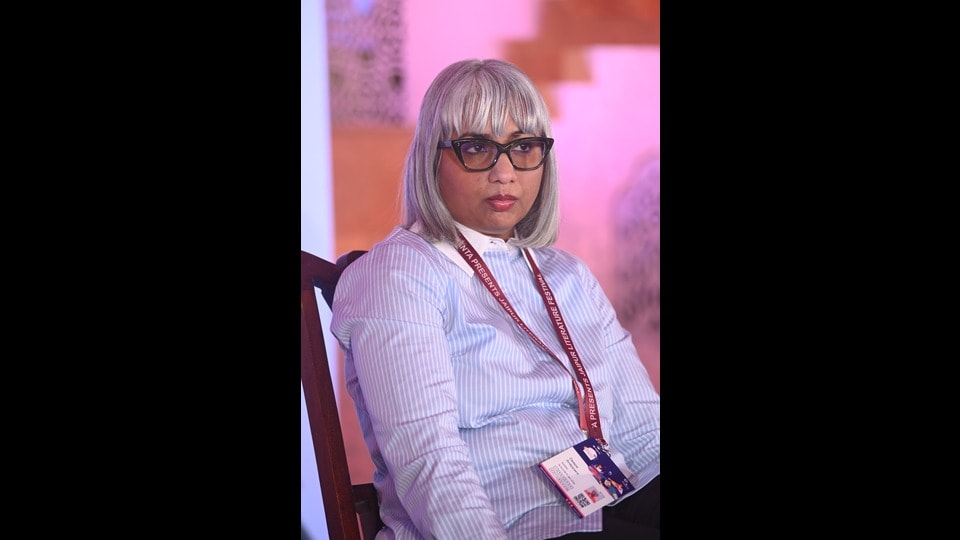
I think I’ve always been interested in Tibet and I also loved Rudyard Kipling’s Kim, even though the representation of Indians in the novel is difficult for you to read as an Indian, but I think there was enough in the book that I found interesting, and especially the stories of spy surveyors, so it was always something that was there in the back of my mind. I never thought I would write about it, but then after I moved to the UK, I came across this account by an Englishman about travelling to Tibet in the 19th century, and how he had been helped by two Indians whom he describes as his manservants, and these two men essentially kept him alive during this expedition in the 19th century, because he didn’t have any knowledge of the land. It’s a very hostile landscape if you’re not used to it. The average altitude in Tibet is over 13,000 feet; the air is thin and you’re not getting enough oxygen, so it was very clear that he was floundering, and they literally rescued him many times from danger and from falling into rivers, and in fact he has a photograph at the very beginning of the book in which he’s flanked by these two Indian men, and he credits them with saving his life.

At the same time, he’s also very racist in his language and how he describes Indians and Tibetans, and he talks about whipping one of these men because he didn’t polish his shoes properly, and he talks about how you have to administer firm, but not too severe punishment, so that to teach the natives how to behave appropriately and what is expected of them, and I was really interested in that power dynamic where you’re completely reliant on the Indians for your survival, but at the same time you don’t see them as your equal… I wanted to write about that: going on a journey completely dependent on the Indians’ knowledge of the landscape, but at the same time really being condescending and patronizing and in many ways racist towards them. So, when I started researching journeys into Tibet, I came across the stories of Indian spies like Nain Singh Rawat and Kinthup, who were trained by the British Survey of India to use their own bodies as surveying instruments, so essentially they were taught to walk in a certain way so that each pace would be exactly 33 and a half inches. So, if you counted 2,000 paces, that would be around a mile, and that was how they mapped all of Tibet. In the 19th century, Tibet was known as the Forbidden Kingdom because Westerners couldn’t go into the country, so for the British, this was their way to get around that rule and that prohibition. They would just send Indians to map the region. The Indians would come back with information and then they would create the maps.
I was thinking about that story and why did they undertake these really dangerous expeditions and what was the factor that motivated them, was it just money, was it just something that their family had done for a long time? I think that was the point at which I started working on this novel. I just also want to quickly say that once I started looking into explorations of Tibet in the 19th and early 20th centuries, I found that a number of women had also traveled to Tibet, people who describe themselves as female explorers and they were wearing very restrictive clothing, so they didn’t even have proper clothes to climb mountains. That didn’t stop them from travelling to Tibet. In the novel, you also have the narrative of a woman named Katherine who wants to be the first female or the first European woman to reach Lhasa. It’s all based on true stories and what we can find in the historical record but obviously a lot of it has had to be constructed through my imagination as well.
You mentioned restrictive clothing was something that the women explorers did not mention in their accounts, so how did you approach this gap in your characterization of Katherine?
I think they had to present a certain view of the world, so they had to be true to that time. If you were a female explorer, you were essentially travelling without a chaperone, so you could be seen as a woman with very loose morals, which in Victorian periods, definitely for English women, that was not something that they could have lived with easily. It’s pretty clear that they could not have been completely honest about what they were wearing.
One of the big questions that occupied me was what were they doing if they were menstruating, and in that time before sanitary pads and tampons, how were they managing? There’s not a single mention of that in any of these female explorer accounts. So, in the account, they’re behaving pretty much like the men, so there is some gap between what they’re telling us and what must have actually happened. You have to rely on your imagination, and you have to think what is that experience of being a woman, and how would they have climbed mountains, what did they do during that particular time, and how honest could they have been, and what did they tell their family back home?
One of the interesting things I discovered was that if they met someone who knew somebody back home in England – there was always the danger that gossip could travel through steamers over six months back to England – so they were very conscious of how they presented themselves to the world. In writing Katherine what you’ll find is that there are brief excerpts from her journal, and you see what she has crossed out, and then we get her point of view where we see what she’s actually experiencing. What I wanted to do in the novel was look at what was the experience, and how is that particular experience represented in this fictional character’s writing. I wanted to talk about that gap which we can’t really see but which clearly existed at that time.
How different was the research process for this novel as opposed to your previous one?
The archives are very carefully curated by the British, they had a very definite sense of how they wanted to present the empire to the world, so you see that mentions of atrocities have been erased or they would have been downplayed. Subaltern studies historians have written quite a lot about that. For instance, people are described as savages, not as people who are protesting against an injustice. So, when you’re reading the archive, you have to look at what is represented there and what might have actually happened. That was one of the main challenges: locating the Indian consciousness in these essentially English archives, and then trying to read between the lines and trying to figure out what are the erasures and what might not have been stated.
You travelled to Tibet only after completing the first draft of your book. What were the alterations that you had to make to the draft post your visit?
The surprising part for me was that the descriptions of the landscape in my novel were accurate, in that I relied so much on explorers’ accounts, I didn’t find the need to change any of that. In Tibet, today you can only travel as part of a group. It opened my eyes to the kind of small troubles that may be brewing, or the ways in which people help each other, what makes you annoyed about a certain person after spending two weeks with them. Some of those aspects became clear because I travelled in Tibet as part of a group tour.
There were some very minor changes in the descriptions of the landscape after I visited, and I think perhaps one of the main changes was about the relationship that Tibetans have with the landscape. Because you see that the lakes and rivers and mountains, they refer to them as mothers and fathers, that’s part of the name in Tibetan, and I found that very moving. What we call the Parikrama around Mount Kailas, the Tibetans call the Kora, and it’s a three-day trek if you’re walking, but many Tibetans actually prostrate every step of the way, so it’s 52 kilometres, the altitude at the highest point is around 18,000 feet, and they’re bringing their hands together, they’re prostrating, and then they’re getting up, and then they’re prostrating again, and just watching them do that at this really high altitude where I could barely put one foot ahead of the other… It’s a very difficult journey that they were undertaking. And they’re not just praying for themselves but for the world. I found that part of it really moving, and I think that informed how the landscape is represented in the novels.
Simar Bhasin is a literary critic and research scholar who lives in Delhi. Her essay ‘A Qissa of Resistance: Desire and Dissent in Selma Dabbagh’s Short Fiction’ was awarded ‘Highly Commended’ by the Wasafiri Essay Prize 2024.


