
 E-Paper



Essay: Fun facts about board games in ancient India
In time for International Tabletop Day on June 4, Brishti Guha writes about the ancient Indian obsession with board games evident not only in archaeological finds but also in myth, literature and folklore

 Prefer HTon Google


With International Tabletop Day around the corner, we can expect the thriving board gaming communities in our metropolises to celebrate their interest in a pastime that combines skill, luck, and pure fun. They may be surprised to know that thousands of years ago, their ancestors were just as enthusiastic about board gaming. There’s a plethora of archaeological and literary evidence on our gaming heritage.
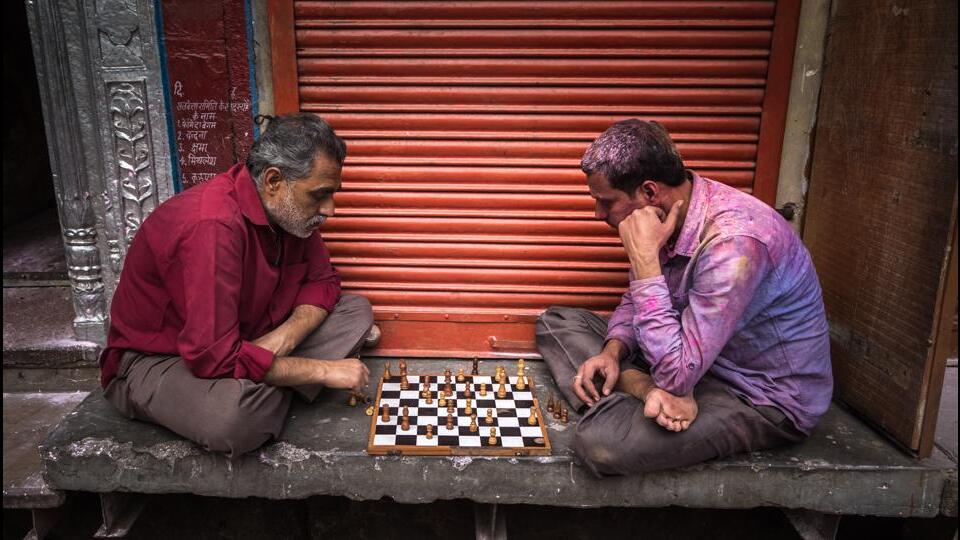
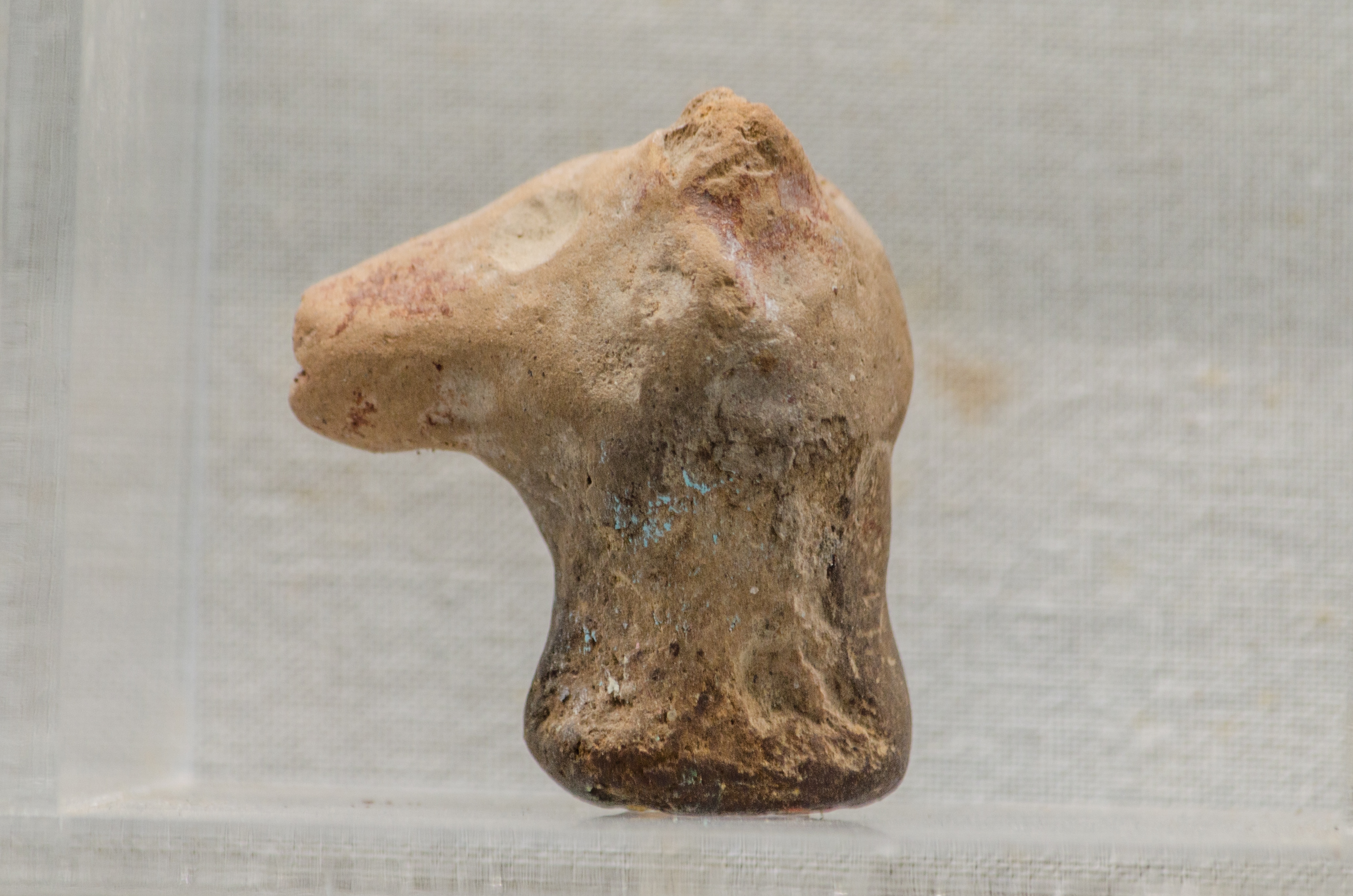
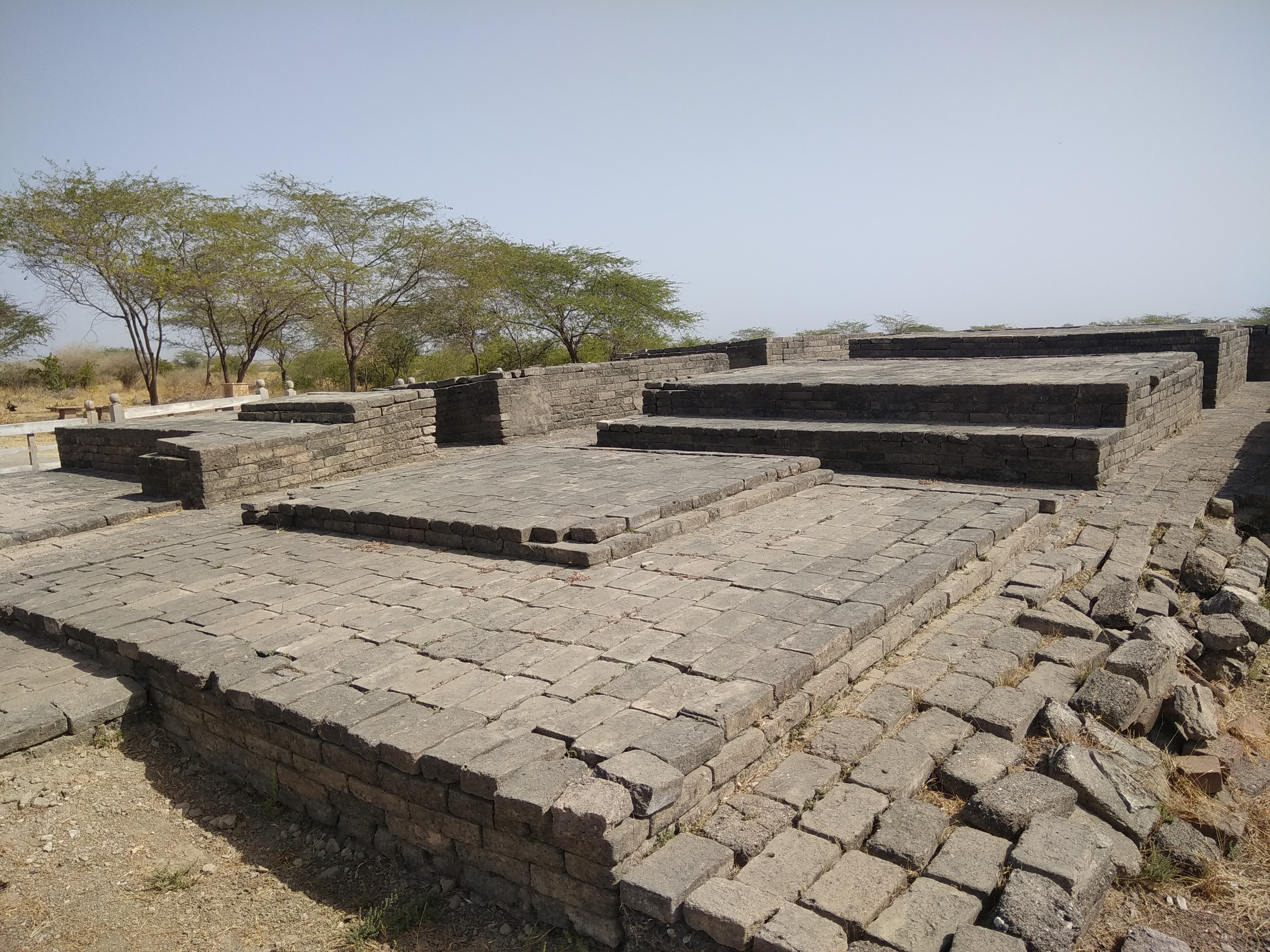
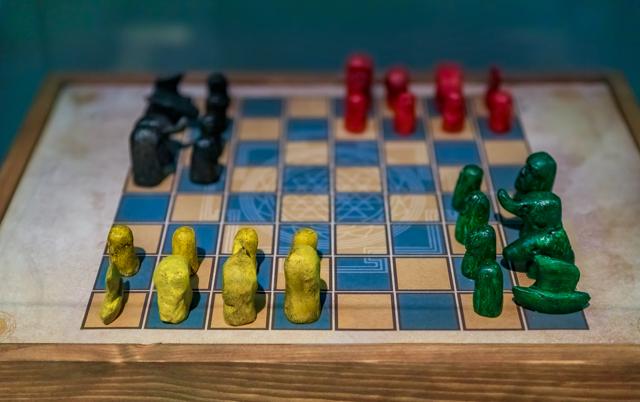
Archaeological finds from Bhirrana, an Indus-Saraswati site in Haryana, include terracotta gamesmen, dated to roughly 6000 BCE, according to a 2005 paper by archaeologist LS Rao and his colleagues. This was roughly the time when the residents of Bhirrana were transitioning from living underground (in subterranean pits) to constructing dwellings above ground. It seems that board games provided the perfect distraction during the rare leisure moments they could snatch while making this momentous transition! Excavations in Lothal (dated to the Harappan era, roughly third millennium BC) yielded a rich set of finds, including more than 75 game pieces, a number of brick and terracotta gaming boards marked with different patterns, and variously shaped dice with clear markings. The game pieces included animal-like figures, such as horses, as well as cones, castles, and pellets. The archaeologist in charge, SR Rao, deduced that the evidence strongly suggested that some of these gamesmen were being used to play chaturanga, the first version of chess. He showed how the pieces would look if arranged on a modern chessboard. Chaturanga, according to modern chess historians, was conceived as a war simulation game. Different pieces had different powers and roles – hence one had knights (horses or cavalry), pawns (infantry), bishops (which we called ratha or chariots), and castles (which we called gaja or elephants). The whole objective of the game was protecting a single piece, the king. These two features of chess have survived through the ages and through all its many international variants.
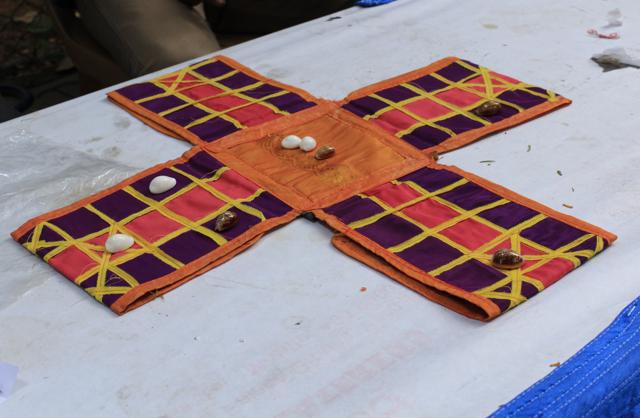
The rest of the game-related evidence at the site suggests that a variety of other board games were also being played. One board had a series of concentric squares, while another had 16 houses arranged in a rectangle. Dice, made of either bone, ivory, or terracotta, were found in plenty at Lothal, as well as other Harappan era sites, suggesting a fondness for games of chance. Archaeological evidence from a later period, the Painted Greyware culture (1100-800 BC), turned up game boards for Pachisi and the closely related Chauper, along with variously coloured gamesmen, and dice (these excavations were led by BB Lal). Pachisi is the precursor of modern Ludo, having spawned a number of variants in Syria, Spain, Morocco and Colombia in the course of its westernization.
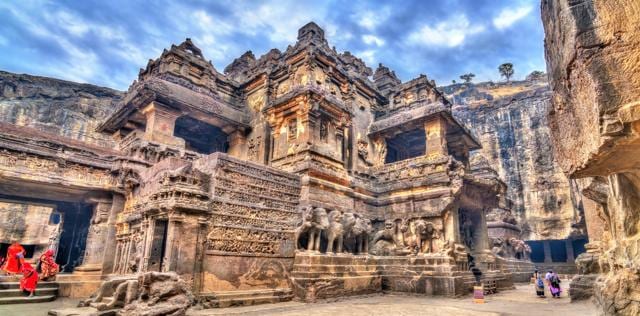
A number of reliefs across India, including some at the Ellora caves, depict Shiva and Parvati playing dice games. These have been extensively studied by Micaela Soar, who concluded that the game in question was backgammon (checkers) – an instance of a game which, though popular in ancient India, seems to have disappeared completely before the end of the first millennium BC, only to be reintroduced many centuries later by the Persians, who brought it to the Deccan. Parvati wins at almost all of these games, while Shiva occasionally manages to win by cheating, each such win causing Parvati to lift her hands in amazement. This is seen in the reliefs, as well as in a literature starting with the Skanda Purana, which mentions their game in some detail, and also in subsequent Sanskrit literature like the Haravijaya.
This brings us to the rich literary references on board games in ancient Indian literature. The oldest such reference dates back to the Rig Veda, which contains the famous “Gamester’s Lament” (RV 10.34). It vividly describes how the rattle of brown dice (brown because they were made of vibhitaka nuts) thrown on a board called to the poet, who rushed to the gambling house like a girl running to meet a lover. Another very old reference is in the Mahabharata, where the whole plot centres around the disastrous board game between the Pandavas and the Kauravas (this game is thought to have been Pachisi or Chauper).
Fascinatingly, the next piece of evidence on Indian board games is a list of games prepared by the Buddha in the sixth century BC Pali text Brahmajala sutta (the list is replicated in about 10 other ancient Buddhist texts). Buddha mentioned that he would not play any of the games on the list, because they were so addictive that they caused people to neglect their duties. The first kind of game he mentions are games played on an 8 by 8 square board (ashtapada), as chess was and still is. Next, he mentions akasam ashtapadam or “sky chess” where the same game is played using an imaginary board (“drawn in the sky”). The American Chess Bulletin (in 1916) identified this as the earliest known example of a blindfold chess variant in an article entitled Imagining Boards in the Air. Another early reference to the 8 by 8 square board is from the grammarian Patanjali’s Mahabhashya (there is some disagreement on Patanjali’s date, but the range lies between the sixth and the second centuries BC). Later, Sanskrit prose novels (the Harshacharita of Bana, and the Vasavadatta of Subandhu – both written in the seventh century AD) mention Chaturanga and the fact that it was played on 8 by 8 boards; the Vasavadatta mentions green and yellow chessmen.
nterestingly, Persian and Arab accounts, including some by early chess experts, attest to the Indian origin of chess and relate how it came to Persia. The Chatrang-namak, written in Pahlavi (Middle Persian) around 800 AD, describes how chaturanga was brought from India and introduced to the Persian king Khusru 1 (or Nushirwan) who ruled from 531 to 578. The Indian ambassadors who brought the game issued a challenge that if the Persians could not figure out the game in a limited time, they would have to start paying tribute to the Indians. Fortunately for the Persians, a wise courtier was able to figure out in two days how the chess pieces should be arranged on the board. As chaturanga became chatrang in Persian and shatranj in Arabic, Arab chess historians such as al-Masudi (around 950) documented the same episode of Indian chess coming to King Nushirwan’s court (along with a copy of the Panchatantra). An earlier Arab chess expert, Al-adli, said, writing around 840, “It is universally acknowledged that three things were produced from India, in which no other anticipated it, and the like of which existed nowhere else: the book Kalila-wa-Dimna (Panchatantra), the nine ciphers with which one can count to infinity (numbers), and chess.”
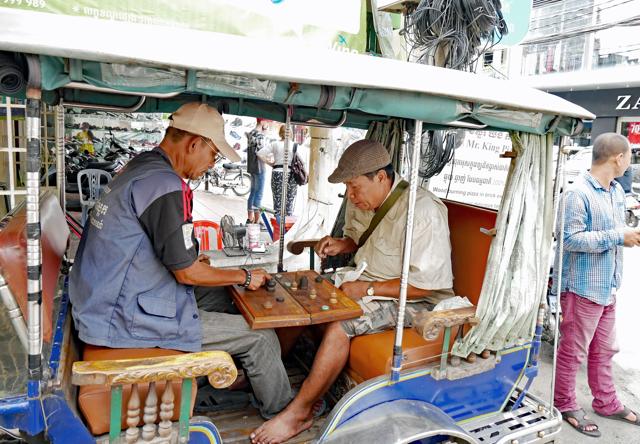
While chess then spread from the Arabs to Spain and to the rest of the western world, it appears to have followed an entirely different route from India to the east, entering China, Korea and Japan via travelling Buddhist monks, scholars and merchants on the Silk Road (giving rise to xiangqui, janggi and shogi in these three countries). It also passed into Southeast Asia where it spawned variants like the Thai makruk and the Cambodian ok chatrang.
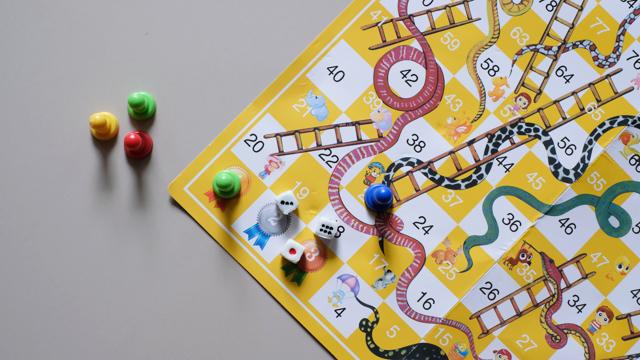
Snakes and Ladders, commonly thought to be an entirely western board game, had its origins in the ancient Jain game Mokshapatam and the closely related Hindu Gyan Chauper. Jain monks designed the game so that the ultimate goal was to reach the gate to salvation (moksha); the ladders would start from squares marked with “virtues” like humility, generosity, and compassion, while the snakes would lurk on squares with vices. The game infused some fun into religious and philosophical ideas, and was quickly adapted by other religions. During the colonial era, it was imported into the UK, (with Christian virtues and vices replacing the Jain, Hindu or Sufi ones). Ultimately the religious themes were discarded and the basic game became popular in both the UK and the US.
The popularity of board games has survived the ages and spanned geographical and class divides. Premchand’s classic story Shatranj Ke Khiladi (The Chess Players), later made into a spectacular movie by Satyajit Ray, describes how both the rich and the poor were completely immersed in chess. Hopefully, these and the newer board games developed will continue to entertain our descendants for many generations to come.
Brishti Guha has a PhD in economics from Princeton and is currently an associate professor at the School of International Studies, JNU.


