
 E-Paper



Essay: She Couldn’t Escape the Taliban - On Sushmita Banerjee, author of A Kabuliwala’s Bengali Wife
The Taliban have never been kind to women who speak up for themselves. Sushmita Banerjee’s case was complicated by the fact that she was an Indian and had written about life in Afghanistan. Her book A Kabuliwala’s Bengali Wife spoke about her dramatic escape from that country. Revisiting her tragic story

 Prefer HTon Google


They are back in Afghanistan. In the initial days they were said to have issued a diktat that women would be permitted to step out of the house only with a male relative and, “girls above 15 and widows under 45 to be married to Taliban fighters”.
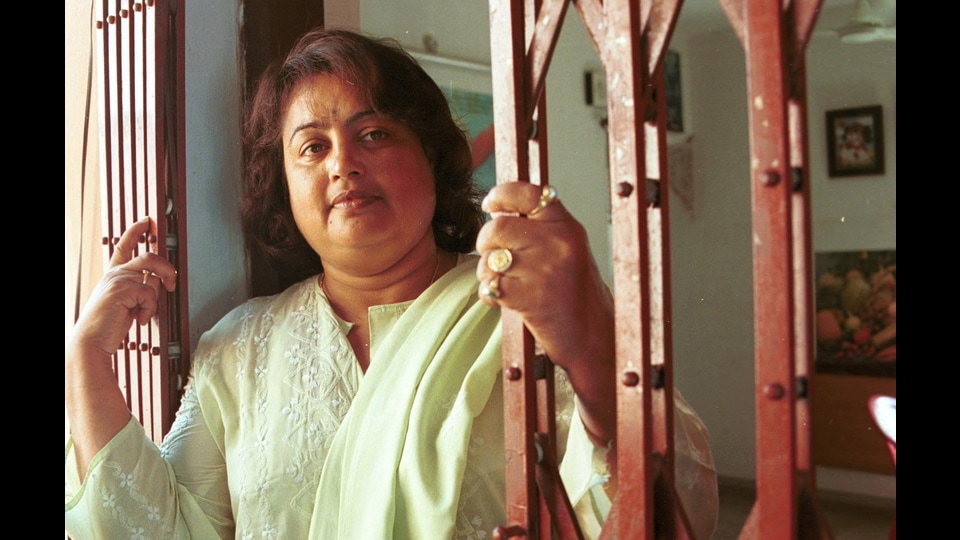
True or not, the Taliban have never been kind to women speaking up for themselves. In 1987, when the military skirmishes were on, Meena Keshwar Kamal, founder of The Revolutionary Association of the Women of Afghanistan (RAWA) was killed. Despite the threats, there are local women and human rights organisations that continue to fight even today. They have to fight for what are and ought to be necessities and choices.
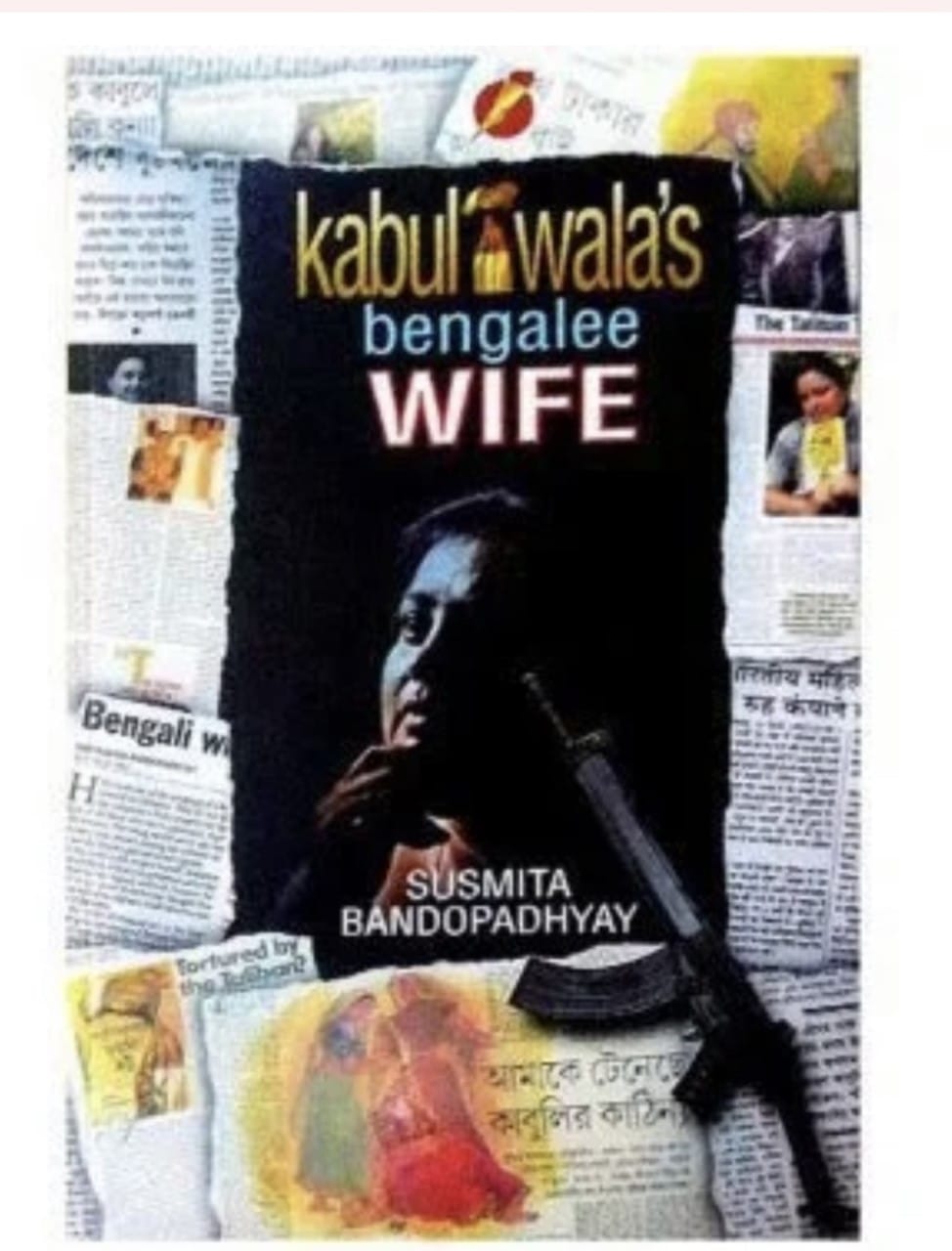
Sushmita Banerjee’s case was complicated by the fact that she was an Indian and had written about life in Afghanistan. Her book A Kabuliwala’s Bengali Wife spoke about her dramatic escape from that country.
The mystery is that she returned. Only to be killed. It was a tragic end to what was more than a love story.
After tying up her husband and other family members, they kidnapped her from the family home in Paktika province on September 4, 2013. The next day, police found her body with 20 bullet wounds, much of her face unrecognisable, her hair pulled out.
Banerjee had met Jaanbaz Khan, a small-time Afghan businessman, in Kolkata. They married and she returned with him to a country that was limping back to life after the decade-long Soviet-Afghan War. It was a state of civil strife. This was not the Taliban as we know it today; those were neophytes who had fought in the war and been scarred and bitter. A country that had once been modern, where half the workforce was made up of women, was caught in the clutches of fanatics who abused religion.
For an educated person, what made her choose to stay behind in Afghanistan after her marriage even though her husband left to tend to his business in Kolkata? He was already married, a fact she discovered later. However, she did not seem to have any issues with the first wife and remembered her rather fondly. In fact, until 1993 she found life there “tolerable”.
That year became the defining one. As she wrote: “I remember it was early that year that members of the Taliban came to our house. They had heard of the dispensary I was running from my house. I am not a qualified doctor. But I knew a little about common ailments and since there was no medical help in the vicinity, I thought I could support myself and keep myself busy by dispensing medicines. The members of the Taliban who called on us were aghast that I, a woman, could be running a business establishment. They ordered me to close down the dispensary and branded me a woman of poor morals.”
A bit of history would tell us that the Taliban had not yet taken over. These were the dregs that were trying to assert their authority. She mentioned how every house had AK-47s. Most mujahid were using the leftover Kalashnikovs from the Soviet war.
She made three attempts to run away. In the first, she managed to reach the Indian High Commission in Islamabad, Pakistan, but they “could not help me since I had no passport or visa”. This was most unfortunate, for they could have at least ensured her protection.
She was back where she started: “…my brothers-in-law tracked me down and took me back to Afghanistan. They promised to send me back to India. But they did not keep their promise. Instead, they kept me under house arrest and branded me an immoral woman.” She was at their mercy.
Her next attempt included tunnelling her way out only to be captured and questioned by the Taliban. Her day of execution was finalised, but rather surprisingly she was able to convince them that as she was an Indian she had every right to go back to her country.
She described the final attempt thus: “I have always been a fighter. Dranai chacha, the village headman, helped me with my third attempt. His son had been killed by the Taliban so he turned against them. On the day I was to escape, I grabbed an AK-47 (which decorates most houses in Afghanistan) and shot three Taliban.”
About reaching Kolkata and being reunited with her husband, she wrote then: “I don’t think he will ever be able to go back to his family.”
He did. She did. And they killed her.
According to the BBC, the Taliban said they did not. In the villages and tribal areas where rule of law is replaced by rule of honour, defined as per convenience, it is possible that there were other feuds – family, business rivalry, or change in personal equation.
Later, a renegade group called The Suicide Group of the Islamic Movement of Afghanistan proudly admitted to it: “We killed Sushmita Banerjee because she is an Indian spy…We are against everyone who is engaged against the Afghans, the jihad and works with the American attackers.” This despite her assertions that she was “a daughter-in-law of all Afghans”.
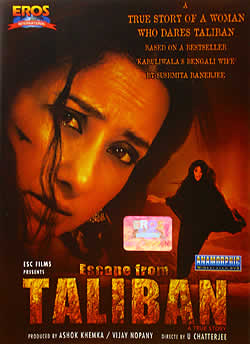
The untenable spy angle aside, there could have been many reasons why they might have targeted her – her gender, her faith (although she had converted to Islam after her civil marriage in India), her nationality or her work in the health sector with women. It is unlikely that it was her memoirs for, if anything, the Taliban like to be portrayed as sadists in charge. While the book was said to have been a bestseller in India, Escape from Taliban – the movie based on it – tanked at the box-office.
The manner in which she was shot dead was not simple. It was horrific. What did the Indian embassy in Afghanistan do? Why was there no enquiry into her killing? The Taliban had issued a fatwa against Banerjee in 1995. That should have qualified her for media attention. But it did not make it to the news.
She would have known from experience what living under such circumstances would entail. Her return can only be explained in terms of love, of her belief that she could make a difference, and the political situation at the time when the Taliban was on its way out and there was hope that things would change.
Sushmita Banerjee could have sought asylum anywhere. She could have stayed home in India. But, then, perhaps she thought home was a place beyond boundaries.
Farzana Versey is a Mumbai-based writer. She tweets at @farzana_versey


