
 E-Paper



Farrukh Dhondy: “Writing fiction is never a purely logical process”
On his hometown, Pune, religion as wilful human delusion, and the different strands that inspired his new novel, Tibetan Gospel

 Prefer HTon Google


Did Tibetan Gospel emerge from a fascination with belief and scepticism? Or was it simply the current world political situation that has caused you to pick a fight with several religions simultaneously?
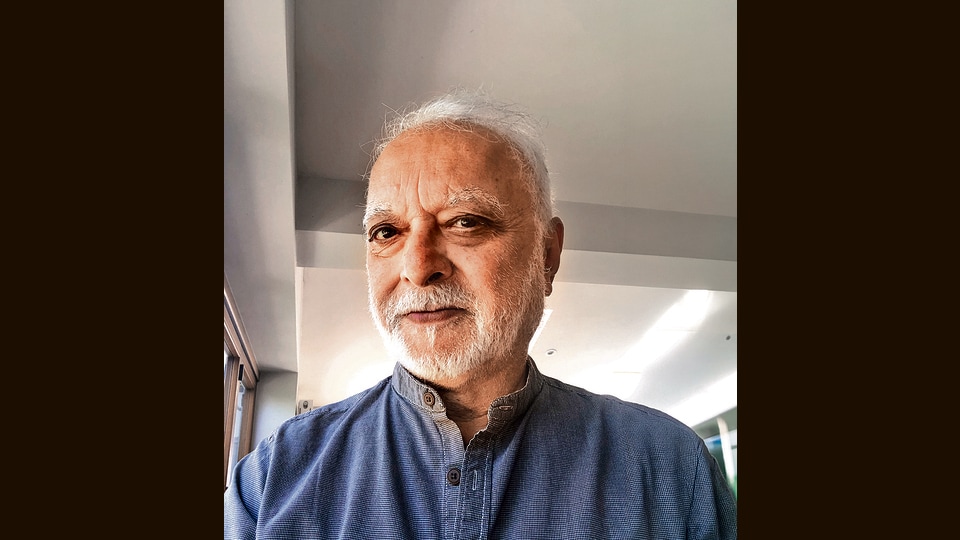
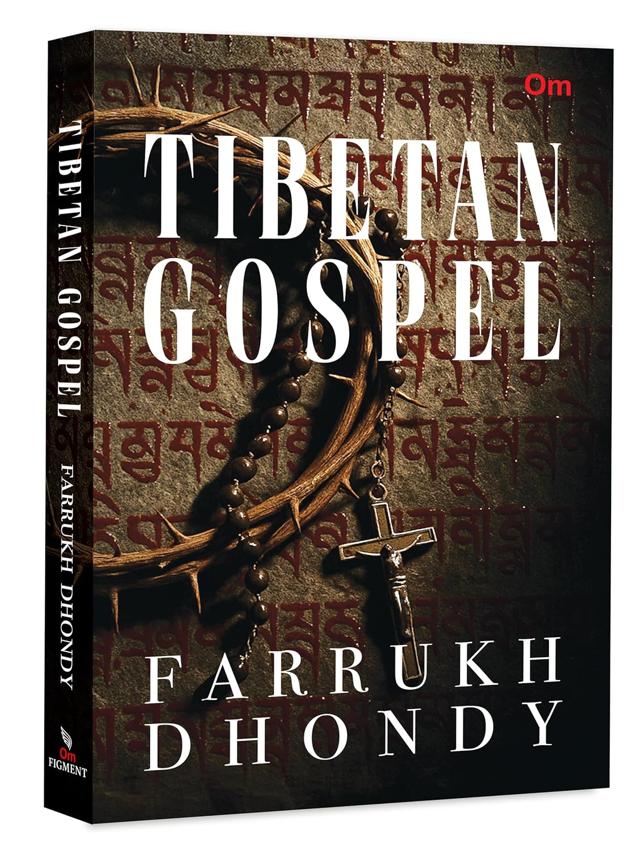
Though I was brought up to be a good Zoroastrian I determined, at an early age, to abandon all belief in religions as wilful human delusions. I had a lifelong friend called Darius Cama, who did convert from Zoroastrianism to Catholicism and did indeed become a priest and go to Bolivia as a missionary. The idea of the novel came to me when I read that Osho had claimed in writing that Jesus was buried in Kashmir. The plot then suggested itself.
My late friend historian Charles Allen’s research into the origins of the Hindu and Zoroastrian idea that the plant they called Soma or Homa led to mystical experiences contributed to this plot.
You’ve drawn on so many religious traditions and historical sources. Did you begin with years of accumulated reading, or did the demands of the story send you down new research paths?
To call my allusions to religious beliefs in the novel ‘research’ is like saying President Trump’s policies are based on a profound reading of Machiavelli, Thomas Aquinas and John Maynard Keynes. No, all the allusions to belief are notions and inheritances from the popular culture in which we are all, in varying degrees, immersed.
Specifically, did you visit Roza Bal and Shugtal?
I’ve never ventured further north than Gulmarg and Kilanmarg in Kashmir. A friend of mine did spend years in the monasteries of Ladakh and she would speak of them. The description comes from observation and imagination.
One of the things I enjoyed most (as much as the mystery) was the monastery itself. The monks were real people, not just representatives of a faith. There are generational differences, disagreements, loyalties, rivalries and adventure. Did you begin with a community and discover the characters inside it, or did the characters come first and create the monastery around themselves?
All of us interact with and are or have been part of institutions – families, schools, colleges, workplaces etc. Yes, I imagined a monastery and its hierarchies of age, of rank, of function. Writing fiction is never a purely logical process. Action, motive, characters all emerge from the subconscious which is, I suppose, a vast store of observations. These emerge into the conscious, as one writes, resolving themselves in words and sentences and then impels the fingers on the computer keyboard. OK, enough pretentiousness!
Obviously, the rivalries and dissensions have to fit plausibly into the life, traditions and reason-for-being of the monastery. So, the chicken existed inside the egg and the egg within the chicken to be born and both exist together – not one before the other ….
So, yes, monastery and characters at the same time!
How much of the Pune that appears in the novel is the Poona you remember, and how much is the Poona you still carry in you?
All the descriptions of Poona are from my memories of growing up there, from my early years, through my teens. It was quiet town till the mid or late 1950s, when the first factories were built.
I go to Pune now and it’s unrecognisable, except for the streets of the neighbourhood where I grew up. Some of the buildings of our road, Sachapir Street, are still as they were then, though most have been replaced by taller apartment buildings. The Parsi fire-temple, the “komdey chi agyari”, so called because it’s crowned by a rotating weathercock, is still very much there and untouched.
Of course, when I think or dream of Poona, it’s not the developed crowded, heavily-traffic-ridden city -- the adjunct of Mumbai that is the real Pune today.
Darius writes and speaks a lot like you. How much of Farrukh founds its way into Darius?
As I said at the start, Darius – Dara – and I grew up together and shared books, friends, stories, fantasies and phrases throughout our teenage and even twenties, when I came to Britain to university and he, non-academic, to get whatever employment he could. Yes, years after his death – of cancer of the tongue which quickly spread and was fatal – I imagined, for this fiction, what he would think and do. And, inevitably, my own experiences and observations, modified to take in his beliefs and crises of belief, became the substance of the novel’s character.
The idea of the ‘sand on the beach’, for instance, stays with me as it’s last manifestation in my mind comes from a story of Jorge Louis Borges called The Book of Sand in which a ‘magic’ book he acquires simultaneously contains all the books in the world including itself. The narrator knows it’s the most precious thing he has, and to hide it he takes it to the British Library which, supposedly, collects all the books in the world, and places it among these. He contends that it’s tantamount to hiding a grain of sand amongst the near-infinite grains of sand on the beach. But, of course, this particular ’grain’ contains the whole beach itself... And so on in an infinite regress.
Could you tell us about how and why you came up with the ending, without spoiling any surprises for the reader?
I presume that the reader of Tibetan Gospel knows the biblical story of the betrayal of Christ, the kiss in Gethsemane and the words “Let the rest go free, I am the one!”
Then, as the Pope who commissions Dara’s mission believes, Pontius Pilate washes his hands off the conviction of Jesus and hands him over to those who crucify him.
When developing the story of this novel the Shakespearean quote from The Merchant of Venice: “to do a great right, do a little wrong” constantly occurred to me. I think this could be the way to construct all sorts of fictional plots, though that isn’t how Shakespeare used it.
Ever since I read the short stories of O’Henry in my teens and after, I have believed that a twist in the tail of a story is one of the engaging ways of ending it. Read on.
Saaz Aggarwal is the author of Sindh: Stories from a Vanished Homeland and Losing Home Finding Home.


