
 E-Paper



HT Picks; New Reads
The reading list this week includes an unravelling of the dream adventure in Hindu myth and religion, a book that explains seven of the most fundamental realities governing our survival today and tries to answer the most profound question of our age, and a translation of an Urdu novel that tells the story of a middle class Muslim joint family over a span of 50 years as India – and Islamic culture – hardens

 Prefer HTon Google


Dreams of God and Mortals in Classical Hinduism
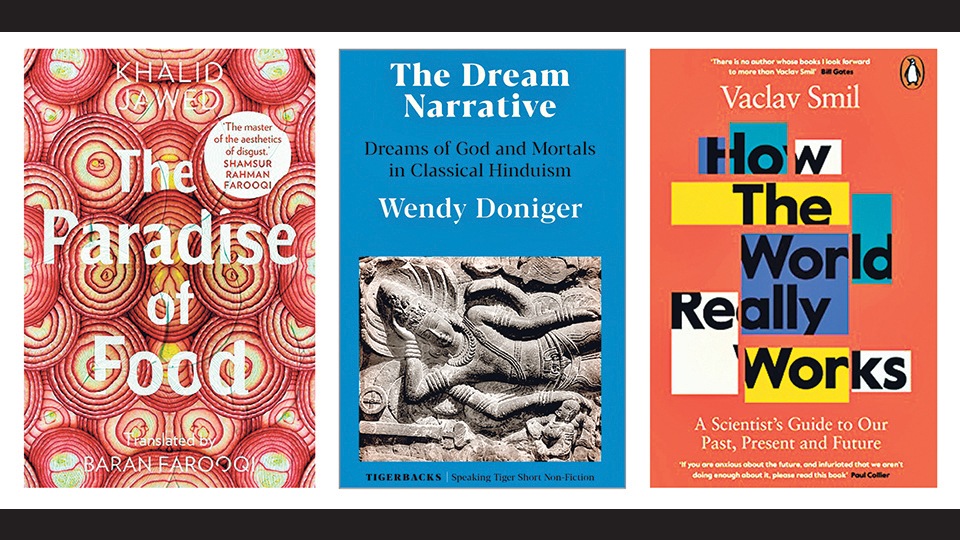
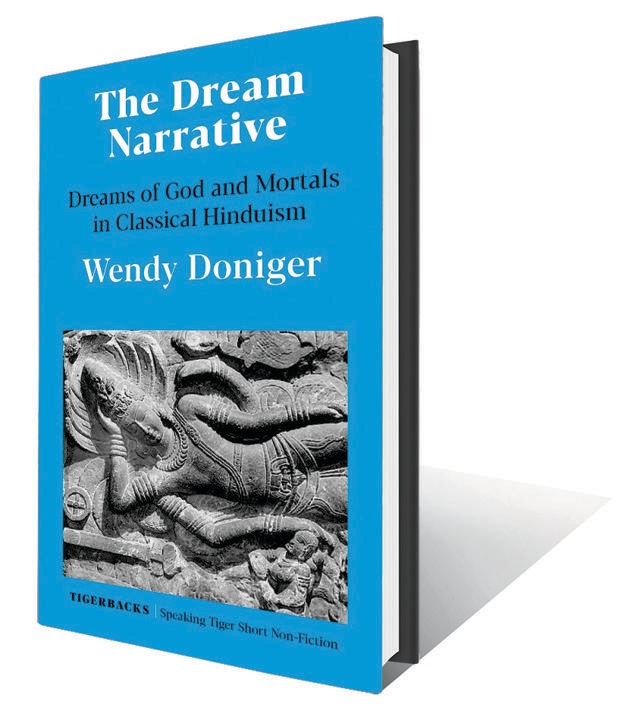
Dreams are a serious matter in Indian myth and religions, especially Hinduism. But are they maya (illusion), lila (God’s play), or an awakening to our real selves? Are we living in a dream dreamt by the Author of the Universe as we know it? Are dreams, then, an insight into the reality of that universe? Do they prove the ‘nothingness’ of the world we see or the substantial reality of ‘illusion’ itself?
In this dazzling short book, Wendy Doniger, one of the world’s great scholars of Hindu texts and myths, tries to unravel the dream adventure – encompassing dreaming, forgetting, rebirth and karma – with the help of fascinating stories from the Yogavasishtha (regarded as the greatest text ever written on the subject), the Ramayana, the Mahabharata, the Bhagavata Purana and the Matsya Purana.
The stories she retells – whether of the monk who dreamt of Jivata who, in turn, dreamt of a hundred dreaming souls; Rama and Krishna, who often forget that they are God or the sage Markandeya, who roamed inside the belly of Vishnu and couldn’t tell whether he was inhabiting illusion or had escaped it – catapult us, readers and dreamers, into new understandings of our waking life.*
A Scientist’s Guide to Our Past, Present and Future
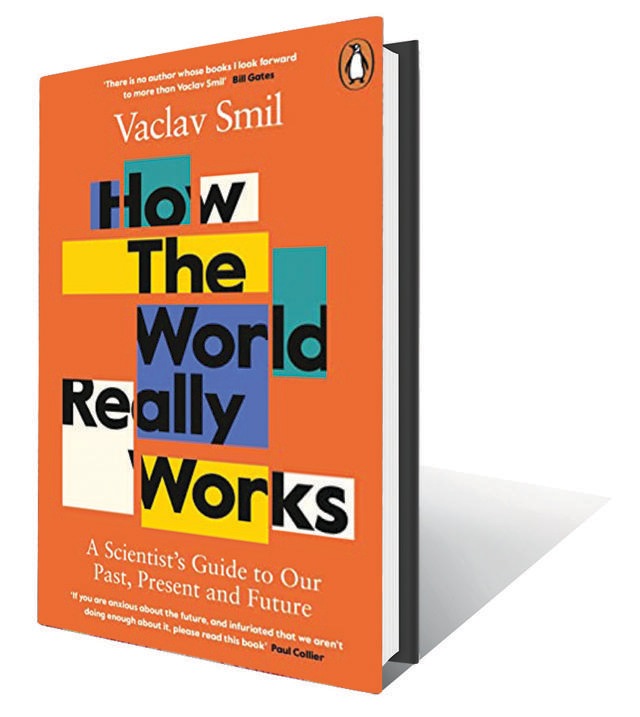
We have never had so much information at our fingertips and yet most of us don’t know how the world really works. This book explains seven of the most fundamental realities governing our survival and prosperity. From energy and food production, through our material world and its globalization, to risks, our environment and its future, How The World Really Works offers a much needed realty check – because before we can tackle the problems effectively we must understand the facts.
In this ambitious and thought provoking book we see, for example that globalization is not inevitable and that our societies have been steadily increasing their dependence on fossil fuels, making their complete and rapid elimination unlikely. Drawing on the latest science and tackling sources of misinformation head on, ultimately Vaclav Smil answers the most profound question of our age: are we irrevocably doomed or is a brighter utopia ahead?*
A landmark Urdu classic translated for the first time
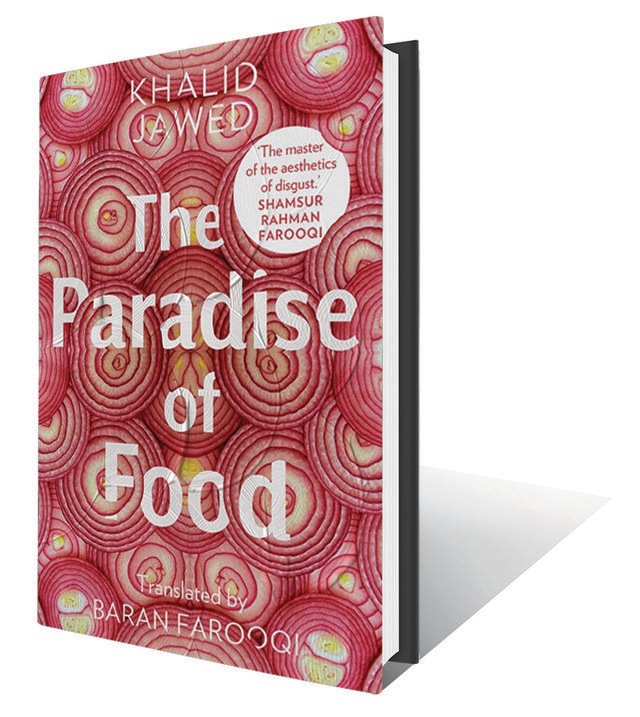
Khalid Jawed is one of the most original and extraordinary writers in Urdu today. The Paradise of Food is an Urdu classic known for its radical experimental form and savage and dark honesty.
It tells the story of a middle class Muslim joint family over a span of 50 years. As India – and Islamic culture – hardens, the narrator, whose life we follow from boyhood to old age, struggles to find a place for himself, at odds in his home and in the world outside.
But to describe the novel in its plot is to do its originality no justice. In this profoundly daring work – tense, mysterious, even unfathomable on occasion – Jawed builds an atmosphere of gloom and grotesqueness to draw out his themes. and in doing so he penetrates deep into the dark heart of middle class Muslims today.
Superbly translated The Paradise of Food is a novel like no other.*
*All copy from book flap.


