
 E-Paper



HT Picks; New Reads
This week’s pick of interesting reads includes a fascinating food trip through Delhi’s many historical cities right down to the present, a memoir of a life built around the fight for human rights, and a pioneering book on queer rights in India

 Prefer HTon Google


A melting pot of cuisines
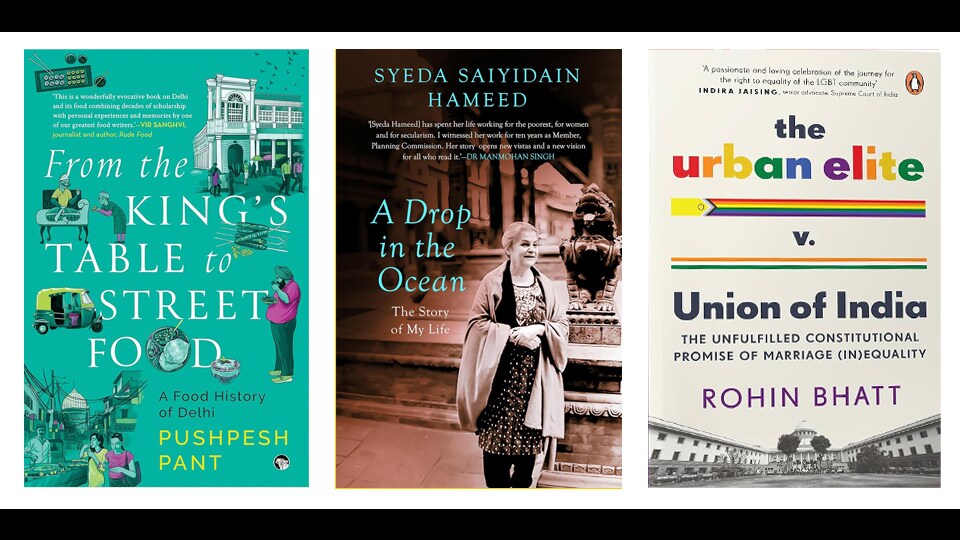
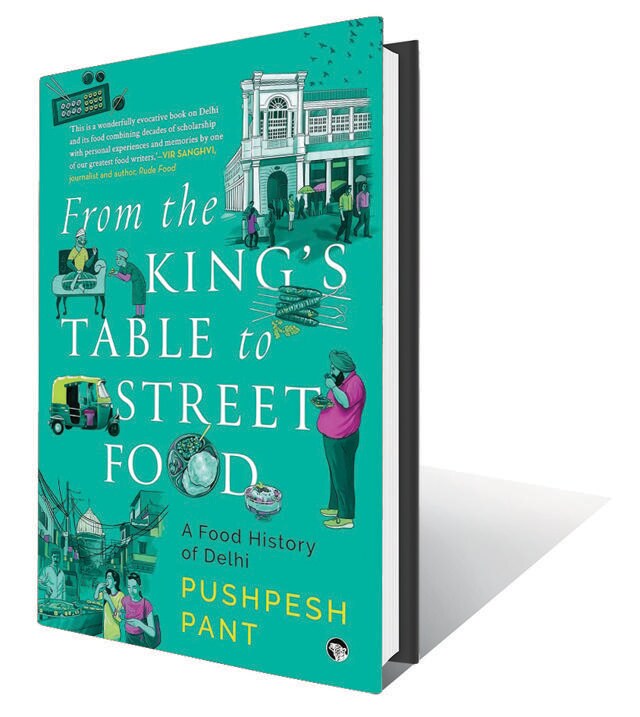
Who is an “asli Dilliwala” — a true-blue Delhizen — and what is his cuisine? To answer this question, Pushpesh Pant, food historian and raconteur par excellence, takes us on a culinary journey from the Mahabharata’s Indraprastha — the first city of Delhi — to the present day, through the Sultanate, the Mughal Empire and the British Raj.On this fascinating food trip, we savour the rich qormas and kebabs of Shahjahanabad and the Shepherd’s Pie and mutton cutlets of “angrezon ki Dilli”, with a light snack in between of papri or undiya, washed down with bael ka sherbet in a good Baniya home. But that is not all. As Delhi’s population grew to include migrants from across the country, so did its culinary repertoire. The Dilliwala of today is as likely to enjoy Calcutta-style street food — chops, cutlets, puchka and jhaalmuri — in the south Delhi colony of CR Park, as he is to relish a berry pulao and dhansak at the Parsi Anjuman. And what better tiffin than idli-dosa-sambar from the South Indian outlets that dot the city? From a city identified largely with Punjabi and Mughlai food — butter chicken and biryani —Delhi is now a melting pot of cuisines ranging from Kashmiri, Bengali and Bihari, to Andhra, Naga and ‘Indian-Chinese’.Pushpesh Pant also tracks the growth of the city’s restaurant culture, from wayside dhabas and McDonalds to high-end restaurants that can compete with the best in the world — justifying its claim to being a global food capital where virtually every cuisine can be found, including Japanese, Thai, Mediterranean and Korean.Drawing on a wealth of historical records and literary sources, Pushpesh Pant has written a delightful, anecdotal account of the life and food habits of each period of Delhi’s history, that is as much a feast to be enjoyed, as the food he describes.*
A record of a remarkable Indian life
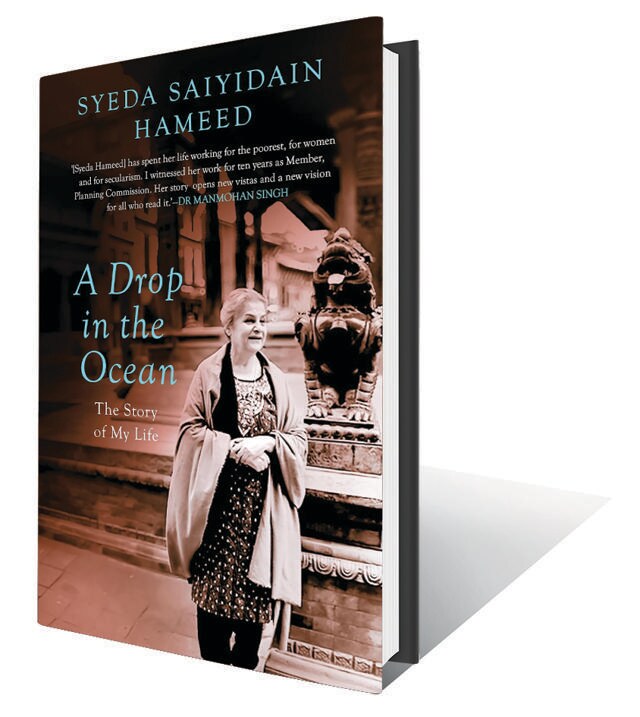
Syeda Hameed was nine years old when her first story was published in Shankar’s Weekly in 1951. It was the start of a prolific writing career that would include the translation and editing of four volumes of Maulana Abul Kalam Azad’s works, and translations of Hali, Ghalib, Faiz and Sarmad Shaheed. But the story, You Have to Learn to Make Friends, also held within it the seeds of much that was to define her life in years to come. Born of an incident when she was boycotted by the neighbourhood children because her name was ‘Syeda’, it made her aware of her Muslim identity for the first time and, in time, of the need for peace between Hindus and Muslims, Indians and Pakistanis. To this end, she went year after year with iconic journalist Kuldip Nayar and others to the Wagah border to light a candle on the stroke of midnight on August 14/15, and in 2000, took a ‘bus of peace’ to Lahore, and met women who, like their sisters from ‘the other side’, yearned to forge bonds of friendship.Before this, returning to India after 17 years in Canada with her husband, Syed Mohammad Abdul Hameed — a marriage of both happiness and heartache — she had built her life around the fight for human rights. As a Member of the National Commission for Women and, later, the Planning Commission, she travelled across the country listening to the dispossessed, and taking up their causes — among them, Sajoni Kisku, a Santhal woman who was beaten and tortured for the ‘sin’ of picking up the plough when her drunken husband could not; 19-year-old Maimun from Nuh who was gang-raped for marrying outside her gotra; and Tang Kumar of the Andamans, who lost his entire family at sea and built a new life for himself as ‘captain’ of his village.Syeda writes of many such encounters that gave meaning to her life, and of some extraordinary people who shaped it: her mother, Aziz Jahan Begum of the royal Rampur family, and her father, the educationist Khwaja Ghulamus Saiyidain; her uncle, the writer and cinema legend Khwaja Ahmed Abbas; Indira Gandhi, with whom she worked briefly; and Khushwant Singh, the grand old Sardar who was her literary mentor.Sensitive, deeply human, intimate and often moving, this is an inspiring record of a remarkable Indian life.*
Queer rights in the courtroom and outside
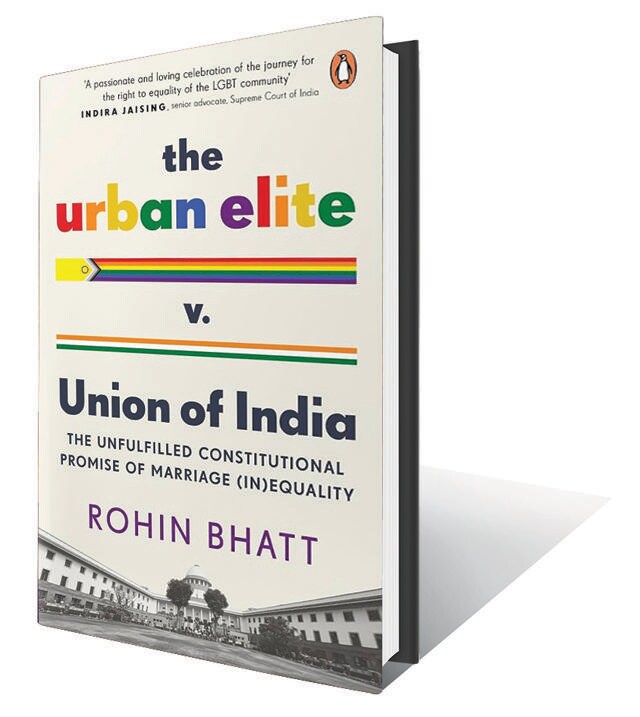
What does it mean to be a queer lawyer? How should social impact and public interest legislation be undertaken? Is the legal profession a safe space for queer lawyers? What goes through the mind of a queer lawyer when homophobia is masqueraded as a legal argument?Rohin Bhatt was studying law at the Gujarat National Law University when the Supreme Court gave its landmark judgment in Navtej Singh Johar & Ors v Union of India. The apex court was asked to determine the constitutionality of Section 377 of the Indian Penal Code, a colonial-era law which, among other things, criminalized homosexual acts as an “unnatural offence”. The verdict changed the lives of the LGBTQIA+ community in India, with activists and lawyers outside the court cheering as the news broke. But five years later, little has changed on the ground.The Urban Elite versus Union of India is a first-of-its-kind book on queer rights not just of the courtroom, but of the author’s own life. In this book, they present the legal history of the fight for the decriminalization of Section 377, the arguments of the petitioners pushing for their right to marry (and the vicious opposition) and to have families of their own, as well as a story from the frontlines of litigating queer rights by a queer person that presents their own perspective of what it is like to be both personally and professionally involved in a case that had the potential to change the social fabric of this country forever.*
*All copy from book flap.


