
 E-Paper



HT Picks; New Reads
On the reading list this week is a book that describes what happened in Manipur from within the Kuki-Zomi/Mizo experience, another that presents harrowing reportage on the pandemic, and a volume that looks at the three groups of rock-cut temples at Ellora

 Prefer HTon Google


A searing personal account
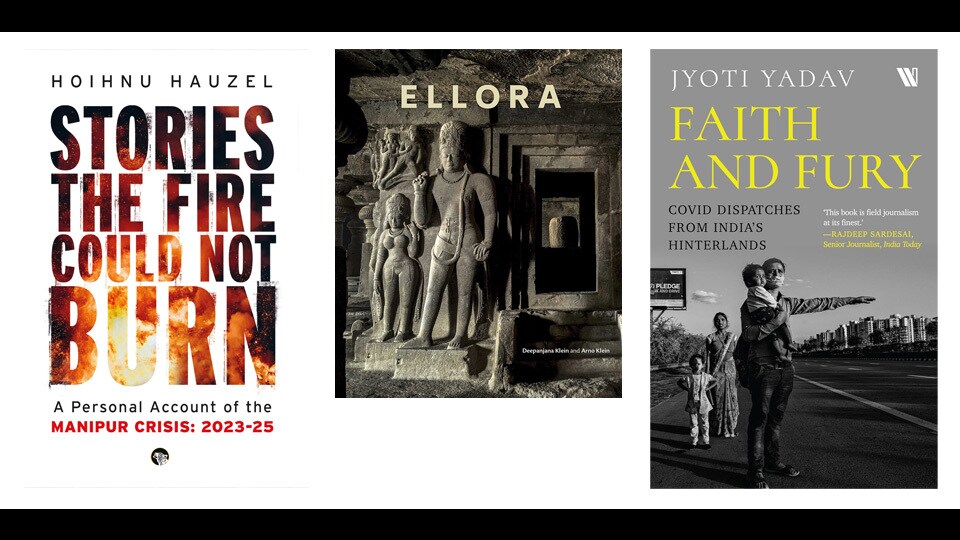

On 3 May 2023, the north-eastern state of Manipur plunged into the gravest crisis it has faced since its formation. Decades of differences, aggravated by grievances over land and identity issues, between the Kuki-Zomi/Mizo tribes and the majority Meitei community, spilled over resulting in deadly clashes that have, till the writing of this book, left over 200 dead and over 60,000 displaced.
The book describes what happened in Manipur without filters, and from within the Kuki-Zomi/Mizo experience. Hauzel describes the night of terror when her parents’ home and those of others in the tribal enclave in Imphal she grew up in were burnt down along with the church the family went to. She also recounts — among many other such instances — the ruthless beheading of David Thiek, and the stripping and unbearable humiliation suffered by two women, that were seen in viral videos on screens everywhere and that brought national focus on the crisis. She weaves the history of tribal and Meitei antagonism, the formation of Manipur, and its unique geographic and ethnic make-up, with personal history.
Stories the Fire Could Not Burn is a compelling portrait of love for one’s homeland and the incredible pain of losing it forever. This is a book about a conflict, but it is also about geography, movement, and the difficult work of continuing life when the ground beneath you has shifted for good.*
Chronicle of an unremitting tragedy

On the morning of 7 May 2020, journalist Jyoti Yadav set out to cover the first wave of the Covid-19 pandemic in Uttar Pradesh and Bihar and the migrant exodus that began once the country went into lockdown. She travelled on the highway and passing through small towns and villages, she documented the migrant crisis and the breakdown of India’s healthcare infrastructure, battling frequent exhaustion, bouts of sickness, troll abuse, searing heat, abysmal sanitation, unreliable statistics and official resistance to truth-telling. Interviewing hundreds of people on the road, in the local administrations, staff in hospitals, crematoria, families of victims, she did numerous stories which later received awards for fearless journalism. She set out again when the far deadlier Second Wave struck, collecting data, which exposed the undercounting of deaths by the state governments.
Faith and Fury is an immense reporting achievement. Jyoti Yadav gives us a riveting chronicle of the unremitting tragedy that Covid was and the resilience that also sometimes accompanied it.*
On the only site that houses Buddhist, Hindu and Jain cave temples

Ellora attempts the first systematic overview of the Ellora cave temples, a UNESCO World Heritage Site, excavated between 600 CE and 1000 CE and the only cave temple site that houses Buddhist, Hindu, and Jain caves. This volume looks at each of these three groups of rock-cut temples and the stylistic influences they drew from each other and from surrounding regions.Essays by a range of scholars including Stanislaw J Czuma, Nicolas Morrissey, Lisa N Owen, Vidya Dehejia, Pia Brancaccio and Arno Klein bring a comprehensive understanding of the chronology and stylistic development of the 34 main caves and lesser caves of the site. Ellora also includes extensive photographic documentation, ground plans, and rarely seen early 19th-century etchings of the most significant caves.*
* All copy from book flap.


