
 E-Paper



‘I had to branch out and tell the other side of the story’
Hussain Zaidi’s new book gives form to years of information collected on the Mumbai underworld; the source of which is former top cop Pradeep Sharma

 Prefer HTon Google


navneet.vyasan@htlive.com
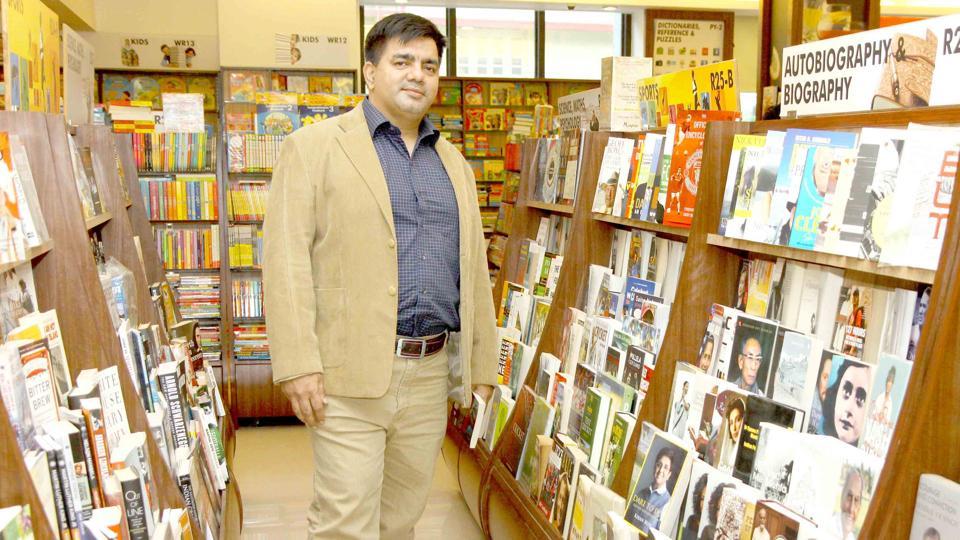
If ever there was a personification of the saying, ‘You can take the boy out of Bombay; you can’t take Bombay out of the boy,’ Hussain Zaidi’s name is there, up front. Today, what the city stands for is a far cry from what it was in the ’80s. Zaidi’s works, most notably Dongri to Dubai, was a gut-wrenching account of twisted men, who landed on the shores of Mumbai looking to make a fortune. But one just has to look at Black Friday and Mafia Queens of Mumbai — preceding Dongri to Dubai — and Byculla to Bangkok that succeeded his popular work, to realise it’s clear that Zaidi’s unquestionable credentials will raise no eyebrows.
The class of ’83
But his new book, The Class of ’83 (Penguin Random House), is about the batch of 1983 from the Police Training School (PTC) in Nashik trained by the legendary Arvind Inamdar. Inamdar, who passed away in November this year, produced numerous encounter specialists, who were as brave as they were controversial. Most notably, Pradeep Sharma, who served the Mumbai Police for two-and-a-half decades (notorious for his encounters. Official records state 312 killings). “My first meeting with Pradeep Sharma was way back in 1996 when he was in the narcotics cell of the crime branch of Mumbai police,” recounts Zaidi. A reporter back then, Zaidi felt it would be “advantageous for any reporter” to know him. “He was a persistent cop and good with his network of informants. We became friends soon after and then he began confiding in me and telling me inside scoops. I did not anticipate that slowly these massive amounts of information that was coming my way will become the foundation for a book in subsequent years,” says the author.
The glorification debate
And Zaidi is aware of the criticisms labelled against him. Be it glorification of gangsters or writing only about them, his works have undoubtedly piqued the interest of readers. “I usually write about gangsters,” says the author, adding, “But I had to branch out and tell the story of the other side.” Zaidi admits that this was, in fact, a story waiting to be told and he “had to do that because luckily, I have the means to get the information to do justice to it.”
It was only last year, when former top cop, Isaque Bagwan released his book Me Against the Mumbai Underworld. The book was his account of his encounters with Mumbai’s underworld, which was at its height when he took office. Bagwan was portrayed by Anil Kapoor in the 2013 movie, Shootout at Wadala. In an interview, he had expressed his concern about Bollywood glamorising criminals. Does Zaidi feel that too? “To say it frustrates me is unfair to the filmmaker. I know that they are going to have their own vision with the words that I may have penned down. So it’s their version of the narrative which is moulded to suit dramatic needs instead of the truth. It’s a function of the medium, I guess,” he says.
“Also, as far as glorification goes, I think the guys also meet a dark fate by the end of the film. So it’s not always a rosy picture being painted. Sometimes it is a bit disappointing to see certain situations or episodes exaggerated just to suit the whim of the actors,” he adds.
Mumbai- The muse
Make no mistake, Zaidi is Mumbai in more ways than one. And for the author, who made the city his muse, he’s grateful that its history is a “gift that keeps on giving”. “We’ve had several landmark moments in Mumbai’s police history and my latest offering is me telling one of those stories that can put any fiction novel to shame,” he says.
And Zaidi unabashedly taps the aspect inside a person’s soul that’s intrigued with these stories, mostly eluding admission. “I think, the fact that these accounts are real things that have transpired, is what keeps people interested,” he says.
“There are such stories, not just about gangsters but also about cops, that I hope to keep telling so that people who are interested in this, get to learn more about the city,” he concludes.


