
 E-Paper



Interview: Ipshita Nath, author, Memsahibs; British Women in Colonial India — ‘They often challenged official narratives’
You contest the notion that memsahibs were “merely trailing spouses” though they did mostly rely on the status of their husbands to establish their own positions

 Prefer HTon Google


You contest the notion that memsahibs were “merely trailing spouses” though they did mostly rely on the status of their husbands to establish their own positions. What role did these women play?

Memsahibs had a less prominent position in the empire-making process, and their personal histories were marginalized in official narratives of the Raj. In actuality, their part in the colonial process was not as direct agents of the Crown, as they were co-opted into it mainly through the institution of marriage. Nonetheless, as many of their writings reveal, the typical notion of a trailing wife does not apply to them as they carried out varied activities of their own in India. Even though they did not directly participate in the empire building project, they did aid their husbands in a number of ways. Their writings allow us to gain an alternative perspective to mainstream colonial discourses with regard to British India. I suggest the term ‘epistolary chronicling’ for their pursuits in archiving different aspects of their lives in the Raj.
You have extensively quoted personal narratives, including letters and diaries. What insights did they provide about their own lives and those of the subjects ruled by their husbands?
My sources were a range of writings by memsahibs themselves, mostly written between 1800 to the mid-nineteenth century. Over the years, I managed to accumulate a few early editions of their works. I was even fortunate to find some rare books by Flora Annie Steel in an old antique shop in Shimla, early in 2015 – one of the reasons why memsahibs sparked my interest. One of the more expensive ones had coloured illustrations.
Since there is a lack of data on the lives of British women in India, their personal accounts become indispensable sources of information on their daily activities, private and intimate lives, as well as public engagements. Since their writings covered a range of subjects such as travel, sports, domesticity, society, religion, love and marriage, motherhood, (maternal) health, diseases, etc., they are crucial in understanding the gendered histories of the Empire. Besides, even though they had been co-opted into the colonial project as wives, their insider-outsider position allowed them a kind of liminal position from where they could offer alternative perspectives to the dominant stance, contradicting official statements, and sometimes transcending barriers of race, class, gender, etc. In doing so, they often supplemented and even challenged official narratives on the same through their “female gaze”.
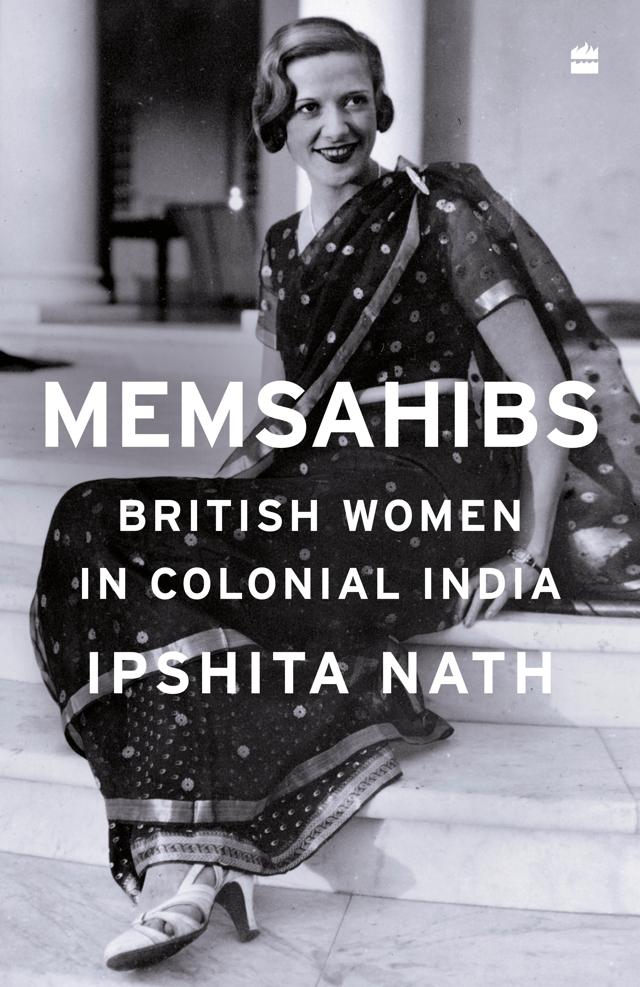
You argue that the historical neglect of memsahibs’ writings lead to “sexist and often diminutive portrayal of memsahibs in literature and cinema”. Why has their writing been largely ignored?
Memsahibs built a vast body of literature about their experiences in India in the form of published accounts or private diaries providing variegated insights into Raj-life in India. Yet, their works remain obscure even today, allowing debilitating stereotypes about them to persist in popular perception. Several historians engaging in colonial history have discussed how memsahibs’ writings are testimony to their unconventional and even progressive activities while in India. It is likely that their writings have been neglected in mainstream history since officially, these women did not have the power or authority, because of their mediated position as wives of sahibs and army officials. The marginalization of their writings is merely symptomatic of their social marginalization.
Due to the steady effacement of their narratives, the stereotypes remain unchallenged. Such obfuscation leads to the obscurity of their writings, which in turn impacts the overall body of literature on a given subject, making it skewed in favour of male perspectives. And yet, memsahibs’ writings were crucial documents of colonial history, even though they have been neglected in the largely mainstream history of the Empire. They were chroniclers in their own right, creating copious accounts of their own specific activities precisely to provide a glimpse into the subjectivities of that gender that was left on the peripheries of imperial work
Did their writings also reveal their prejudices and a justification of the colonial project of which they were an integral part?
Certainly, yes. Several memsahibs’ writings were replete with racial and religious biases. Selective historical amnesia can be noticed, and a deliberate attempt to sketch the East as primitive is also evident in many. Many used hyperbolic language to describe their adventures in oriental spaces, while some exaggerated their supposed sufferings, despite the obvious privileges they enjoyed. Some were simply apolitical. There were women who were racially arrogant and pro-imperial too so it was challenging to keep a neutral tone.
Writing about memsahibs’ writings, complex, problematic, and variegated as they were, was not to “redeem” the women of the colonizing race by romanticizing them, or to villainize them either for their racist ideas whenever present, but to afford them a part in a historical narrative from which they were largely excluded.
Who were the “atypical memsahibs”?
Here I want to specifically point out the ‘Naga Queen’ – Ursula Violet Graham Bower who came to India in 1937, initially to tour the north-eastern regions. Her anthropological bent of mind led her to the tribal community of the Nagas, and compelled her to stay on for several years. In the 1940s, as Japanese invasion seemed imminent, she continued her research in the villages and even took the lead in the relief efforts of refugees. Eventually, her studies became more entwined with political work, and she joined the guerilla warfare against the Japanese to defend the borders. She was hailed as the “Naga Queen” for her efforts by the locals.
Married to a Lieutenant, Violet Jacob came to India towards the end of the nineteenth century and travelled widely by train and horseback. Fanny Parkes — the nineteenth-century equivalent of the ‘solo traveller’— travelled through the country in search of adventure. She unabashedly went “in search of the picturesque”. Mary Frances Billington, a writer and journalist working for The Daily Graphic, became known for several of her publications including her book, Woman in India (1895).
Harriet Tytler, an India-born writer, artist, and photographer wrote a particularly haunting autobiographical account of her life called, an Englishwoman in India, 1828-1858 (1864). She became known for giving birth in Delhi as the 1857 Uprising raged through the city and lived in hiding in abandoned ruins for several months with her children.
What did the personal narratives of memsahibs reveal about their interactions with Indian women?
British women frequently met Indian women while on tours with their husband. Several documented their encounters in the zenanas. Some were concerned about their “eastern sisters” and so, while the memsahibs’ husbands engaged in imperial work, they engaged in their own “diplomatic relations” with Indian women of rank. The memsahibs’ easy access to Indian women in their zenanas gave them an uncommon insight into the private lives of their subjects.
Most believed Indian women lived limited lives as they were kept within their homes, in purdah. Marianne Postans wrote, “Surrounded by slave girls, all chatting merrily together, and some with their infants in their arms, we proceeded through a suite of several apartments to the Beebee’s sitting room”.
British women appreciated Indian ladies’ grand attire and jewellery but were disappointed at their lack of keenness to interact with foreigners. E Augusta King noted that Indian women did not discuss private matters openly, leaving a lot to the imagination.
Undoubtedly, memsahibs were curious and sometimes voyeuristic in their approach to Indian women’s intimate lives. Their writings contain a ‘Eurocentric gaze’ in their revelations about zenana women and aspects of Indian life, such as marriage. They also had a condescending tone at times as they believed these women to be suppressed and suffering under rigid patriarchal norms. Some wanted to initiate methods to Westernize the zenana ladies, educate them and help in ‘improving’ their condition. Indeed, memsahibs’ “gentle imperialism” had the same imperialist agenda of “civilizing” the Indian masses, as their male counterparts.
Since these women did not have any official role, what changes were they able to make during their years in India?
A few memsahibs did some progressive social work. Flora Annie Steel, who began with teaching children from her home, advocated reforms in the whole system of education. She established several small schools and was later appointed Inspectress of Government and Aided Schools in Punjab.
Annette Ackroyd came to India in the 1870s and discovered that sufficient work wasn’t being done to educate women. She initiated separate schools for young women, but not before learning about Indian culture and Bengali.
Some women of rank such as Lady Hariot Hamilton-Temple-Blackwood, Marchioness of Dufferin and Ava, who came to India with her husband when he became the Viceroy in 1884, worked in women’s health care, and in 1885, established the National Association for Supplying Female Medical Aid to the Women of India, known as the Countess of Dufferin Fund.
Their writing offers an important entryway into a portion of colonial history – rather, women’s histories – that would otherwise not have existed.
Majid Maqbool is an independent journalist based in Kashmir.


