
 E-Paper



John le Carré: Sworn to Secrecy
The author of wildly successful novels like The Spy Who Came in From the Cold and Tinker Tailor Soldier Spy, who died aged 89 on December 12, elevated the genre of spy fiction


“Spying was forced on me from birth much in the way, I suppose, that the sea was forced on CS Forester, or India on Paul Scott. Out of the secret world I once knew I have tried to make a theatre for the larger worlds we inhabit,” writes David Cornwell, known to the literary world as John le Carré, in his memoir, The Pigeon Tunnel: Stories from My Life (2016). A chronicle of a writer’s journey over more than six decades, the memoir also recounts his “hunt for the human spark” that lent “life and heart” to his fictional characters, spies all, decent men buffeted by personal tragedies, and negotiating the webs of deceit — treachery, betrayal and political intrigue — often through moral compromise. Looking back at his life through a series of funny and incisive stories, le Carré reads into events past and witnesses the same “moral ambiguity” with which he imbued his novels. Several encounters he describes have acquired, to his eye, the status of “tiny bits of history caught in flagrante”.
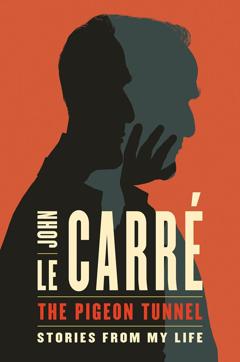
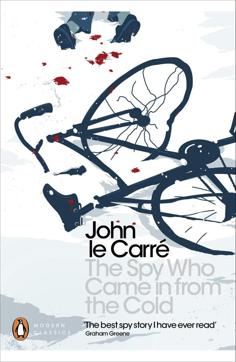
Through his works like the wildly successful The Spy Who Came in From the Cold and Tinker Tailor Soldier Spy, le Carré, the master of espionage, elevated the genre of spy fiction, and upended Ian Fleming’s fictional model for modern British spy as the suave and urbane James Bond for whom spying is no less than a romp that is to do with sex and secrecy in equal measure. His spies, both Western and Soviet, including the legendary George Smiley, are awkward and unhappy souls caught in the maze of bureaucratic power play. Through them, le Carré portrays British intelligence operations as “cesspools of ambiguity in which right and wrong are too close to call and in which it is rarely obvious whether the ends, even if the ends are clear, justify the means,” as an obit in the New York Times rightly underlines.
le Carré’s Cold War thrillers stand out for their immensely nuanced characters and intricate plots. They are as much steeped in moral ambiguities as they are in the author’s own ideas of truth, memory and facts. In The Pigeon Tunnel, the stories are told from memory, but le Carré is aware that the reader is entitled to ask what truth and memory could mean to a creative writer in “the evening of his life?” Answering this question, he writes: “To the lawyer, truth is facts unadorned… To the creative writer, fact is raw material, not his taskmaster but his instrument, and his job is to make it sing. Real truth lies, if anywhere, not in facts, but in nuance.” Is there such a thing as pure memory? As a fiction writer, le Carré doubted it. Even when we convince ourselves that we’re being dispassionate, he argued, sticking to the bald facts with no self-serving decorations or omissions, pure memory remains “as elusive as a bar of wet soap”. Or at least it did for him, after a lifetime of “blending experience with imagination”.
David John Moore Cornwell, who later became John le Carré, was born in Poole, a coastal town in Dorset, southern England, to an amoral and delinquent Ronald Cornwell, who declared himself bankrupt, and Olive Cornwell, who left the family when he was just five. The life and career le Carré went on to carve out for himself was the consequence of an impulsive adolescent decision to get out of England and his embrace of the “German muse” as a substitute mother. “Spying did not introduce me to secrecy. Evasion and deception were the necessary weapons of my childhood. In adolescence we are all spies of a sort, but I was a veteran. When the secret world came to claim me, it felt like a coming home,” he writes.
Having “bolted” from his English public school at the age of 16, le Carré took refuge in the unruffled tranquillity of Bern, the capital of Switzerland, and where he enrolled at Bern University. It was from here that the offer to serve in in British Intelligence during the Cold War came to him. And it from here that he tasted literary success with the publication of The Spy Who Came in From the Cold (1963), the story of a British agent, Alec Leamas, a faux defector, who is entrusted with sowing disinformation about a powerful East German intelligence officer. His writing career took le Carré around the world, from war-torn Cambodia to Beirut on the cusp of the 1982 Israeli invasion, and Russia before and after the collapse of the Berlin Wall. He received critical acclaim not just for writing “from the heart of modern times” but also for traversing eclectic territory. The love for everything German at a time when the very word evoked outrage fed his incurable romanticism and his love of lyricism. For le Carré, his life was “one unending education”. When he came to study the dramas of Goethe, Lenz, Schiller, Kleist and Büchner, he discovered that he related equally to their classic austerity and to their neurotic excesses. “The trick, it seemed to me, was to disguise the one with the other,” he writes.
In his novels, he does exactly that: disguise austerity with excess, good with bad, moral with immoral. He loved best the privacy of writing. Which is why he didn’t do literary festivals. As much as he could, he stayed away from interviews. “There are times, usually at night, when I wish I’d never given an interview at all. First, you invent yourself, then you get to believe your invention. That is not a process that is compatible with self-knowledge,” writes le Carré, who loved writing on the hoof, in notebooks on walks, in trains and cafés, and, almost always, by hand, preferring to remain with the centuries-old tradition of “unmechanized” writing. The lapsed graphic artist in him actually enjoyed “drawing the words”.
Throughout his long career, he kept no diary, and relied on the odd travel note or line of irretrievable dialogue. Men and women of power drew him because “they were there” and because he wanted to know “what made them tick.”
Nawaid Anjum is an independent journalist, translator and poet. He lives in New Delhi.


