
 E-Paper



Karan Tejpal: “For me, the real writing happens in the rewriting”
The screenwriter and director of Stolen on his writing process, and arriving at the emotional truth of a project

 Prefer HTon Google


How and when did you decide to become a screenwriter?
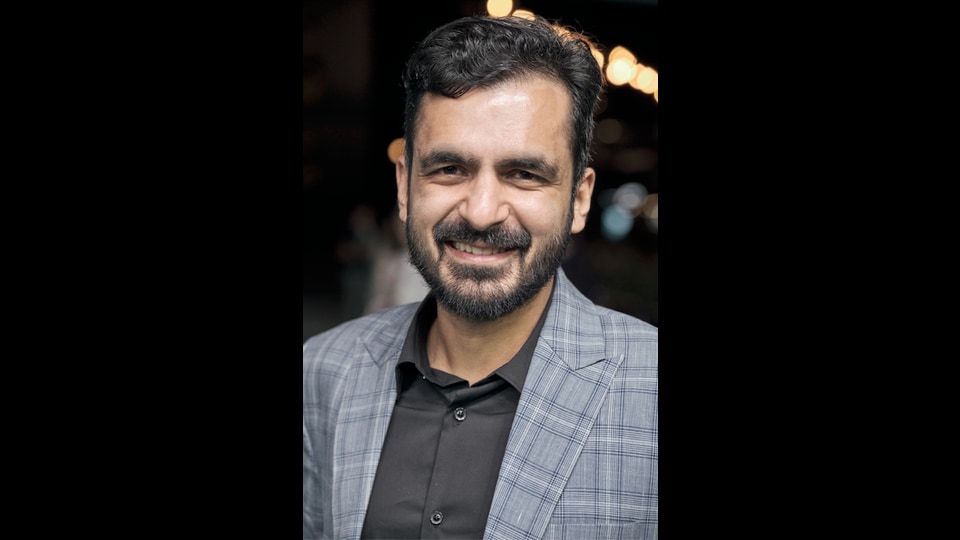
I’ve always felt that directing and writing go hand in hand, but my first passion was directing. In the beginning, I was only writing for myself — just enough to bring my own stories to life. Then, in 2017, I was all set to direct a film. Everything was in place — crew, casting, locations — but the project got shut down just three weeks before we were meant to start. That moment changed everything for me. It made me rethink my path, and I decided to actively look for work as a screenwriter, even if it meant putting directing on hold for a while. I was lucky to land my first screenwriting job in 2018, and that opened up a whole new journey. Now, I’ve truly come to love screenwriting — not just for my own films, but as a craft in itself. It’s become an essential part of how I tell stories.
What is your process of writing?
My writing process relies heavily on research and rewriting. I start by immersing myself in the world of the story through all kinds of research — reading books, watching films, talking to people, and of course, using the internet. On-ground research is a key part, which normally takes place toward the end of this process.
But more than anything, this stage is about finding the heart of the story — the emotional centre I connect with. Once I find that connection, everything else starts to take shape: the characters, the world, the tone. From there, it becomes a process of relentless rewriting. I never treat any draft as final. There’s always something to improve, something to go deeper with. For me, the real writing happens in the rewriting.
Stolen is a gripping thriller. Did you have any international references in mind for the pace or the texture?
There were three films that deeply inspired Stolen: Victoria by Sebastian Schipper, Good Time by the Safdie Brothers, and Son of Saul by László Nemes. Each of these films left a strong impression on me when I first saw them, and they stayed with me — both consciously and subconsciously — throughout the journey of making Stolen. Whether it was their sense of urgency, immersive style, or emotional intensity, they shaped how I thought about pacing, texture, and how to keep the audience gripped from start to finish.
Take me through the journey of Stolen in detail, from the idea to writing to pitching to making.
The idea for Stolen began with a video I came across of the 2018 mob lynching in Assam. It left a knot in my stomach — a visceral reaction I couldn’t shake. I felt stuck, disturbed. Writing became the only way I knew to process that emotion. Over time, that initial response grew into a 30-page treatment, which I shared with Gaurav at the end of 2019.
He immediately saw the potential. We were both drawn to an action-thriller approach, but one that carried the weight of social horror — something tense, grounded, and immersive. We wanted to explore that world through long takes and real-time momentum, letting the story unfold with urgency.
At the time, Gaurav was working with writer Swapnil, and the three of us began developing the screenplay together. It was a slow, steady process — spread out over three years and disrupted by multiple COVID waves — but we kept going. I rely heavily on research and rewriting in my process, and with Stolen, I wrote so many drafts I lost count. It was all about finding the emotional centre and staying true to it, no matter how long it took.
Casting was driven purely by the strength of each actor’s craft. With only five central characters, every performance needed to hold emotional weight. Abhishek (Banerjee) is one of the finest actors working today — honest, instinctive, and rooted in spontaneity. Casting him as Gautam Bansal was an easy decision. He read the script within days and came on board without hesitation.
The chemistry between the Bansal brothers was key. I wanted two actors who shared a real-life connection, and Abhishek suggested his friend Shubham. From our very first meeting, I knew I wanted to work with him. He’s meticulous, highly trained, and disappears completely into character.
Mia was recommended to us by our incredible casting director, Dilip Shankar. I saw her short film The Field, and I just knew — she was Jhumpa. Mia is an exceptional collaborator: emotionally present, fully committed, and willing to give everything to the work.
Being on set felt like home. I’d spent the first six or seven years of my career working non-stop as an assistant director, which gave me a solid grounding in every part of filmmaking. That foundation made the shift to directing feel natural. I never felt overwhelmed — just excited.
Every day on set was a thrill. There was a sense of play, of freedom. We were all in it together, trying things, pushing boundaries, taking risks. It was a joyfully intense experience.
And through it all, I was backed by an incredibly talented, passionate, and slightly mad team — people who believed in the story as much as I did. Without them, Stolen simply wouldn’t exist.
Do any of your personal experiences come into the script of Stolen?
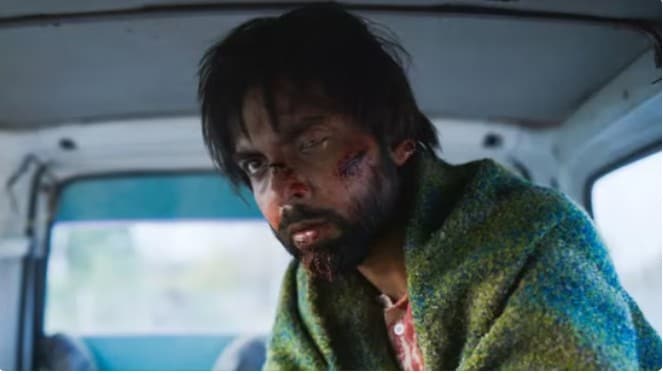
Yes, absolutely. Every frame, every character in Stolen comes from something personal — whether it’s a memory, an emotion, a fear, or a lived experience. For me, there’s no other way to make films. If it’s not personal, it doesn’t move me, and if it doesn’t move me, I don’t know how to make it. Even when the story is fictional, the emotional truth behind it has to come from something real.
Does it help to have written the script of the film when you’re also going to direct it?
Yes, absolutely. As I mentioned earlier, writing is my first step into the world of the story — it’s how I begin to immerse myself. So, when I’ve written the script myself, that connection is already deep and personal. Even if I were to direct a script written by someone else, I would still create what’s often called a director’s draft. That means rewriting or reshaping scenes in a way that reflects how I see them — translating the first layer of my vision onto the page before I step onto set. It helps me internalise the material and direct with clarity and instinct.
Would you have written Stolen any differently if it were to have a theatrical release and not an OTT-only release?
No, I wouldn’t have written Stolen any differently. I always write and direct with the big screen in mind. That cinematic approach is at the heart of how I tell stories. Even if someone ends up watching it on a phone or a laptop, the impact of that intention still carries through. For me, scale is not just about format — it’s about emotional depth, visual detail, and storytelling ambition.
Stolen is deemed to be a ‘social thriller’. What is that anyway? And do you believe in genre filmmaking?
Honestly, I don’t really believe in tags. Labels like “social thriller” are just a way to help audiences navigate the overwhelming number of films out there. They can be useful for curation — but as a filmmaker, I don’t think in boxes. I don’t start with a genre; I start with a feeling, a question, or an emotional knot I want to explore.
That said, I’ve always loved what people call “genre films” as a viewer — so it’s no surprise that Stolen falls into that space. What truly drives me is the chance to craft stories rooted in contrast — the kind of world that’s both brutally unforgiving and deeply human. That tension is where I find meaning.
I never set out to make a film with a message. I wanted to tell a gripping, emotional story about characters in a high-stakes, unpredictable situation. The politics are embedded in the world they live in — class divides, mob mentality, child trafficking — these aren’t themes I added on top; they’re part of the fabric of the story.
Which films and filmmakers have influenced you at the different stages of life?
That list is long and ever-growing. But there are a few filmmakers who’ve had a profound impact on me — not just through their work, but through the way they approach cinema and life itself. Directors like Akira Kurosawa, Ken Loach, Nuri Bilge Ceylan, Satyajit Ray, Mira Nair, Martin Scorsese, the Coen Brothers, Quentin Tarantino, Asghar Farhadi, and Bong Joon Ho have all shaped my perspective at different points in my journey.
Some influenced me through their storytelling and visual style, others through the emotional honesty of their characters, and many through the way they’ve carved their own path, often against the grain. Each one has, in some way, reminded me that cinema can be bold, personal, political, and deeply human — all at once.
Mihir Chitre is the author of two books of poetry, ‘School of Age’ and ‘Hyphenated’. He is the brain behind the advertising campaigns ‘#LaughAtDeath’ and ‘#HarBhashaEqual’ and has made the short film ‘Hello Brick Road’.


