
 E-Paper



Ledia Xhoga: “Memories are every person’s invisible cloak”
The author of the Booker-longlisted Misinterpretation on presenting human relationships in all their complexity

 Prefer HTon Google


What was that genesis of this book?
Some years ago, I volunteered for an organization that helped survivors of torture and I was supposed to interpret for a man whose background was similar to Alfred. Our schedules didn’t align and I didn’t interpret for him, but the story remained in my mind and I jotted it down at some point. It didn’t have a title and I didn’t know if it was going to be a novel. But it worked out; the story flowed.
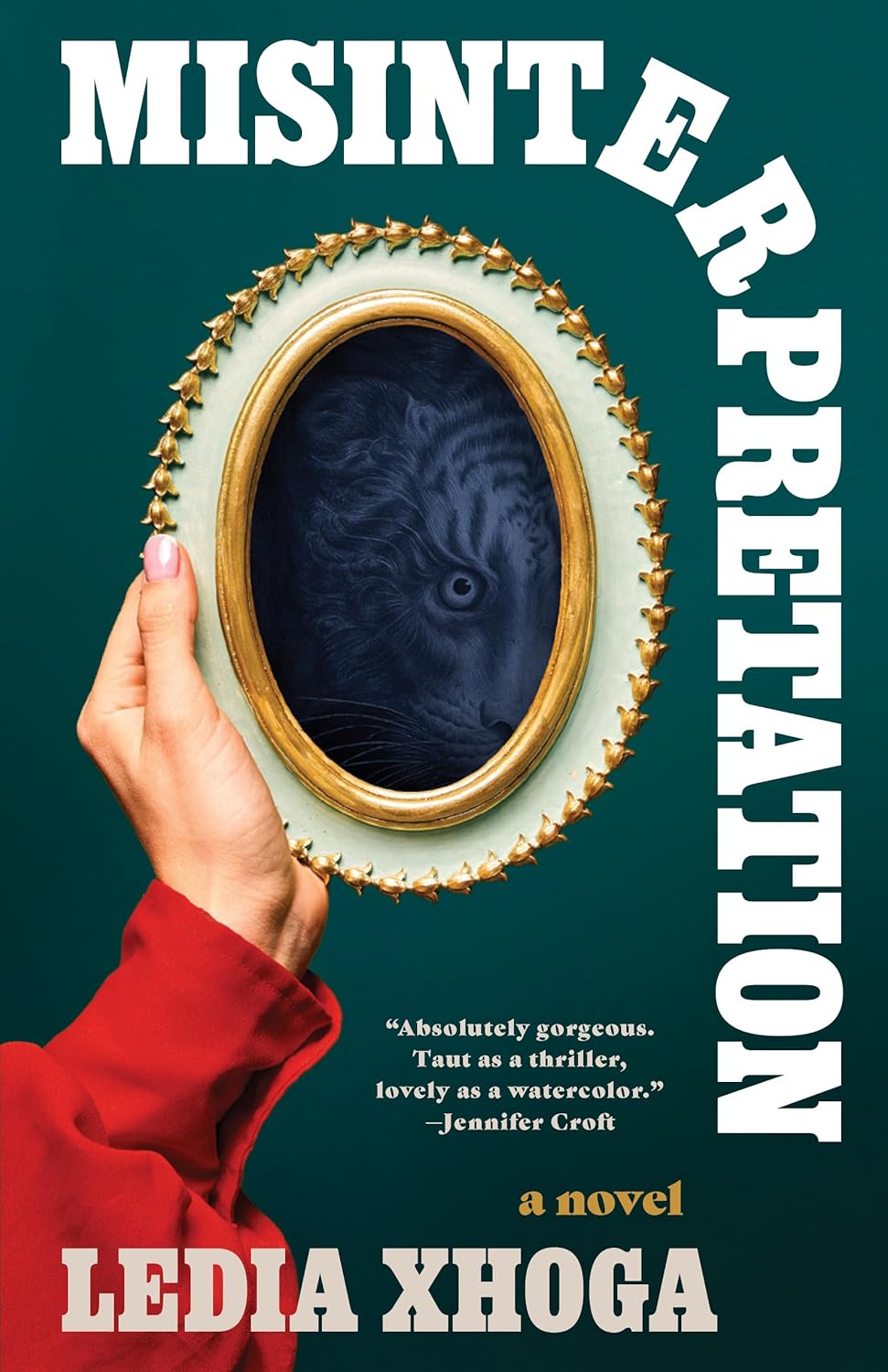
Alfred is an interesting multilayered character who unfolds his memories to his psychiatrist for his mental issues. The unnamed narrator also brings out her memories in many instances in the novel. How important are memories to you as a novelist who makes characters plunge into their past?
Memories are every person’s invisible cloak. Or, a better metaphor is what Delmore Schwartz says in a poem
Breathing at my side, that heavy animal,
That heavy bear who sleeps with me.
I’m not sure if Schwartz was referring to memories exactly, but it seems apt in this case.
In Misinterpretation memories play a huge role especially since we have scenes that take place at a therapist’s office (a natural setting to plunge into the past) and since most of the characters are immigrants who straddle two worlds, their present lives and their pasts in other countries. It seems unfeasible to understand a character who has made such a turn in life without exploring to a certain degree what came before.
Do you also carry a diary, or notes from your own past that you later find useful for fiction writing?
I really wish that I was a diary person or someone who jotted down notes about my life, but I’ve never done it. I do write notes on my phone when I’m working on a project, ideas, lines of dialogue that come to me suddenly. I find that really useful.
You write, “In order for anyone to find out if a novel is any good, the novel has to first sound good”. What makes Misinterpretation sound good or to what did you pay special attention to make the novel sound good while you were writing it?
Yes, here I was mostly referring to how publishing works in the US. After you finish a novel, you have to write a query where you describe the novel to an agent so they find it interesting enough to represent it and show it to publishers. This was never something I was particularly concerned with when I first started writing, but if you are thinking about publication it does come into play as the competition is fierce. I think the idea of an interpreter who misinterprets because the story of her client reminds her of her own past sounds fascinating. Also, something that the book jacket didn’t mention but that many commented on after publication was the fact that the novel involved various genres. I’m not sure if I was thinking about the query while writing though; I was trying to write a good story.
Which character in the novel is close to your heart?
I worked the hardest on Billy, because some of the initial comments from friends who read the manuscript were that he seemed unlikable. So, in the process of getting his point across more, I feel like I got to know him really well and liked him. But I think for this question I have to go with Alfred. He is really vivid in my mind and I think in the minds of the readers. As you said, he is a multilayered character. He is open about all his problems, and yet remains slightly mysterious.
For a novelist, one of the most difficult tasks is to explore the subtleties of human relations and you are brilliant at weaving the complex tapestry of human relations through your characters. How important is this for fiction writing?
Thank you! Yes, that is something that we, as social creatures, are always preoccupied with or seek advice about and what better way to represent that preoccupation than art and especially fiction writing? There are different kinds of novels, of course. Some seem to have a more historical or journalistic bent, but the fiction that I’m interested in reading and writing is the one that has that verisimilitude when it comes to relationships.
I’m intrigued by the title, Misinterpretation. What’s the story behind it?
Some titles come to me right away as was the case with the novel I’m working on now. That didn’t happen with Misinterpretation. I had finished writing a draft and was looking for a title. Then I was editing the scene at Zinovia’s office (the first time she interprets, when she withdraws into her memories) and then the word “misinterpretation” came to mind. I read a draft again with that title in mind and it seemed to fit.
Which books or writers have influenced you?
The writers I love are each a world of their own, a world where you go and live for a while and then you are slightly changed as a person and as a writer. It’s impossible to tell how or when. When I first started thinking of getting into writing, I read a lot of short stories. I remember reading Delmore Schwartz, Lorrie Moore, Truman Capote, Lydia Davis, Kawabata, Murakami. I love Colm Tóibín’s novels, Jeanette Winterson’s. I’m always and forever inspired by good writing.
Mohd. Farhan teaches English at Jamia Millia Islamia, a Central University in New Delhi.


