
 E-Paper



Mayank Tewari: “The film industry is full of false gods”
The screenwriter of Bard of Blood, Delhi Crime, and Ragini MMS, among others, on his journey and influences

 Prefer HTon Google


When and how did you think of becoming a screenwriter?
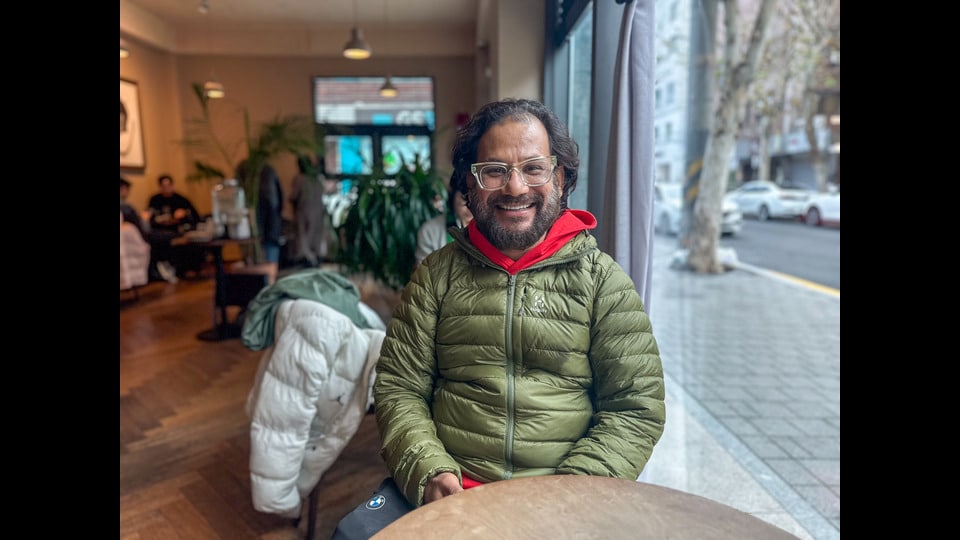
In school, I was very good at dramatics and at extracurricular activities. I also started the school magazine in class 11. So, I could write. Then, I studied journalism. I had the idea that writing was what I wanted to do. So, the writer came first; the screenwriter followed. I started thinking of screenwriting when I was in Delhi. Around 2007, I was a reporter with Hindustan Times. I had friends who were in the music scene, or were artists, and as a journalist, I also met a lot of authors. The idea of writing a screenplay started coming to me, when I creatively engaged with an artist friend and we tried to write a play. The play didn’t work out but that gave me the feeling that I could do this and I started thinking about screenplays and movies. I was also getting a little bored of journalism. So, I came to Mumbai in 2008; I was still a journalist. I moved actually because I was dating a girl from Delhi, who wanted to be an actor. She moved and I moved with her. Then, she went back to Delhi and I stayed. I started hanging around with a few film people and one thing led to another and I became a screenwriter.
You co-wrote the cult favourite Suleimani Keeda, and also acted in it. Tell me how you wrote it.
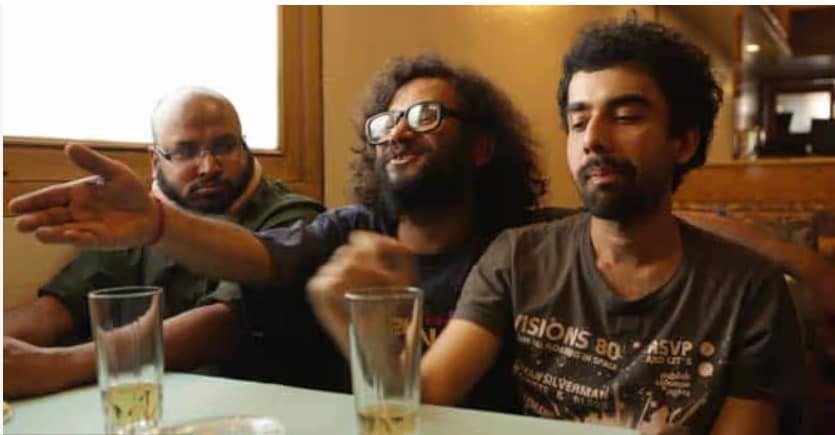
I used to go for comedy nights and open mic poetry nights. That’s where I met Amit (Masurkar), and we became friends. We started discussing ideas, and then he told me he’s writing this film about writers. He used to come to my house, discuss ideas. Then one day, he said, “I will shoot two scenes of the film. Can I use your house?” He also asked me to play one of the characters. The plan was to show the scenes to the producer, and then get an actor for the real shoot. But the producers liked me so much that they said they would take me on as an actor. All the dialogue, I did on my own.
It’s not easy to get a break and your first break was Ragini MMS. How did you land that opportunity?
In December 2009, the newspaper I worked for told me they don’t need my services anymore. When I came to the city, I had become friends with two people – the film critics Mayank Shekhar and Raja Sen. I started hanging out with them and they talked about films in a very critical way. When I was a journalist, I didn’t watch too many films. When I started hanging out with them, I began understanding films. When I was fired from my journalism job in 2010, I thought I’d become a freelance writer. Screenplays were part of the long list of things I could write. One evening, I performed a stand-up comedy set at Café Goa in Bandra. I was quite good and did it two-three more times. Vaspar Dandiwala, one of the writers working on Ragini MMS, approached me to write dialogues. He introduced me to Siddharth Jain who hired me for the job.
Are you satisfied with how Ragini MMS turned out?
Well, when I got onto the project, it already had a script and they wanted somebody to write dialogue. My first instinct when I read the script was that it wasn’t that great. So, I gave my suggestions to the team. They considered them. Then I wrote a dialogue draft. With that draft, Siddharth Jain went to Balaji who chose to co-produce the film. So, yes, if I look back, the project could have been better. I was well aware of its flaws. But I wasn’t the director of the film. It wasn’t my vision.
When I got into the industry, I was very confident of what I wanted to say. I wanted to say something real, something radical. For instance, Navdeep and I were making a zombie comedy, which was a comment on society. I used to think politically because of my reporting background. But when I got acquainted with the industry, I quickly discovered that something is terribly wrong with it. I did not have much respect for any big director in Bollywood but I needed a constant stream of work. So back then, I kept working on many small-budget films. I used to get some money to develop the ideas, but the films never got made.
Sometime later, I happened to meet Kamal Swaroop. I consider him my Guru. Every Saturday, I used to go to his house at 11. Then, we used to head to a nearby bar in Goregaon, order some beer and talk. He taught me a lot about cinema and politics. While doing all this, I started making sense of what was happening in the industry. The industry is full of false gods. I have a lot of problems with the film Lagaan; mainly with the fact that it revises history. It says the British were so nice that they lost a cricket match and waived off the tax. It seemed to me like an attempt to be in the good books of the West. I started building a resistance towards the mainstream.
I quite like Newton. Please take me through the journey of co-writing it with Amit Masurkar.
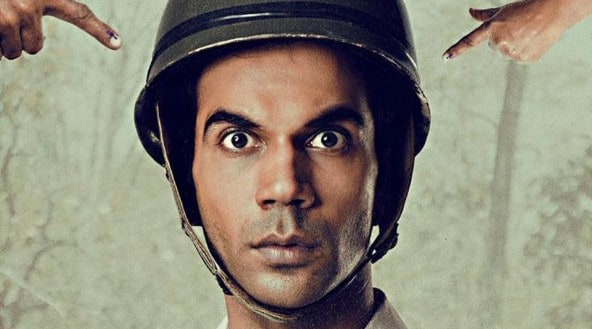
Newton was written in 2015. At that time, Amit and I shared a vision. We liked similar kinds of films and we disliked similar kinds of films. Besides, both of us were independent from the mainstream. We wanted to do work that was in our ‘zone’. We wanted to make a political film. As we got into the writing of it, we discovered the politics of the film. Amit had a lot of research done on these subjects. I worked on the dialogue. I remember changing the climax on the set. Fun times! It was an easy film to make.
You’ve written several things. Bard of Blood being one of them. How do you look at that show today?
Honestly, I don’t like it much. Red Chillies hired me as a writer. I wanted to see how a Netflix show is made. I was curious. Netflix said that two people from Hollywood are coming down to work on it. Without much understanding of India or Indian politics, they made a beat sheet in a month and went back. That left three writers, including myself. Netflix then asked the other two to leave because they didn’t like the episodes they had written. That left only me writing it. But there was a lot of interference. There was no pressure to add depth to the writing. I had to mainly finish it fast. But I can’t blame anybody. It was my responsibility, and I did not do a good job. It was my failure. Though you’d be shocked, a lot of people do like that show. It did well for Netflix.
Which films and filmmakers have influenced you over the years?
My earliest influence, though he’s not a filmmaker, was Mark Twain. Then when I started watching films as a youngster, I was very impressed with what Raj Kapoor did. But if you were to ask me what my way of thinking is and what my screenwriting is like, I’d say my writing is anti-Salim-Javed. My biggest grouse with Bollywood is that, by its very design, it cannot bring about social change.
If you were to ask me which filmmaker I would like to emulate, my answer would be the French filmmaker Francois Truffaut.
When I was young, I saw a Dilip Kumar film called Sagina. I love that film. My interest is to create something like that, which can be a commercial success and also deals with mature themes. All the films that I like from the 1970s are not written by Salim-Javed. In fact, my favourite screenwriter is Rahi Masoom Raza, who did a lot of dialogue and also wrote novels. Another one of my favourites is Kader Khan. I think he was a great screenwriter. Then, I quite like Robin Bhatt’s work as a screenwriter.
I like a lot of filmmakers and writers. I also read a lot of philosophy. I’m very influenced by psychoanalysis and things like that. It’s a big part of my thinking.
Mihir Chitre is the author of Screen Writers Inc. - 33 Masters on the Art and Craft of Screen Writing.


