
 E-Paper



Nishant Injam – “I felt like an alien entering a posh land”
The author of The Best Possible Experience talks about culture shock, the disorientation that comes with immigration, and writing his way out of his software job

 Prefer HTon Google


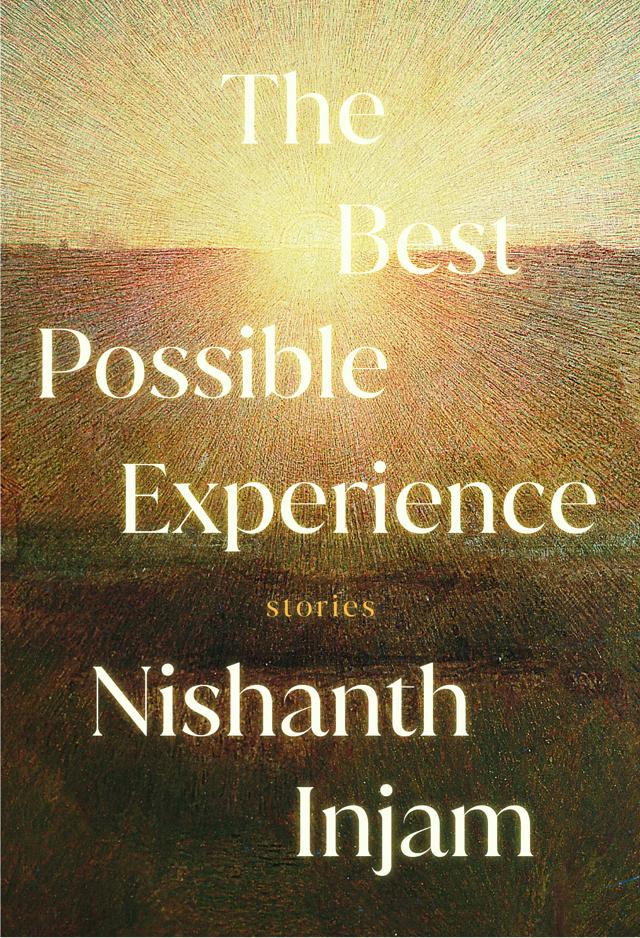
The Best Possible Experience, your debut collection of short stories, has been drawing attention in the US. Since its publication in July, it has already appeared in The New York Times Book Review and NPR (National Public Radio). You moved to the US to study engineering —when did you start writing? How did the book come into being?
The book began in 2015.
I moved to the US in 2011 Fall to get a master’s degree in computer science. Family wise, we had some debt, and I thought going to the US and getting a job and paying it off would be the smart thing to do.
So I went to the US and I was not at all prepared for how difficult and isolating immigration can be. I was definitely struggling a lot initially, and then somehow graduated, found a job. But I was not happy where I was. I was missing home. I didn’t feel like I could fit there.
And by happenstance, I took this creative writing class online. It was taught by Suzanne Rivecca, a Stegner fellow [the Wallace Stegner Fellowship is a prestigious creative writing fellowship program at Stanford University]. She read my story at the time and had great things to say. She was very kind. She said it reminded her of Calvino and Marquez. And she was really encouraging.
Even before she said any of that, as I was writing it, I knew the amount of fun I was having and that this was what I was meant to do. Even if it led to nowhere, it still gave me a lot of joy. And because I was in such a place of desperation — I was on the H1B visa and I couldn’t quit my job — I was trying to find a way to keep myself sane and construct a sense of home for myself. Writing became the way I did that. So I wrote a couple stories in 2015 which are still in the book.
You were working at the Chicago Tribune at the time – what did your job entail?
I was their front-end developer; I helped maintain their website. I built a number of features for their website. I was in charge of their photo galleries. I would read news all day essentially, and looking at it from the perspective of, oh what does this journalist need, or what are the features that they could use, and then try to build those for them.
So you were working with journalists?
I wasn’t. I wish I was, because then maybe I would have been slightly happier. But those requests always came from a manager or somebody else. There was always some other person, a link, in between. But it still gave me, I guess, a little bit of pleasure, because I was still looking at the news every day and was reading the books’ section. If I instead joined like a banking job, that would have been even more horrible, right?
Instead, you went on to get a second master’s degree — an MFA from the University of Michigan’s coveted creative writing program, and received a fellowship to cover living expenses. What made you return to grad school?
I was working and I’d been hunting down writing classes, and then somebody told me about MFA programs. But then there was this risk: to get the program, I would have to quit my job and my visa, and then I would have to go on the F1 [student visa]. I felt like I shouldn’t take that risk unless I got into one of the top programs, so I kept trying. The first time, I got wait-listed at one program, and I thought, okay, this is encouraging, let me keep improving my craft. The second time, I got in somewhere, but it wasn’t one of the top places. The third time [in 2018], I got into many places, so I was like, okay, it’s good now.
The novel is being described as immigrant fiction, but several stories are set in small-town India and are about caste, queerness, Islamophobia… representative of diverse issues particularly relevant in these current times. Is the book also a political statement?
I’m so glad you noticed that because I don’t think that the book is just purely about the immigrant experience. From my perspective, it’s about the search for a home, and what home looks like for some of the people on the sidelines.
I was using these diverse characters, not as a way of representing them, but taking the strands of their existences and then infusing them into my own idea of India.
There’s also an exclusion of some sense happening, even to those in mainstream India in the central belt or even where I grew up [Khammam in Telangana]. In day-to-day life, there’s always some human element of exclusion, some rupture that happens within families. I was trying to fuse both of those things to generate a greater empathy for what life might look like for somebody on the sidelines. I was trying to be in communion with a wide variety of people to say that we’re all sort of still one, and we’re all looking for greater love, and we’re all trying to just be at home.
There are a couple of references to Marxist parents in the stories — were you raised Marxist?
Yes, my father’s Marxist, And it’s funny, right? One of the fundamental things in Marxism is about how the price for labour is not correctly calculated. And if you think about somebody moving from India to the US, they’re looking at how the dollar is so much stronger than the rupee...
I didn’t have this insight before. I guess I wasn’t a good enough student back then. But the way I understood it, it seemed like if I go there, I’ll make more money. I missed this fundamental point that I’m not pricing the calculations correctly: if I’m truly making that much more, I’m losing something else.
It’s one of those things that you don’t really understand until you actually do it.
But I had a hunch the moment I actually entered US. It was a very subtle, instinctive feeling when I walked to the immigration officer. He was saying something, and the way he was talking, the gestures he was using were foreign to me. And I realized that all of the cultural and visual history, all of the cues, that I had grown up with in India, were of absolutely no help there.
It was an entirely new history. And I didn’t even know any of the references that people usually talked about. I didn’t grow up listening to American pop music. I grew up in Khammam. I had never even heard of the Beatles.
It just felt like I was somewhat of an alien entering this very posh land. And there was so much imposter syndrome, and feeling like I could try but it would take me decades really to even have an elementary understanding. It just seemed like a devastating loss and I don’t think that I have fully recovered from that.
Most of your stories end with some level of tension. In Lunch at Paddy’s, which is about the anxiety of a newly immigrated Indian family about what to prepare for lunch when their son’s white friend from school visits — the reader is left with all this anxiety for the family. Will he like Indian-Chinese noodles that they’ve eventually decided would be acceptable food for a white American kid? Will he show up at all? It’s pretty consistent in the stories, the anxiety and the tension. Was that deliberate?
It was deliberate because there’s a difference in the way short stories are perceived in India versus the States. In the US, I think, they want short stories to never be fully complete. Once you know emotionally what a certain trajectory might look like, you can stop. You don’t need to finish the story. In India, we like a nice song and dance or, just make sure that all the threads are completed exactly as we had imagined.
With respect to that story, I thought that story was about aspirational whiteness, about how you can keep waiting but the white kid is never going to… there might be a white kid who will visit, but you’ll never actually be accepted. You will never actually have the thing that you were really waiting for, but all you’ll have is this anxiety. I thought that was really the point of the story and I could stop there.
When I began writing, I would write these long endings and I kept getting told that we don’t need to see all of that.
Which story did you write first — and what did its earliest draft look like?
Come With Me. It started with a sentence about flies and memories. I was reading Tolstoy at the time, and there’s that famous opening line of Anna Karenina about unhappy families… I was trying in some ways to mimic that, and I had a line that said “all that can be said about flies can be said about memories.” The story began as a way to talk about how memories can sometimes be tricky, elusive and irritating, and it was about our relationship with memories. And as I was drawing out the characters, I figured out that the main character is suppressing a memory because of the amount of hurt it involves — and that memory is like a fly, it comes and teases him... [The line in the story is: Occasionally, a customer would complain about flies and I’d take a grayed tablecloth and swish at them. But the flies were also like memories. They had a mind of their own, they flew out of reach and returned uninvited; they’d entice, gently whirring in the air, nasty little f*ckers].
My first draft, now looking back at it, because I had never formally studied English, there were a lot of tense mistakes. I couldn’t stay in tense. If somebody asked me what’s past perfect or simple past, I would have probably messed up. So a lot of it was just writing based on feeling, and trying to get the feeling right, and then slowly acquiring the vocabulary and the tools and the craft to shape it all.
When did you finish writing? Which one was your last story?
The last one I wrote was Zamindar’s Watch. I wrote it in 2021, the end of 2021. I’d finished most of the collection in 2020, and I showed it to my thesis advisor [Peter Ho Davies] in the MFA program. And he was like, this is good, but it’s missing a mother-son story. And he said this after my own mother had died. I was trying to write that story and I couldn’t write it because there was so much grief that I couldn’t move past it. I think I ended up writing 60 different drafts and then throwing all of them away. I would write five pages and then realize that the whole thing was falling apart.
And then one day, I just gave up and started writing something else. It turned out to have the mother character, or the mother-child relationship that I needed for the collection. Once I had the draft, within two months, I revised everything and sold the book.
You returned to work as an engineer after the MFA. Was that always the plan?
Yeah, I needed to pay the bills, and, just the daily struggle, the daily grind of existence.
I was hoping I could sell the book and then not do it. But then I knew I was nowhere close to completing it, and I knew that I would have to go back into software, and finish the book at night after work.
What is your day job now?
It’s what people call a product manager — it’s basically working with software engineers. Earlier, I used to exclusively code, now I do very little of coding, but I’m involved with speaking with developers.
But anyway, that’s all in the past, because two days ago I quit.
Oh wow, to write full time?
Well, yes. I don’t know about full time. But I sold my novel also at the same time as I sold my collection in a two-book deal.
And because I have a child, it was becoming really difficult to handle both things. So I thought, let me just take a three-four months’ break, finish the novel, and at least I’ll get paid for it. And then I can keep up the writing life, apply to a teaching job or something, and then essentially never have to go back to software.
That’s my plan. I hope it works out.
Can you can you talk about the novel at all?
It’s the prequel to The Immigrant. So it’s all set in India, before the character moves to US. It’s about growing up in small-town Telangana.
Tell me a little more about growing up in Khammam. In an interview, you talked about the cultural shock you experienced after moving to the US. You said you had never eaten pasta before and did not know what constituted a salad. But you had lived in Delhi NCR for four years, you studied engineering at Amity in Noida. What were your college years like?
That’s such a strange thing, right? This was from 2007 to 2011. I went from Khammam to Noida and I didn’t know Hindi at all. I stayed within campus and rarely ventured out to Delhi. Slowly, two years into the program, I got more comfortable with Hindi and then I started exploring. I used to travel to the Himalayas sometimes.
But even then, even within India, there’s so much class difference. So in my four years there, I still had never actually had a salad. I never actually had pasta. I hadn’t heard about them either because that shows, that probably tells you what circles I was moving in. It’s one of those things where you realize, “Oh, there’s so many Indias that exist at the same time”.
Do you think that your education and work experience in engineering made you a more disciplined writer?
I was content [at work, before the MFA] because I wasn’t running after promotions or anything like that. It was just a job for me. I was always very clear about that. I hated doing that job, or any job. I think I would still hate it, because it’s just not my thing.
But I was more disciplined in the sense that I knew this was my passion and I knew I had limited hours for it, like after work. And so, even at work, I was thinking about stories. Or during lunchtime, trying to read stories, and just trying to be in that world.
Do you feel at home now?
I have a two-year-old son now. Until now, America hadn’t been like home, or even like a real place. It always felt like there’s India, and then I’m in this nebulous nowhere place called America and it’s very intangible and I’m just floating around there. But the place is becoming more and more real because I have somebody there anchoring me.
Saudamini Jain is an independent writer. She lives in New Delhi.


