
 E-Paper



Remembering the American who built Baroda’s library network
On National Librarians’ Day, a look at the unlikely collaboration between an American librarian and an Indian maharaja that sparked a reading revolution

 Prefer HTon Google


Long before the rest of India had even begun to imagine a modern public library system, the princely state of Baroda (now Vadodara) was already in the middle of a quiet revolution. In the early 1900s, a sprawling network of public libraries was taking shape, serving not just the urban elite, but farmers, schoolchildren, and villagers across the state. At the heart of this ambitious experiment in reading and education was an American missionary, cataloguer, and bibliophile: William Alanson Borden.
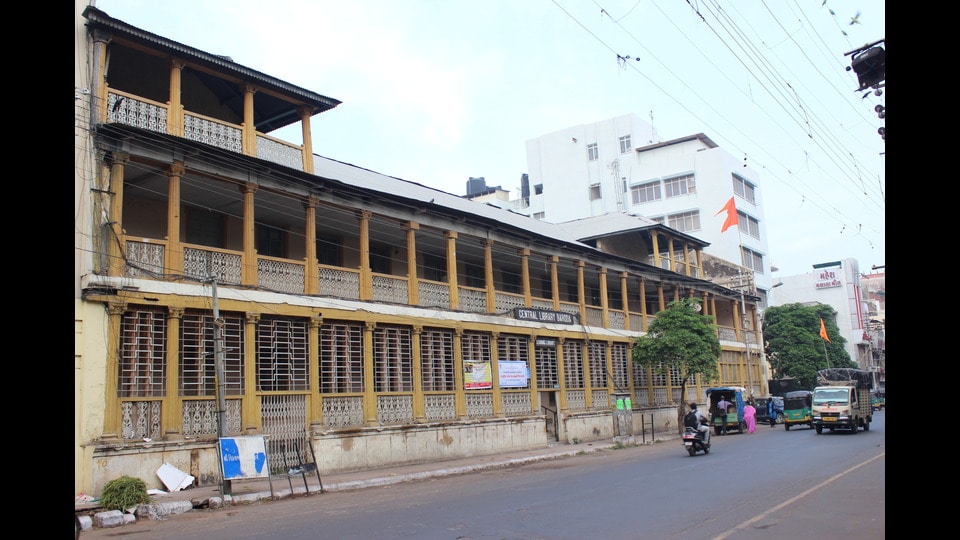
“Borden’s work in Baroda was decades ahead of its time,” says Chirag Munjani, who has been running the Vadodara Heritage Walk for the last 12 years. “He didn’t just bring books; he brought an entire philosophy of what libraries could mean to a society.”
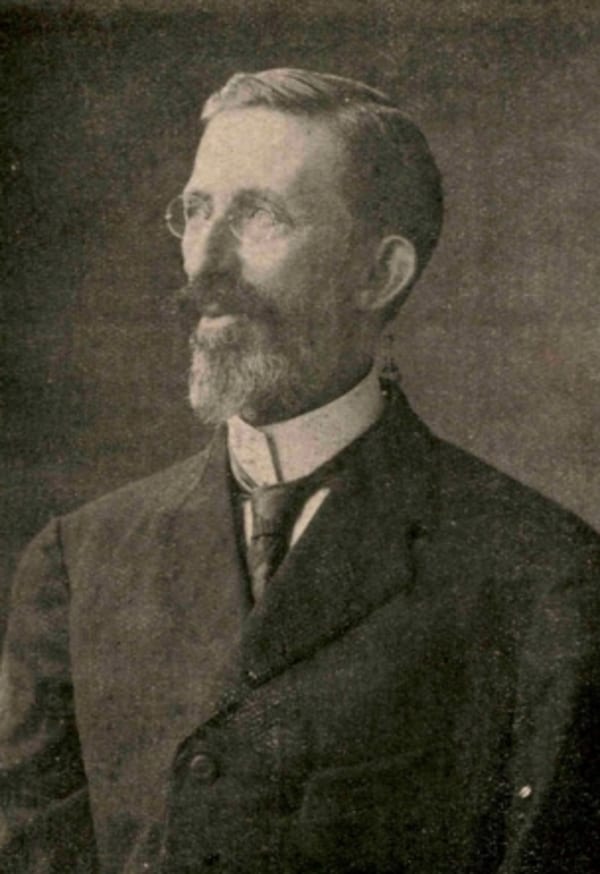
Borden came to Baroda in 1910 at the invitation of Maharaja Sayajirao Gaekwad III, a ruler known for his progressive reforms. Over the following six years, the American librarian laid the foundation for a groundbreaking network of over 400 libraries, bringing in innovations like cataloguing systems, mobile libraries, and structured staff training, all of which left a lasting imprint on public library models throughout the subcontinent.
A Maharaja with a vision
Maharaja Sayajirao Gaekwad III, who reigned over Baroda from 1875 to 1939, believed in education as a force for social transformation. He implemented compulsory primary education in the state, funded women’s colleges and supported reform movements.
“He was committed to providing essential amenities and driving social reform, but he also wanted his people to enjoy the same cultural and intellectual opportunities as those in other parts of the world,” says Maitree Vaidya Sabnis, associate professor in the Department of History at Maharaja Sayajirao University of Baroda. “Libraries weren’t just about books—they were tools of empowerment,” she says.
According to a scholarly paper by Murari Lal Nagar for the University of Missouri-Columbia, the Maharaja believed there was “no more ennobling thing than the reading of good books”; for “it leads men, along flowery pathways, towards earnest and pure lives”. “I would bring to the poor man or woman, the ordinary man of the bazaar, to the common people everywhere, this wealth of literature now only known to the educated,” he said.
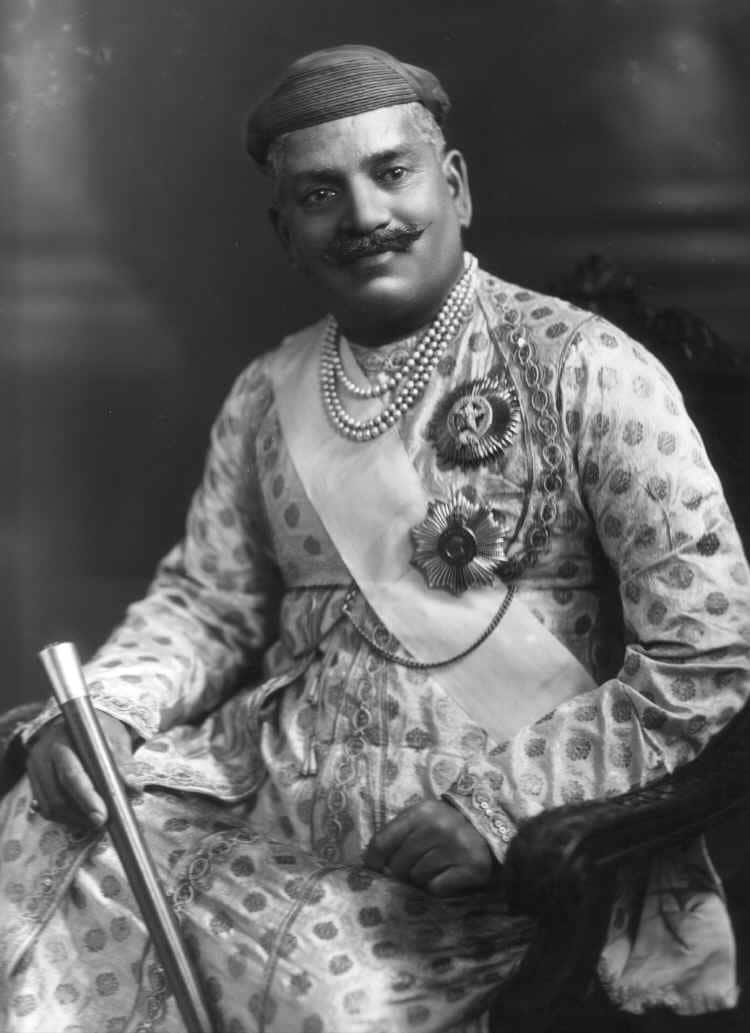
Sayajirao found inspiration in the public library models in Europe and the United States, and was determined to develop something similar in Baroda. In 1910, he reached out to the American Library Association for help, and Borden, then known for his work at the Boston Public Library and for his expertise in library classification, accepted the call.
A systems thinker in Baroda
Borden was 57 when he arrived in Baroda. During his six-year tenure, he helped establish a centrally coordinated network of over 400 libraries, spread across villages, towns, schools, and public institutions.
He implemented the Dewey Decimal Classification system, adapted for local contexts, and introduced the idea of traveling libraries — collections of books sent out in boxes or on bullock carts to remote villages. He also created manuals for staff, designed layouts for village libraries, and emphasized community reading rooms that welcomed all, regardless of caste or gender.
“Even today, many rural libraries in Gujarat unknowingly follow Borden’s frameworks,” Munjani says. “He laid down processes that outlived him.”
One of Borden’s boldest moves was his commitment to inclusive access. In early 20th-century India, libraries, where they existed, were often restricted to upper-caste men or college students. But Baroda’s system under Borden was strikingly egalitarian.
“He believed books should be for everyone,” Sabnis says. “Women, children, farmers, factory workers — he saw the library as a public space, not a private luxury.”
Books were made available in Gujarati, Marathi, Sanskrit, and English, ensuring that reading materials could reach people in their own languages. Borden also ensured that libraries were free to use, breaking with the fee-based or subscription models that were common in India at the time.
On October 29, 1912, at a meeting of the Baroda Library Club, Sayajirao addressed the gathering by saying that the people must rise superior to their circumstances and realise that more knowledge is their greatest need, their greatest want. “They must be brought up to love books, not simply attractive bindings or pretty pictures, but their contents. They must be taught to regard books as a part of their lives. Libraries will not then appear a luxury, but a necessity of existence.”
It was a vision Borden shared wholeheartedly. As he worked to turn that philosophy into reality, he came to deeply admire both the ruler’s commitment and the people’s hunger for learning.
In a letter written in 1914 to the Library Journal, Borden described Baroda as “a land where I have found a ruler determined to educate his people, and a population eager to learn”. He saw his work not as charity or colonial upliftment, but as part of a mutual educational mission, one rooted in shared values of access and self-improvement.
“Borden’s story is really about cross-cultural collaboration,” historian Chandrashekhar Patil says. “It’s a reminder that progressive change doesn’t always come from one place or person; it often emerges from unlikely partnerships.”
Not everyone welcomed Borden’s ideas. Some officials questioned the cost of maintaining hundreds of libraries, while conservative elements resisted the idea of lower-caste individuals using the same books or spaces as upper-caste readers. But with Sayajirao’s support, Borden continued to push forward.
By the time he left Baroda in 1916 to return to the US, Borden had helped create one of the most forward-thinking library systems not just in India, but across the colonised world. The central library headquarters, the traveling libraries, and the training programmes he initiated continued to operate for decades, and served as blueprints for similar efforts in other Indian states.
More than a century later, Baroda Central Library in the heart of Vadodara remains a powerful symbol of this legacy. Housed in a stately colonial building near the old palace complex, it continues to serve thousands of readers, offering collections in multiple languages and dedicated spaces for children, researchers, and casual browsers.
“It’s not just a place to borrow books,” Munjani says. “It’s a living monument to an idea — that knowledge should be shared, not hoarded.”
And yet, Borden himself is little remembered in India. Patil says this is unfortunate because “Borden’s contribution wasn’t marginal; it was foundational. Gujarat’s reading culture owes a lot to him”.
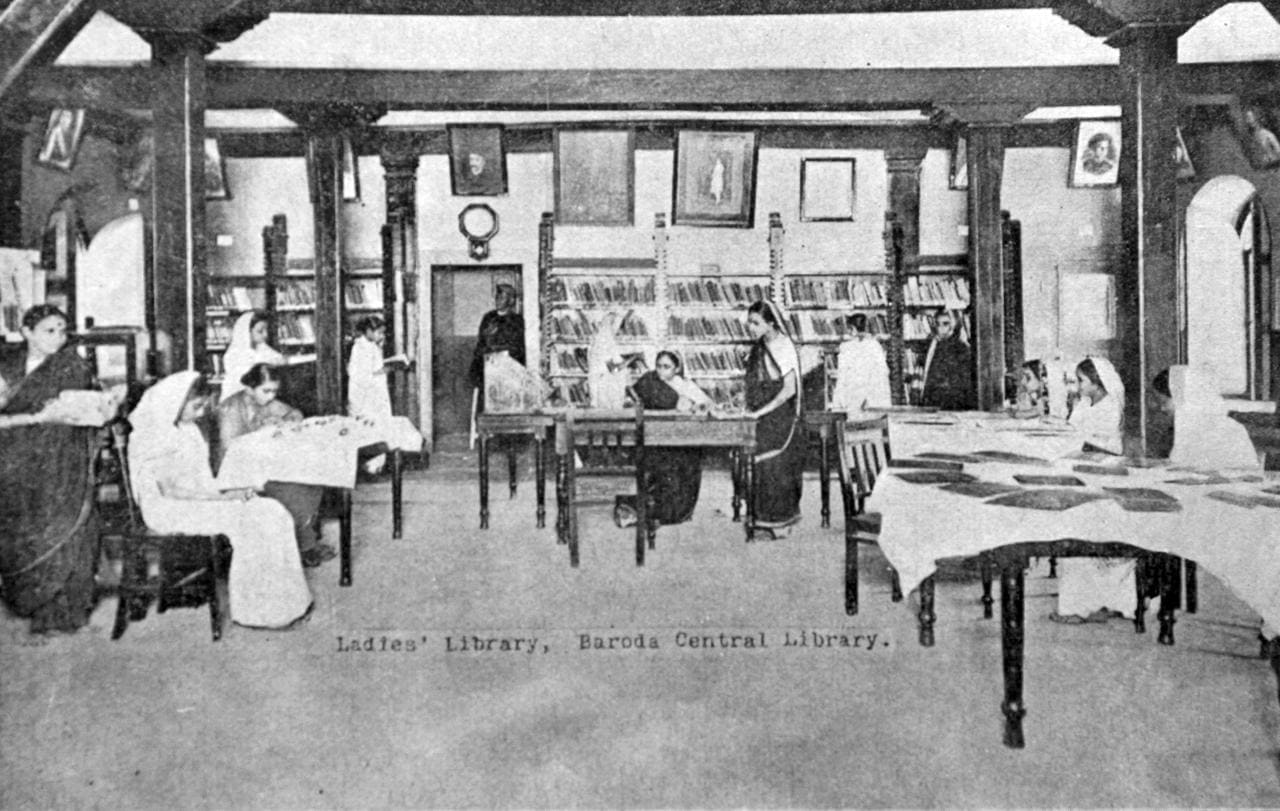
There are signs of revival, however. A digitisation project is currently underway at Sayaji Library. Local historians are compiling oral histories of Baroda’s library movement, and educational institutions in Gujarat have begun to take interest in revisiting Sayajirao’s educational policies — of which the library network was a central pillar.
Remembering Borden’s legacy
In a digital age where public libraries across India face shrinking budgets, dwindling footfall, and rising apathy, Borden’s legacy feels newly relevant.
“Libraries were never just about books on shelves,” Munjani says. “They were meant to be public universities — places where people could educate themselves, build community, and access opportunity.”
The annual report of the Baroda Library Department for the year 1940-41 stated that by its provision of free library facilities to all citizens of the State, Baroda enjoys a unique distinction “not only among the other states of India but among its provinces also. One may even go further and affirm that with England and the United States of America, Baroda occupies a position of leadership in the extension and efficiency of its library service”.
That idea remains relevant — especially on National Librarians’ Day, when we celebrate the people who quietly shape public life.
Teja Lele is an independent editor and writes on books, travel and lifestyle.


