
 E-Paper



Report: Ami Arts Festival
From photography to exhibitions of Hindustani classical instruments, the festival celebrated self-expression in various forms

 Prefer HTon Google


The Kolkata Centre for Creativity’s Ami Arts Festival, which ran from November 21 to December 22, 2024, contributed to the lively energy of the city at that time of the year. Ami is a Bengali word, meaning ‘I’. True to its name, the festival celebrated self-expression, locating the personal in a social and political context, and encouraging audiences to stay curious about the catharsis that art provides when it is incorporated into hectic urban lives.
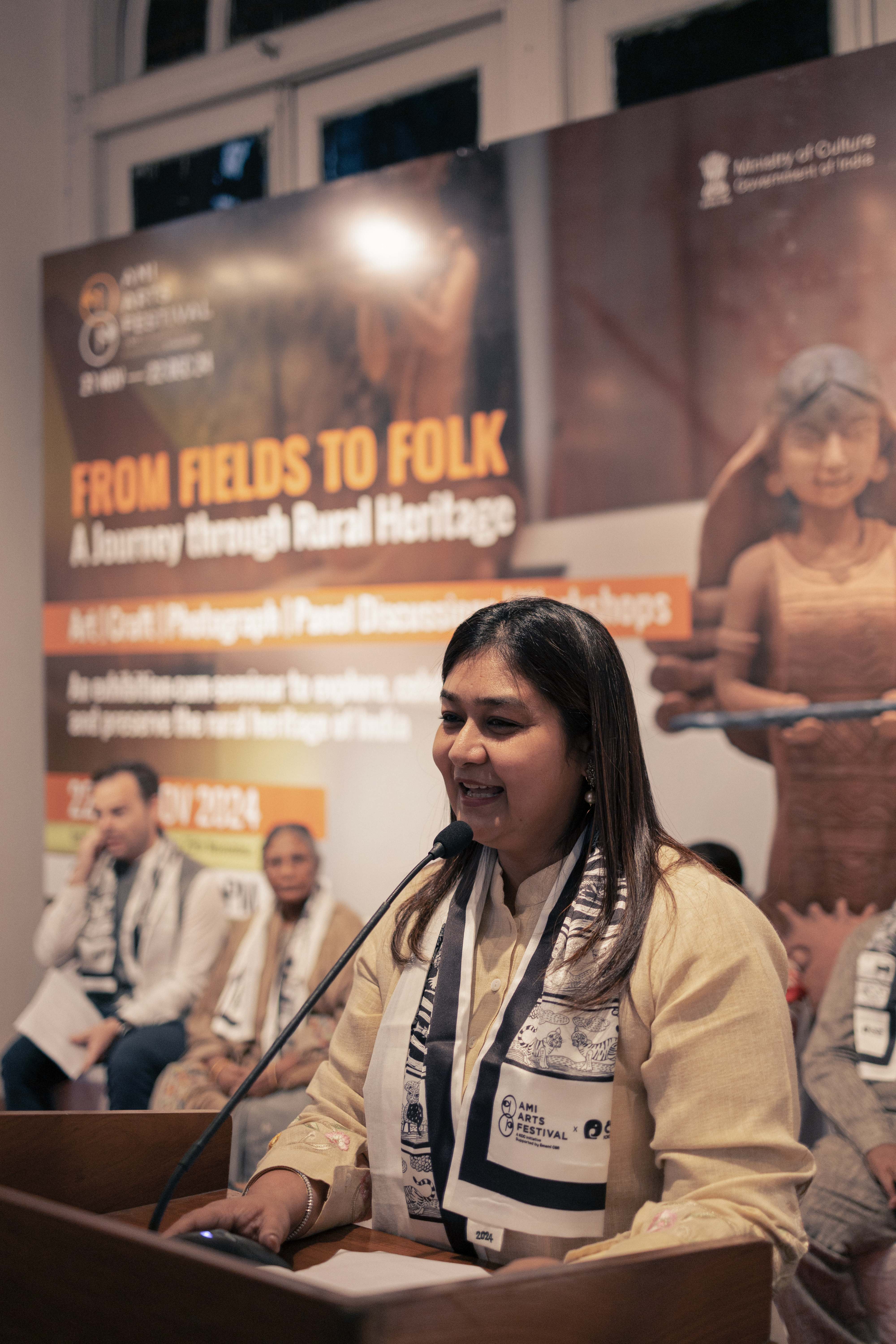
“From a small local art fair, we have grown into a month-long festival that gives a boost to the country’s arts and culture industry,” said Richa Agarwal, Chairperson, Kolkata Centre for Creativity. Her guiding principle behind the programming was to “create an inclusive space for artists and audiences from diverse backgrounds to connect, collaborate and be inspired.”
This was also reflected in the photography exhibition “My Kolkata in Kolkata” curated by Varun Gupta and Kushal Ray, that featured snapshots from everyday life. These were pictures of citizens immersed in everything from weaving flowers garlands to pulling a rickshaw, reading a newspaper, going to school, resting under a tree, taking a dip in the river, and bantering with friends over cups of tea.
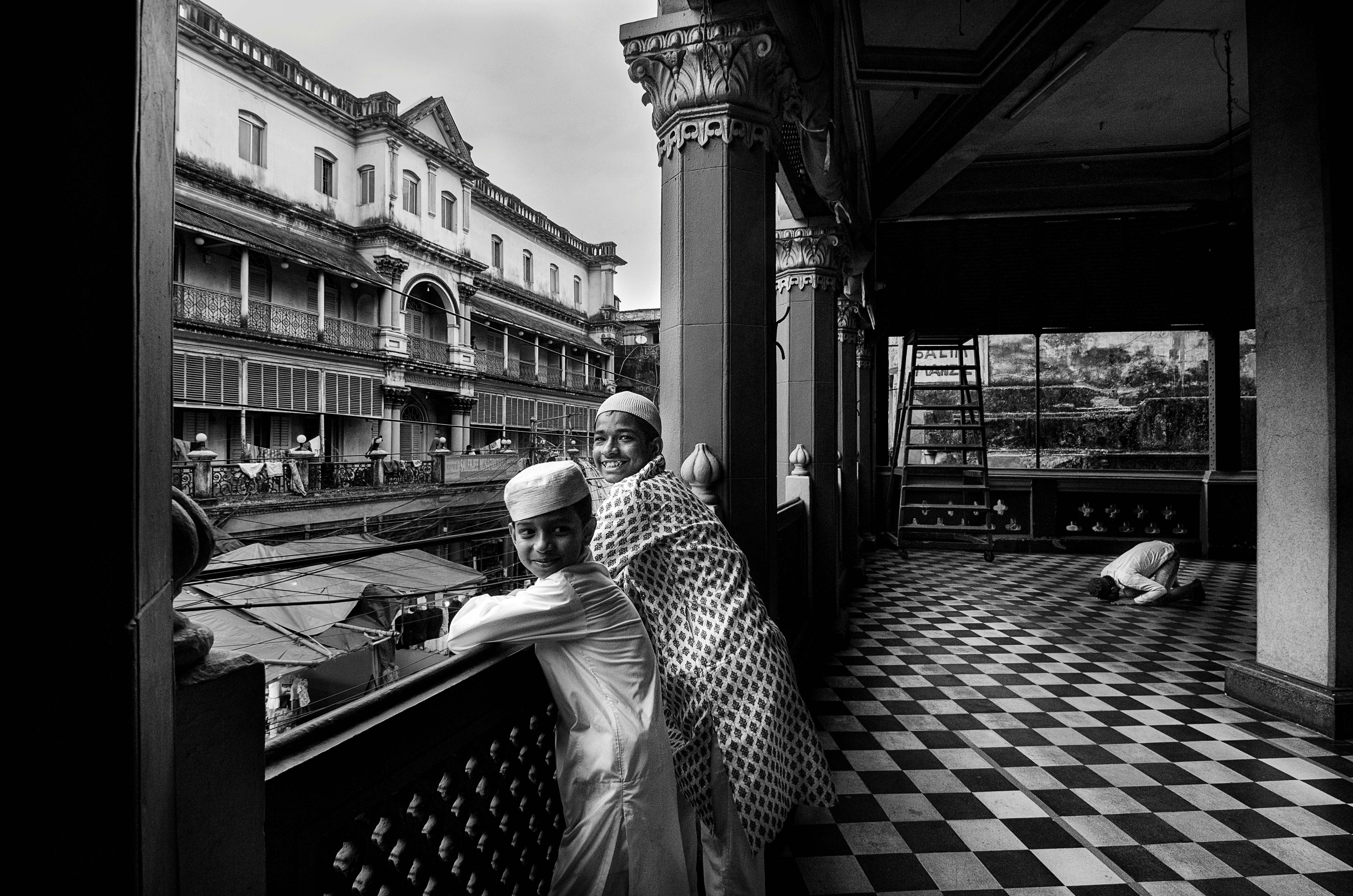
Suvrajit Sarkar’s photograph created a lasting impression, with two boys in skull caps smiling at the camera and a man in the background offering namaaz. In its quiet simplicity, it offered an alternative to stereotypical images that equate faith with fanaticism instead of emphasizing how faith serves as a wellspring of joy, stability and peace. The photographer said, “I wanted to show that devotion to God can bring happiness. Whatever religion we follow, or path we pursue, the aim is to keep our mind free of barriers, to respect everyone.”
Sarkar, whose day job involves working for the West Bengal government, mentioned that photography is his passion. Kolkata’s rich architectural history inspires him to pursue this interest in his spare time. He shot this beautiful image at the Nakhoda Masjid in central Kolkata, which was built by the trading community of Kutchi Memons in 1926.
The exhibition also included Soumyadeep Ghosh’s photo story “Look Back”, depicting the struggles of the Chinese community in Kolkata’s Tangra neighbourhood with a focus on Sheng Hsiung Liao, who was born and raised in Kolkata but now lives in the United States.
In his artist statement, Ghosh noted that Liao’s parents were denied Indian citizenship because of their ethnicity. Moreover, they had to keep themselves locked in their houses during the 1962 war between India and China. They have passed on but Liao comes back to Kolkata because his roots and identity are tied up with his memories. The nostalgia is tinged with sadness because “childhood playgrounds and ponds have been replaced by skyscrapers”.
Ghosh’s pictures put the spotlight on racial discrimination in India, which has led members of the Indian Chinese community to migrate. “Only around five thousand Chinese remain in Kolkata…This situation raises questions about the future of their existence,” he said.
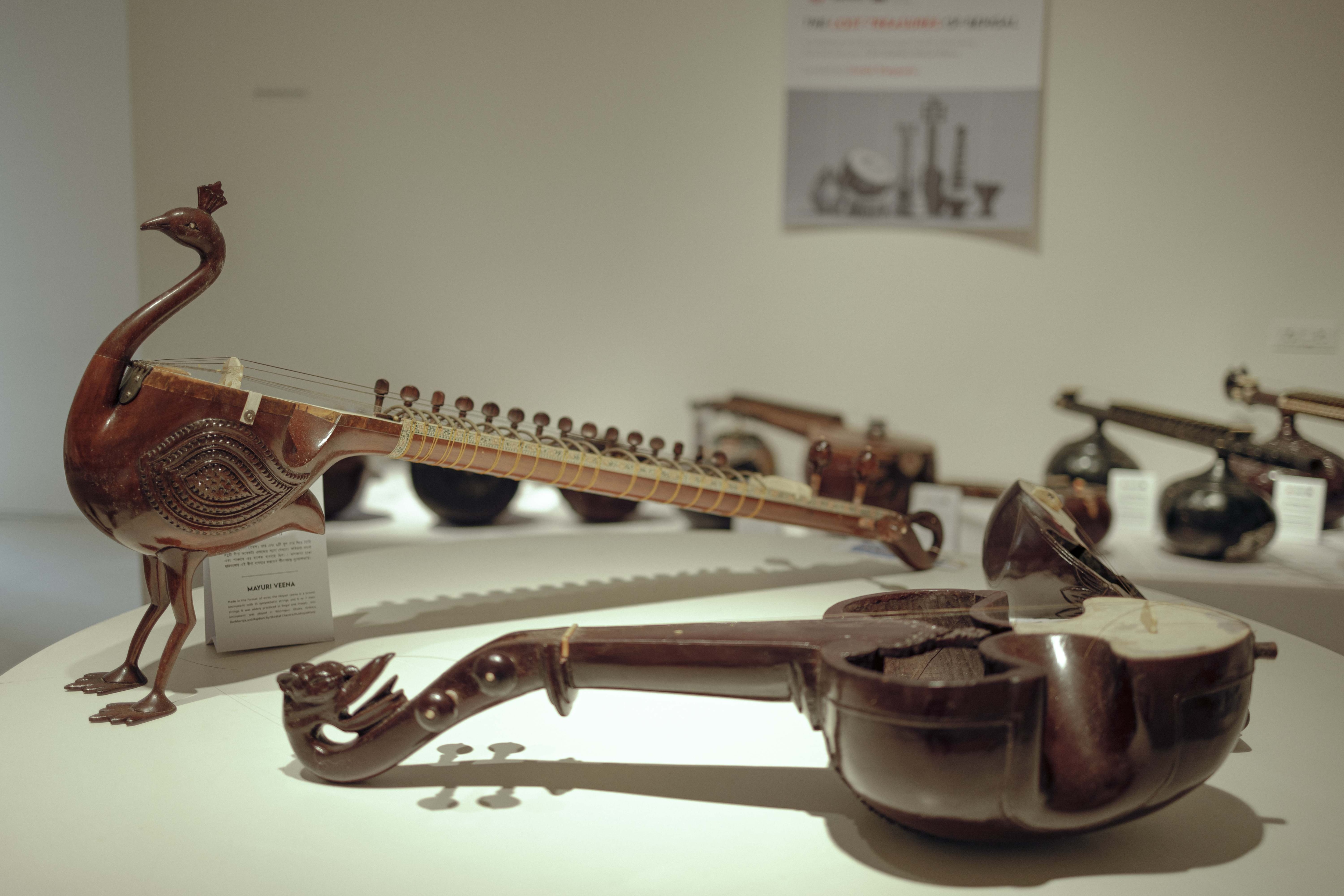
Another remarkable exhibition, titled “Lost Treasures of Bengal”, gave festival attendees a chance to view a selection of musical instruments from sarod maestro Pandit Radhika Mohan Maitra’s personal collection that is looked after by his Kolkata-based disciple Somjit Dasgupta. The instruments are stored across three flats in the city. There are 300 of them, and they have travelled with Dasgupta to Spain, Germany and France too. On display were the tanpura, mohan veena, nabadeepa, pakhawaj, shreekhol, bayan, tabla, surshringar, sur-rabab, sarinda, dotara, mayuri veena, harmonium, sarod, Rudra veena, Indian banjo, Saraswati veena and Tantric veena. Some of these are rarely seen on stage today. The exhibition was, therefore, also a tribute to the history of Hindustani classical music.
Beaming with pride in his musical inheritance, Dasgupta said, “I was 13 years old when I started learning from Radhu Babu, and 21 when he passed away. He taught me three important lessons along with music – bhakti (devotion), biswas (faith) and bhalobasha (love). These have guided me throughout my life.” Some of the instruments were gifted to his guru by other musicians, so he believes that they carry the blessings of those elders.
These musical instruments, according to Dasgupta, are “the heritage of the subcontinent” because Maitra was born in 1917 Rajshahi, which is now part of Bangladesh. Back when visa regimes in South Asia were more relaxed, Maitra had performed in Lahore, Karachi, Peshawar and Kabul.
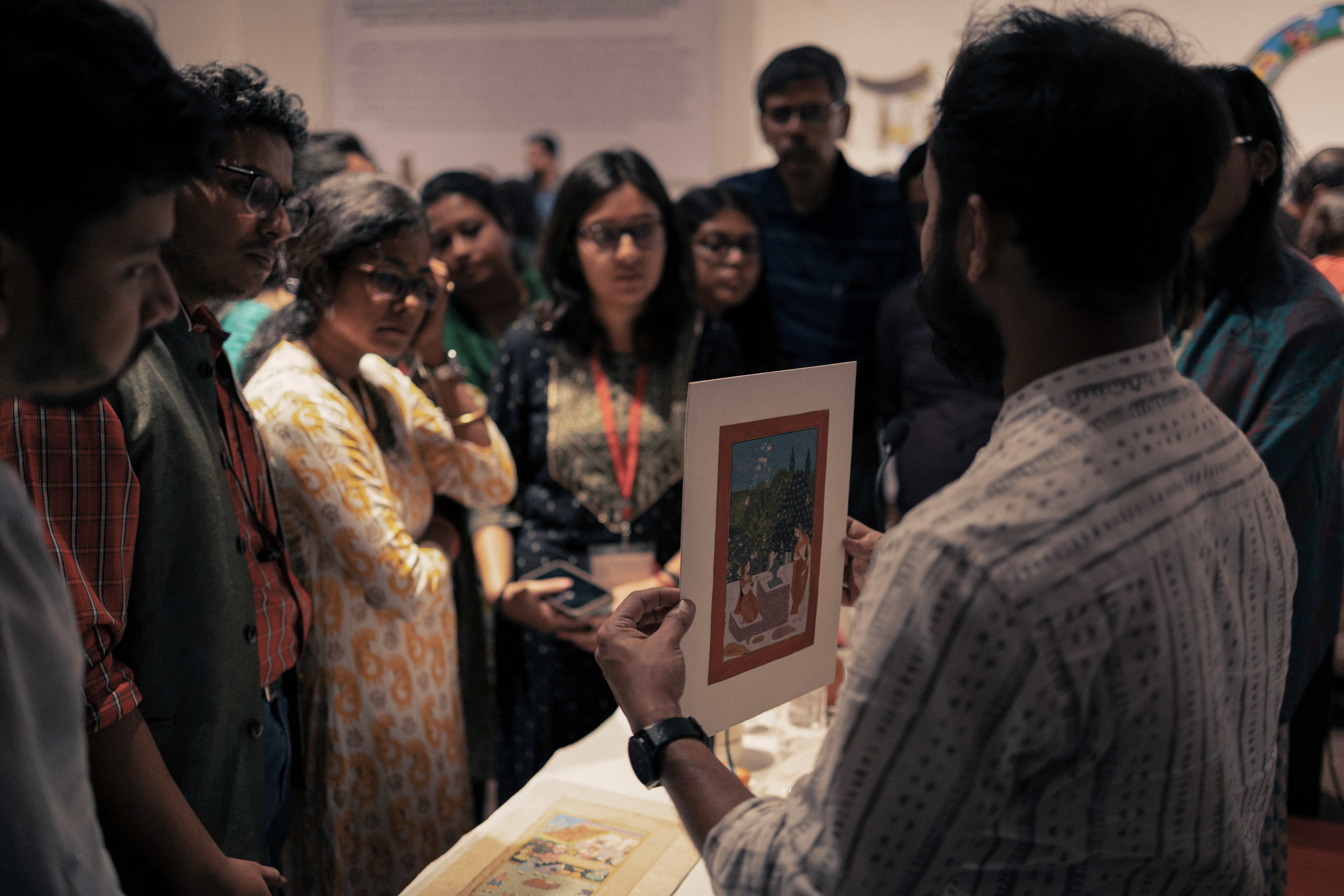
The festival highlighted the expertise and skills required for conservation. Shreyan Banerjee, heritage and art conservator-restorer from the Kolkata Centre for Creativity’s Conservation Lab, led a workshop at the Indian Museum that was founded in 1814. Banerjee said preventive conservation is concerned with “layers of significance that items have acquired over time”. The audience learnt about how chemical, mechanical and biological delay is slowed down. Curative conservation, on the other hand, is about “bringing items closer to a known or assumed original state.” This involves “removal of later additions or recreation of missing parts” to improve appearance or function. He spoke about pest management, handling of hazardous materials, and controlling factors like temperature, light and humidity and explained that damage can occur in the form of mould growth, cracks, exfoliation, discolouration, and surface abrasion. There was much audience participation and important takeaways from the session included suggestions to use boxes and folders made of acid-free paper for archival documents, and the need to use cloves, turmeric, black pepper and citronella oil instead of naphthalene balls while storing objects.
The workshop was part of an exhibition called “From Fields to Folk: A Journey through Rural Heritage” that advocated for the preservation of rural heritage for sustainable economic development. There were stalls with representatives from public and private organizations such as the Cooch Behar Archive, Noukoghar, Khwaabgaon, the Botanical Survey of India, Krishnapur Centre for Folklore Studies and Research, the Ramakrishna Museum, Birla Industrial and Technological Museum, and the Sheikh Noor-ud-din Noorani Museum of Heritage.
Anubhab Dutta, Joint Coordinator of Cooch Behar Archive’s Exhibition Committee, revealed that the general public is made aware of the rich heritage of the former princely state through quiz competitions, heritage walks and exhibitions. The archive’s exhibit at the Indian Museum included manuscripts, rare booklets of folk plays, textiles made of jute, fishing equipment built from bamboo, photographs of folk dances and festivals, and gramophone records of artists such as Abbasuddin Ahmed and Damayanti Barman Ray, known for their renditions of folk songs from the Bhawaiyaa, Chatka and Malshi traditions.
Dutta, who played some of the records for visitors, said, “Malshi songs, now almost extinct, are especially notable for their wit and sensual undertones. Bhawaiyaa songs evoke themes of love and longing, preserving the emotional essence of the region’s cultural heritage.”
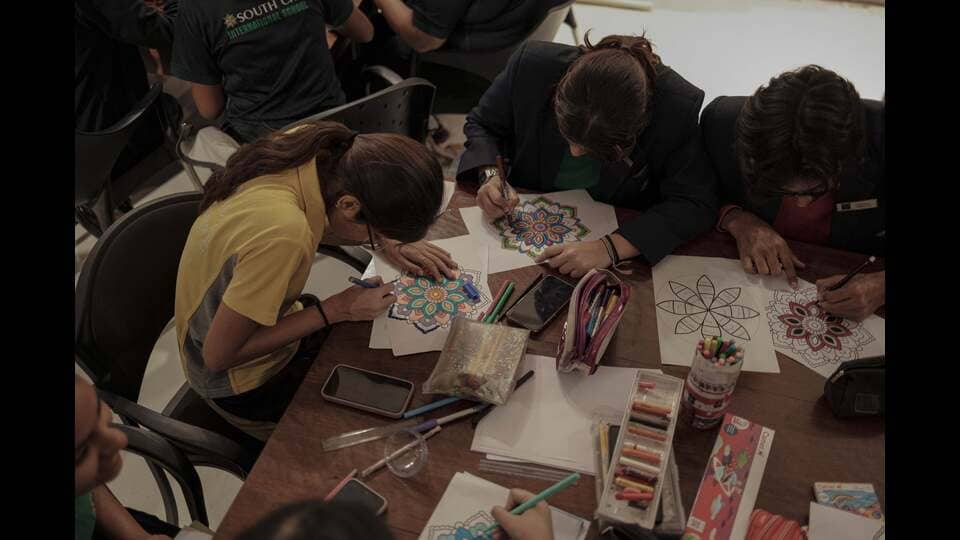
The festival ensured that people who came to attend also had a chance to create their own art. Educator and mind transformation coach Vaijayanti Bose teamed up with designer-entrepreneur Jayeeta Poddar Chowdhury to offer a workshop called “Inner Canvas: Exploring Emotions with Art Therapy”. After an introduction to colour theory, the emotion wheel, and Mandala art, participants were encouraged to think about the colours they associate with different emotions and how this influences what they like to wear on a particular day.
All in all, the Ami Arts Festival provided much visual and intellectual stimulation and left attendees feeling vastly enriched.
Chintan Girish Modi is a Mumbai-based journalist who writes about books, art and culture. He can be reached @chintanwriting on Instagram and X.


