
 E-Paper



Report: Art Soirée by StoneX
The stone brand’s Kishangarh refinery showcased the works of 10 distinguished artists who used marble and natural stone to monumental effect

 Prefer HTon Google


The past is often dressed up to make it look noble so it’s usually best left unvisited. But StoneX, a brand that sells marbles and natural stones, is keen for you to go back in time so these chunks can be accorded the respect they deserve. Towards this end, the firm, founded in 2003, invited 10 distinguished artists — Chandrashekar Koteshwar, Gigi Scaria, Harmeet Rattan, Harsha Durugadda, R. Magesh, Shaik Azgharali, Shanthamani Muddaiah, Sudarshan Shetty, Teja Gavankar, and Yogesh Ramkrishna — to work with their stone.
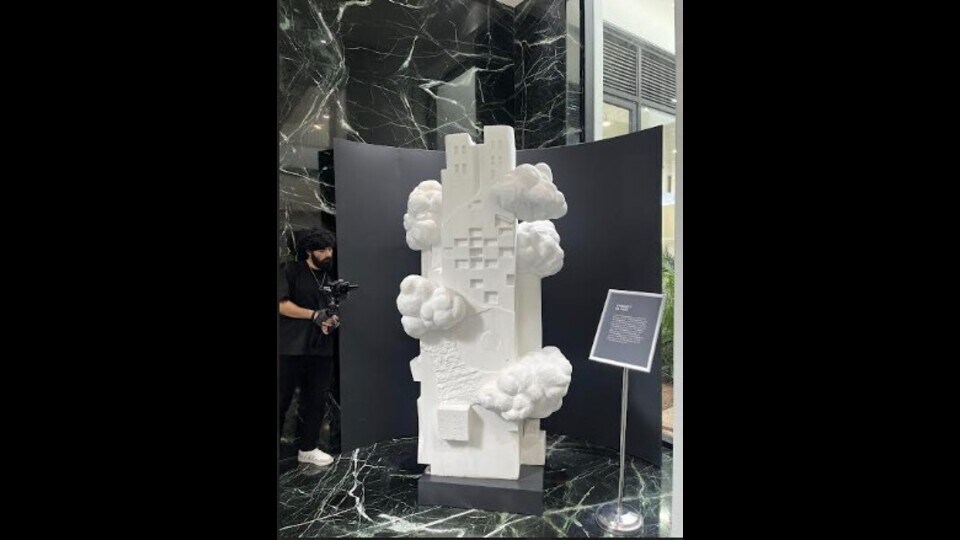
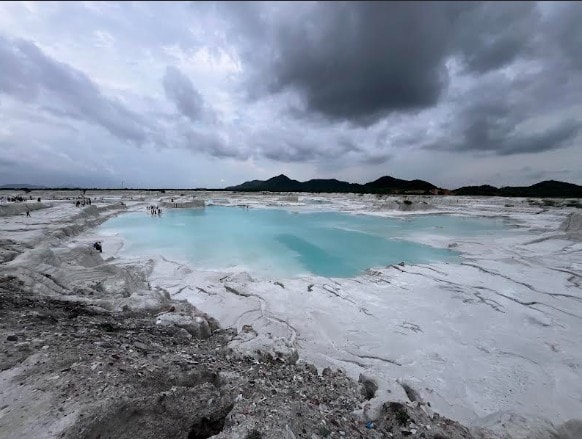
Earlier this year, in August, to celebrate their artistic endeavour, the firm also launched a coffee-table book, Art Soirée, at their state-of-the-art refinery in Kishangarh, Rajasthan. The book features leading figures who use stone in their art including Alex Seton, Cynthia Sah, Kota Kinutani, Nicolas Bertoux, and Sebastian Errazuriz.
Visitors were then given a tour of the exemplary pieces of stone art on display. Shaik Azgharali’s Cotton in white Carrara marble is imbued with the sculptor’s belief that “artistic expression can raise everyday objects”.
Dream House by Harmeet Rattan, who believes sculptures are be both “testimony and critique”, is a significant departure from the popular idea of what a space can be. What helps build a home is one thing, dreaming about it is another — an insight that guided the artist while sculpting this piece from pure Greek marble.
In Jungian psychology, dreams are a result of an individual’s interaction with the immediate environment. This comes through masterfully in Harsha Durugadda’s The Way of the Wind. While the stony form offers this artwork a fixedness, its fluidity is rendered by how permeable it seems, seeping into the space it acquires, representing the dynamism of nature.
Multidisciplinary artist Gigi Scaria’s Impossible Stairway calls to mind the Oscar-winning movie Parasite (2019). In a true sense, his piece depicts, the way the movie did, the corridors of power — its perennial upward and downward movements. The absurdity of it, however, lies in the truism that it’s impossible to escape the structural barriers, though they appear very neat in where they lead. But are they leading anywhere? Whilst it’s open to interpretation where this staircase with no beginning and end in the metaphorical sense leads to, it’s clear that this is a powerful critique of not only the psychological motivators but also of societal conditioning.
There’s no one way to look at the Hidden Gem on Museum Steps by Chandrashekar Koteshwar. Though, according to the artist, it borrows a lot from the “grand staircases of South Indian temples”, it may also appear that a ruler has left their throne in a hurry, leaving a robe behind. Or is this what becomes of the throne when it’s abandoned? Are you looking at this as a preservation of a memory or a ruin? Do elements signal significance depending on what your eyes are attuned to see? These are the kind of questions that plagued my mind
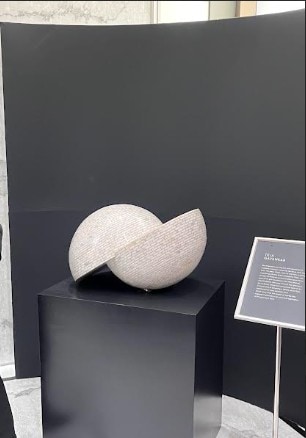
Teja Gavankar’s Khôra has an unmissable geometric brilliance. Made up of Lasa Covelano marble, the artwork was inspired by Plato’s philosophy of form. But someone like me, who was trained as an engineer, read a spheroid becoming an ellipsoid, which means it was breaking away from a single-shape-obsessive reading of form. Perhaps a few would also appreciate that mathematics is pure philosophy in a way whose functions are multifarious. Given that its sculptural imagining could be so shape-shifting and fundamental in a physically realised form, this piece was a marvel.
Yogesh Ramkrishna’s Shikhara was another fusion piece made using a “mosque dome and a temple shikhara”. The chiselled Italian marble Bianco Vogue blends religious sensibilities in a way that makes it feel like an audacious attempt at inverting the trend of ‘hurt sentiments’.
Shanthamani Muddaiah’s Bloom cements weaving traditions alongside the “advancing garden wilderness”. One look at the piece compels you to wait and witness the ‘blooming’ of this sculpted form. Another look convinces you that it’s already happening. It is a story unfolding with each look, and it’s designed to afford you a unique sensation each time.
Umbrella by Sudarshan Shetty raises as many concerns about conservative and preservative practices as it touches upon the subject of who gets to decide to pursue such an act. Anyway, what would you think of an umbrella made of marble and illuminated by making it interact with water? Must it be picked for everyday use, or should it be allowed to perish? With time, some untouched, uncared-for structures afford a weatherability disguised as an artefact. Perhaps that’s what Shetty is trying to challenge: do away with time, with what you see in front of you, now tell me what you make of it!
That it all comes down to power is what The Monarch by R Mangesh depicts. A related aside: James Watt, the inventor of steam engines, used ‘horsepower’ to situate his machine’s relative superiority to horses, their power. But in the Indian tradition, most certainly of Rajasthan’s culture, horses have played not only a huge role in several battles, but they’re also inseparable from the region’s rich oral storytelling culture. This equestrian delight by the Vadodara-based artist made using Bronze Amani is a representative of that culture and also serves as a societal critique.
The evening closed with a Rajasthani feast and a musical performance. It’s clear that by collaborating with artists to create a timelessness set in stone, StoneX’s vision is being expanded. Soon, perhaps, people will start viewing stones differently, one masterful piece at a time.
Saurabh Sharma is a Delhi-based writer and freelance journalist. They can be found on Instagram/X: @writerly_life.


