
 E-Paper



At the Louvre; Poems by 100 Contemporary World Poets
Reimagining the Louvre and its treasures and celebrating the museum’s multiple identities through the eyes of selected poets

 Prefer HTon Google


Roll over Apollinaire or Baudelaire with your connection to the Louvre. A new map is being drawn, and 100 contemporary world poets are taking over. However, the qualifier ‘world’ in the book’s subtitle baffles me as a critic and a poet. Anyone can have their own list of 100 world poets. Ask any poet, and they will claim they are a world poet. No yardsticks are offered by the editors for their choice. They want us to trust them? Makes you wonder when you look at the list of the contributing NYRB poets on the back page.
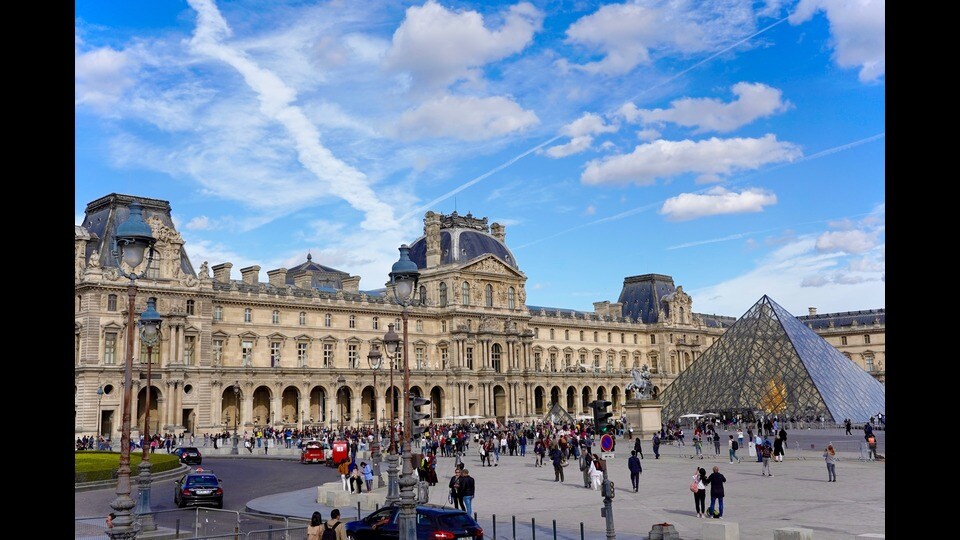
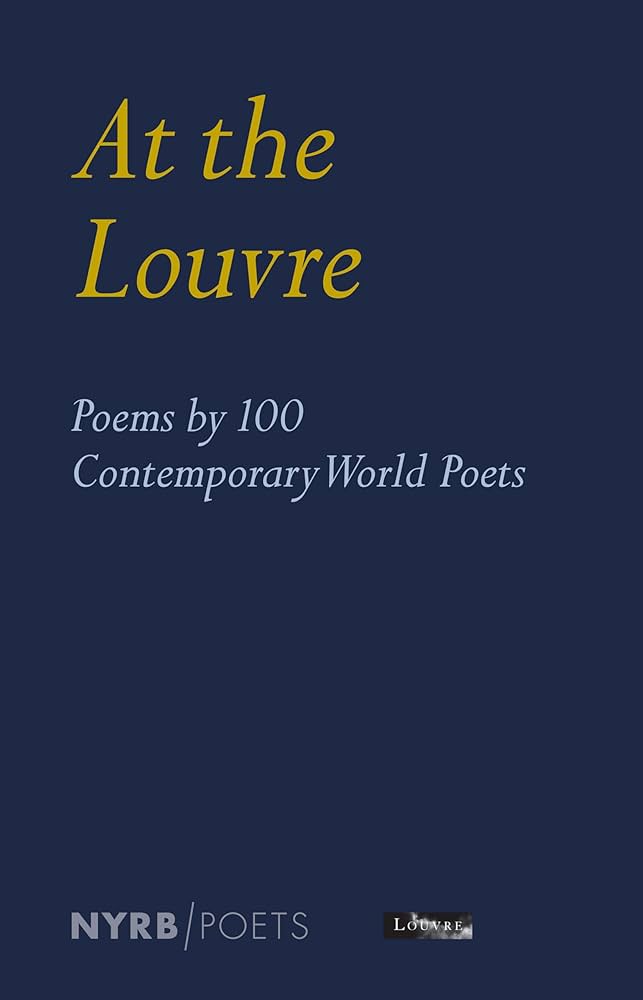
Has this affected the quality? NO. Instead, before visiting the Louvre, read this anthology to smell, feel, touch, and understand the museum and the time warps it leads you to. As aptly illustrated by the poem, You, Ocean by Nujoom Alghanem, while you approach the Louvre and get dumbstruck by its contrasting glass pyramid greeting you:
Rain fell in sheets, and I/ had no umbrella. But like a dry/ field filled with desire,/ I delighted as water rushed/ down and whispered to my desert/ soul: “Look! The Louvre.”/ Summer storm kissing the shining/ pyramid on the glass, past/ stories praising a new day,/…
How much you comprehend its abstraction will depend on your “desert soul” and “a dry field filled with desire”. The fun and emphasis in these lines with the enjambments around adjectives “dry” and “desert”. Here, the images of the field and soul are not as crucial as their state, which becomes an experience through the words ‘desire’ and ‘whispered’. The anthology invites you to visit the Louvre in that light or ‘rain’. Not through the queues of dead tourists, and as exemplified by a question in the poem titled Who Was I? by Jana Prikryl.
One who hasn’t lived before 1789/ has never tasted the true sweetness of life
This sweetness lives in the museum, but above all, in every poem in this anthology.
Najwan Darwish, who has intuitively written about Ravi Shankar and his sitar in his last collection, also conjures up a fresh interpretation of the journey’s end in the museum. He starts with:
Writing a poem about a museum/ is almost the same as going there
But when the artefact would be ‘fed up with the visitors if you were a painting/ You’d be sick and tired of all the people/staring at you with such indifference,’ he tells you to:
Go look for the wing/ with the Egyptian antiquities./ There’s an empty sarcophagus there —/ open it, and lie down in it./ Now you’ve finished/ your poem about the museum.
A simple image here goads a reader to return to the common theme of the anthology, which should feel like an extension of everything past you cannot or should not escape. The eerie silence of the museum is akin to being in the sarcophagus. Yet it is also about feeling the past and its ’indifference’ in your cadaver wrapped in rags you carry with you all the time.
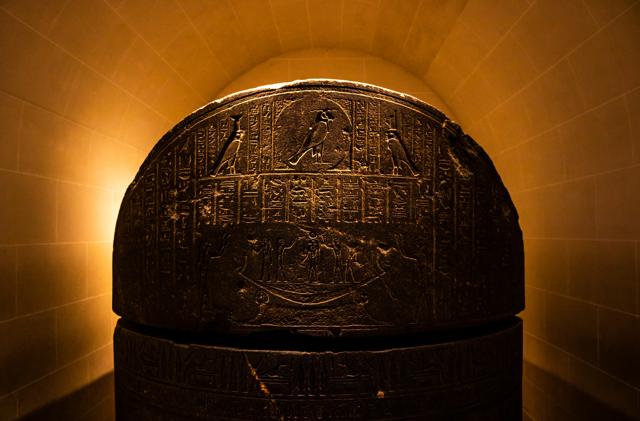
This exchanging your place in the sarcophagus easily connects to Arvind Krishna Mehrotra’s poem in which ‘A young curly haired/man, possibly Theban, …’ ‘removes/the mummy wrappings, /…’ ‘where a visitor/has gotten off the bus/to take his place//in the sarcophagus.’ According to the poet, the eerie aspect is that no one from the visiting crowd notices the caption, nor has it ever changed. The poem takes us to a place where the difference between a mummy and a visitor to the museum becomes as insignificant as the frozen time of the museum, where the line between the past and present is blurred in one place, just as our cultural differences as humans if we askance history, the fact we refuse to comprehend.
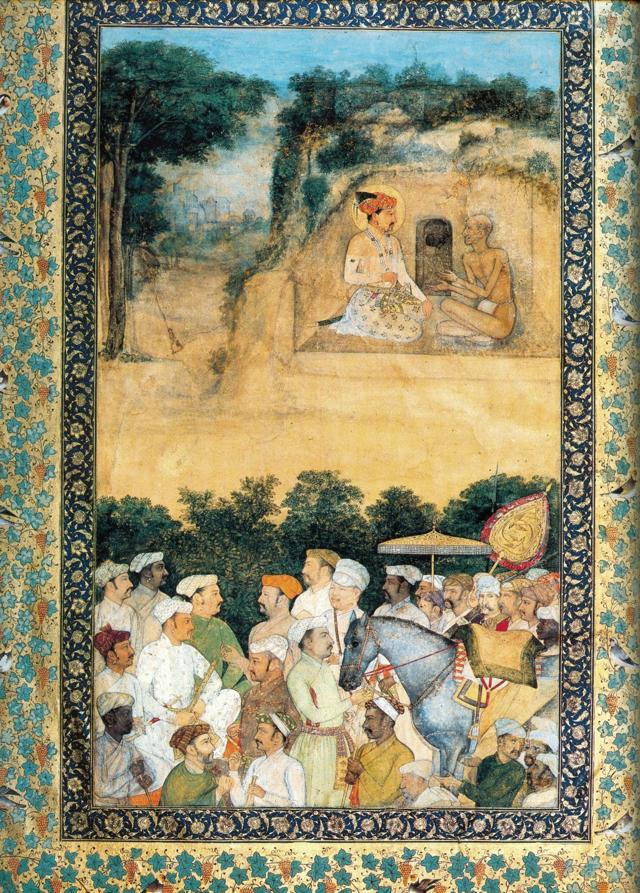
Poet Vivek Narayana’s untitled poem stands out as he is the only poet who writes a poem highlighting the Indian presence in the museum! The Louvre obviously has failed to acquire Indian art. In a typical Western trait, full of noise, they still have only Mughal miniatures to display. Narayana tries to distil the Sufi and Vedic link in the Louvre’s collection through the miniature of Jahangir Visiting the Ascetic Jadrup. Most readers would be familiar with the background story about how the Mughal Emperor Jahangir desired to meet the hermit sage and went to see him in his tiny hole carved in the riverside mud hill, just about open for the skinny sage. Jahangir has weirdly declared the superiority of Sufism while mentioning Jadrup: “He … has thoroughly mastered the science of the Vedanta, which is the science of Sufism.” I wonder if the word ‘thief’ in Narayana’s poem can be associated with this aspect, though it may not have been intended by the poet:
The museum is the most beautiful thief,/ all that I know agrees.
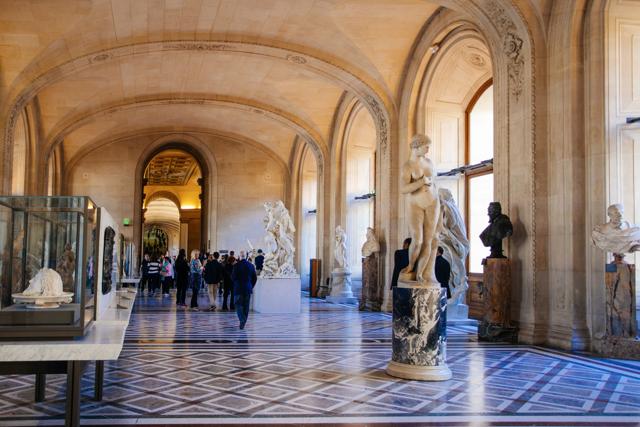
Just as in the museum, the poems in the anthology are a language, dizzy with characters, myths, histories, artefacts, objects, paintings, and hundreds of plaques as a queue flashing by your eyes. As Pierre Chopinaud writes in the poem, Shem, about Noah’s son, “Language dies in the writing of language being born.” Imagine this anthology as a museum with random corridors and passages with much to absorb, rich in content. Offered by the title of Ali Corby Eckermann’s poem, it is Wombs of Passage labyrinthian with wombs of passages.
In the timeless lake of time, the poet describes Mona Lisa’s presence as “A lake in the desert is called Mona Lisa”. Many poems thus bring various notorious and mythological characters and places alive. Be Medusa or Aphrodite; they are all here, in the placeholder of poems, the Louvre. For the poet Lisa Maria Barkos, ‘Its cube sunk in the city’s motherboard.’ Like Barkos, Polina Barskova thinks of everyone as ‘awaiting a departure to the island of Cythera’. But she reveals: ‘I begin to think that destination doesn’t matter anymore.’ Maybe Barbara Chase-Riboud has the answer as a question!
“If you were compelled to burn down/ Notre Dame or the Louvre/ Which one would it be?”/ Without hesitation I answered “Nore Dame/ Because it is only a single image of God/ While the corridors of Louvre/ Light the whole world.”
That is the principal theme of this anthology, a collaboration between NYRB and the Louvre. It has a collage of countless items: all felt, imagined, and described.
Judith Chalmer, a curator of Poetry on the London Underground, once confided in me that humour is challenging in poetry. So, it was a delight to find a poem by the British Poet Laureate Simon Armitage that made me laugh. He knows he is safe when he jokes about Hercules in his poem, Hercules at Rest! With his chest described as “a poached egg”, the statue speaks:
the pudgy belly folded inwards like a toothless smile/ and my lips are lost in a castaway’s beard,/ but I have never been one for mouthing off/ about the climate change or police corruption and blah blah.
Including the experimental aspects like the lines of a poem in the shape of a pyramid (by John Keene) or a poem with the paragraph marks as signs of directions (by Maialen Lujanbio), this anthology stands out as unique with the museum, NYRB, and 100 poets coming together to celebrate one place. I’ve asked the Louvre to make a map that links landmarks to poems so readers and visitors can plan a literary adventure. Maybe it is too much of an ask!
Yogesh Patel has received an MBE for literature from the late Queen and holds the honour of the Freedom of the City of London. His last collection of poems, The Rapids, is published by The London Magazine. He is an award-winning poet. Views expressed in this article are the author’s own.


