
 E-Paper



Review: Bhutan by Sudeep Sen and Ravi Shankar
A book blending poetry, prose, and photography invites readers to explore Bhutan’s culture, complexities, and beauty, revealing spiritual and political nuances.

 Prefer HTon Google


Bhutan blends two literary voices and one artistic lens: Sudeep Sen’s poetry and photography, and Ravi Shankar’s prose. The book invites readers to experience Bhutan as an edifying experience. Sen’s sharp, reflective poetry captures transcendental and aesthetic depth, while Shankar’s analytical prose questions his Western perspectives on Bhutan’s complexities. The nuanced photographs highlight both sacred and everyday scenes, creating a rich cultural texture.
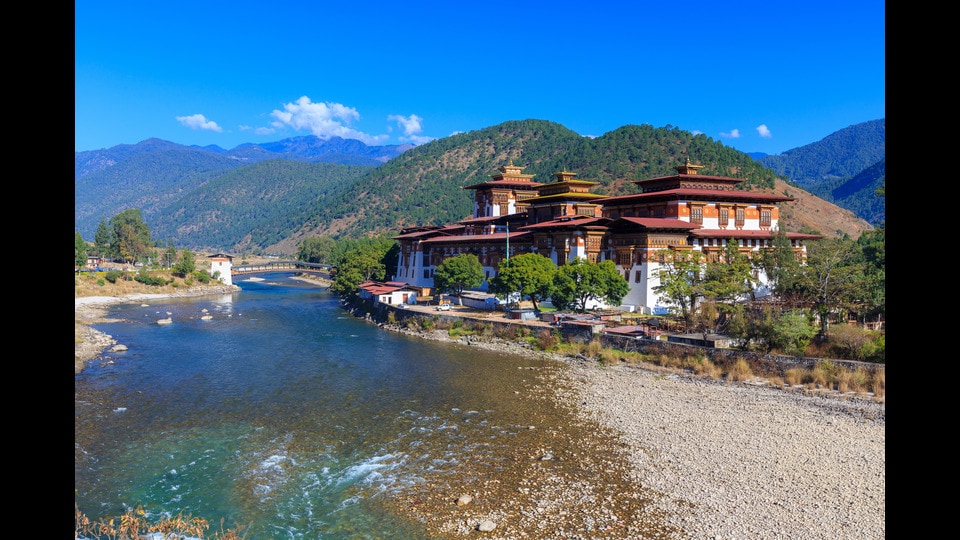
The book is divided into five parts: Part 1 features introductory essays by Dasho Kinley Dorji and Shankar on Bhutan’s real-world challenges; Part 2 showcases Sen’s poetic exploration of spiritual symbols; Part 3 contains Shankar’s essays on culture, mythology, and geopolitics; Part 4 returns to Sen’s meditative poems; and Part 5 provides details on authors.
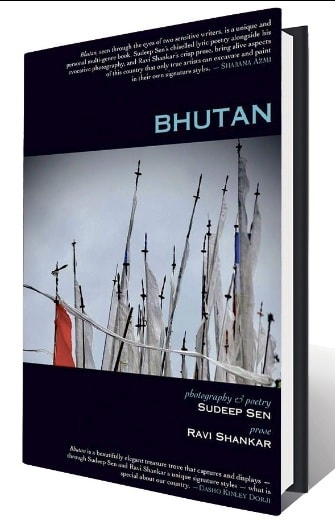
152 pp, ₹2806; Drunken Boat; Available at bhutanthebook.com
Ravi Shankar describes Bhutan as “an invitation to intellectual humility” disguised as a “travel narrative.” He reflects on the awe-inspiring mountains and the carefully curated experience guided by Sonam and Ram, representing Bhutan Tourism. Shankar explores Bhutan’s balance between the traditional and the modern, noting deep respect for the royal family despite low press freedom. The Crown Prince is seen as a protector, whose decisions go unquestioned, reflecting Bhutanese acceptance of their “good fortune” in the “happiest place on earth.” Shankar approaches Sonam’s devotion with scepticism but seeks understanding rather than judgment. Shankar’s direct and lucid prose style makes the reading experience enjoyable and enlightening as well. Ravi Shankar’s direct and lucid prose style makes the reading experience enjoyable and enlightening as well.
Shankar highlights Bhutan’s contradictions — between its mythological past and present realities. While “Gross National Happiness” led to tangible progress like doubled life expectancy and a 100% school enrolment, yet challenges like “poverty, rising crime, and gang culture” persist. However, he embraces the concept of slowing down described by Carl Honoré in In Praise of Slow. He observes the Buddhist influence on the people’s lives, noting their genuine respect for nature and satisfaction with themselves and their monarch. While questioning whether the collective happiness was staged, Ravi Shankar feels fortunate to witness it first-hand.
In the preface, Shankar calls his work “not ethnography but a kind of cognitive travel diary,” documenting a Westerner’s encounter with a culture organised around different assumptions about reality and happiness. He shares his initial “puerile shock” at the sacred phallus imagery, recognising it as a reflection of his own cultural conditioning. He also admires the dzongs — fortresses blending spirituality, history, and administration — showing Bhutan’s unique fusion of culture. Shankar’s conversational tone invites readers to consider Bhutan’s complexities without feeling instructed, making the exploration both amusing and thought-provoking.
Sudeep Sen shares a collection of ekphrastic poems written during his visit to Bhutan. His poems explore themes of endurance, immutable shrines, dazzling horizons, and meditative states, aligning the inner and physical worlds in vivid, sensory language.
His poem Rain captures the delicate transition of dawn’s drizzle into a steady tropical downpour. It explores the realistic sounds of raindrops falling on leaves, their tonal shifts guided by the wind’s changing moods. Long after the rain stops, its lingering melody leaves a trance-like impression, gently caressing the mind with the memory of nature’s song:
Dawn’s drizzle, a light shower,
then rain thickens steadily
falling on dense tropical foliage —
its soughing sound and fall,
dampened by broad-leafed
layers of variegated greenery.
Each drop’s tonal quality
subtle, depending on the leaves’
thickness, breadth, area, size.
This gentle whispered-song
changes its calibration, tenor —
with the wind’s altering moods.
Long after the rains cease,
its melody lingers — imprinting
on our mind’s skin a moaning,
a trance-like slow-rustle caress.
(page129)
Paddy Fields portrays a placid picture of sky-reflections and cloud patterns mirrored in the flooded fields, where sharp green shoots rise like stars. Ducks wade through the shallow waters, foraging for leftover grains. The scene depicts the precise yet fluid geometry of nature, symbolising abundance and the idea that there is enough food for all — if shared wisely.
… The geometry here —
exact, fluid, static, shimmering.
There is food for all to feed —
if we know how to share.
(page134)
This fresh take on Bhutan blends creative and critical perspectives, moving beyond typical themes like Gross National Happiness and Buddhism. Its intimate photographs capture everyday details, adding a poetic sense of place that complements the text. In an era of digital replicas and global crises, the book champions authentic travel and deep analysis as ways to truly understand other cultures.
The limitations of Bhutan include scanty attention to popular culture, including its food, dance, and music. More voices from locals beyond the guides would have added depth. However, the book’s unique design, with its flight imprint and dotted edges, offers a warm, personal touch.
Bhutan is portrayed as a place of spiritual discipline, political complexity, and aesthetic wonder. The book captures the tension between Bhutan’s structured traditions and its evolving identity, inviting readers to embrace ambiguity. It shows culture as a breathing dialogue between past and present, self and other, emphasising how art and curiosity reveal the multifaceted beauty of human experience in an unfamiliar country.
Jhilam Chattaraj is a Hyderabad-based academic and poet. Her works have appeared in Michigan Quarterly Review, Mekong Review, Colorado Review and World Literature Today among others.


