
 E-Paper



Review: Blowfish by Kyung-Ran Jo
Translated from the Korean by Chi Young Kim, this novel, set in the cities of South Korea and Japan, is a meditation on the nature of art and death

 Prefer HTon Google


Written by Kyung-Ran Jo, and translated from the Korean by Chi Young Kim, Blowfish is the story of two unnamed characters – a female sculptor who wants to end her life, and a male architect who wants to save hers. The architect lost his brother to suicide. He believes he could have saved his brother as he was the last person the latter spoke to before jumping out of a window. The sculptor, on the other hand, has lived her entire life in the shadow of her grandmother’s suicide executed by drinking a lethal blowfish soup.

Set in the cities of South Korea and Japan, Blowfish presents the alternating viewpoints of the sculptor and the architect. In an interview with the Hong Kong Review, Kyung- Ran Jo says that both Tokyo and Seoul have plenty of people consumed by the idea of suicide. Increasing isolation and the loss of community may be a driving factor. Both the architect and the sculptor are lonely. Although the former lives with his family, he is isolated in his worry for his depressed father. His parents have been devastated by his brother’s suicide. He now lives in the constant fear that his father too will take his own life. This fear coupled with the belief that his brother’s suicide is his own personal failure is perhaps what drives the architect to care so deeply about the sculptor. They aren’t close friends, and neither knows much about the other. Yet, he tries his best to pull her away from death.
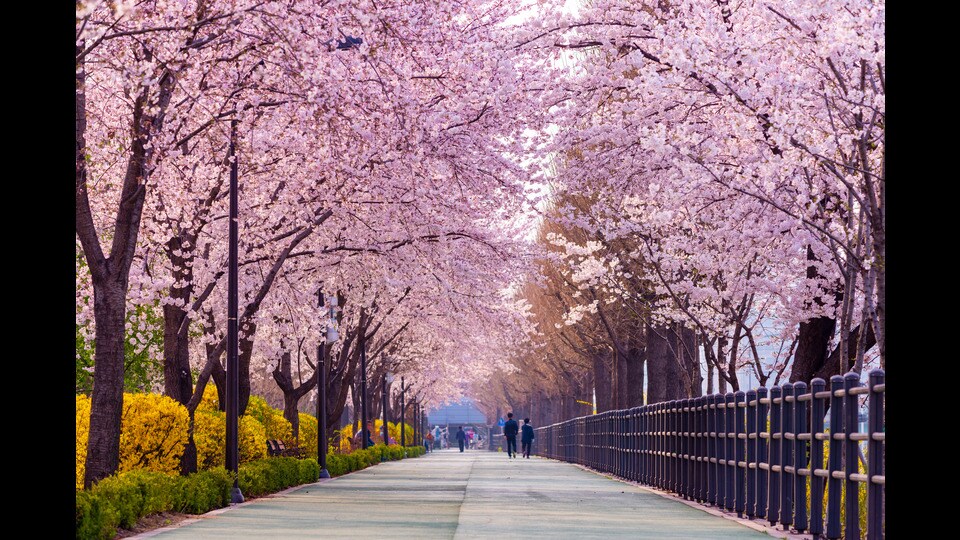
The impact of suicide on those left behind forms an undercurrent in Blowfish. With understated prose, Kyung- Ran Jo depicts how the act of taking one’s own life haunts generations. The sculptor decides to employ the services of a death cleaner – someone who deals with the aftermath of suicide. Having arranged everything, she decides to end her life in a park full of cherry blossom trees. There, she is greeted by the ghost of her grandmother. She then decides to end her life exactly like her grandmother did – by drinking toxic blowfish soup.
The sculptor too is burdened by her family’s history of suicide. Her grandmother’s death had devastated the sculptor’s father and his siblings. They grew up to be troubled individuals with mysterious mental and physical ailments. In addition, the reader senses that the pressures of artistic creation and the fear of failure makes her life even more difficult. The sculptor recalls famous writers who contemplated death by suicide: ‘Her Father loved Tolstoy. From what she could gather, Tolstoy’s books questioned the meaning of life or, in other words, the reason for living. Books that questioned crime and sought forgiveness. The moment the author felt that he had achieved all that he had desired, he had wanted to die. Happiness and success had made him feel that what he had been depending on had shattered. Was that why Tolstoy began thinking of suicide? A too-ethical person wasn’t able to choose death, because their principles would not allow it. It was not due to a lack of courage. Tolstoy hid any rope from his sight in order to avoid impulsively hanging himself, and he refrained from hunting to ward off the temptation for guns.’
The sculptor thinks further about the nature of art, artists, and her father’s interest in writers consumed by the idea of death: ‘Maybe it was impossible to tease out a clear theory about those obsessed with self-destruction. Perhaps all artists worked in vain. Certain things could never fully be explained; you merely attempted to pull those unexplainable things, that urge to destroy, into your work. Her father’s own urge for destruction must have been the source of his appreciation for Tolstoy’s writing. Though it could be said that writers tended to write about their own experiences, and all experiences could be summarised into two things: life and death.’
The sculptor and the architect recognise the shadow that death has cast over them both, and at last, they find community. At the heart of Blowfish lies the question – how to create art and find meaning when faced with the darkness of death and suicide?
‘An architect and an artist both seek beauty. The fundamental purpose of architecture is to make people happy, but that quality is what sets artists and architects apart. Artists don’t make art to make people happy. Artists consider themselves more important than anyone else,’ thinks the architect. Therein lies the difference between the two characters. The lives of both are devoid of community, and yet the architect finds himself helplessly trying to save others. Though he could not save his brother, he thinks he may succeed in saving his parents and the sculptor. He is able to see beyond himself while the sculptor can only look at her own inner turmoil.

Kyung-Ran Jo’s debut short story collection, The French Optical won the Dong-a Ilbo New Writer’s Contest. She is also the recipient of the Hyundae Munhak Award and the Dongin Prize, among others. In the Hong Kong Review interview, she spoke about her own grandmother’s suicide. She too had ended her life on the morning of her birthday by eating poisonous blowfish soup that she had cooked herself. Jo believes that all her grandmother had wanted was her own identity, which was challenging for women in her time. It seems natural that the fictional grandmother’s granddaughter becomes a sculptor because art, one of the purest forms of expression, is about creating meaning and an identity.
And so, it also seems perfectly natural that Kyung-Ran Jo became a writer to carve out the identity that her grandmother never could.
Sharmistha Jha is an independent writer.


