E-Paper



Supreme Court allows Abhishek Banerjee to travel abroad for eye surgery
The relief comes after the Calcutta High Court had earlier denied Abhishek Banerjee's permission to travel overseas for treatment.

 Prefer HTon Google


The Supreme Court on Monday pulled up the West Bengal government for opposing Trinamool Congress (TMC) MP Abhishek Banerjee’s request to travel overseas for an eye surgery, asserting that every individual has a right to travel abroad and choose their medical treatment.
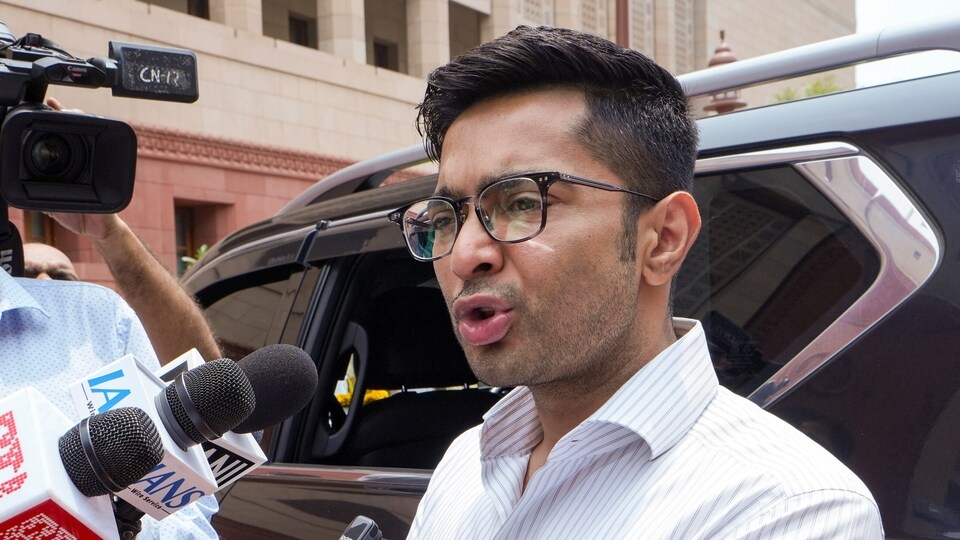
A bench of Chief Justice of India Surya Kant and justices Joymalya Bagchi and V Mohana said it saw “no serious impediment” to Banerjee travelling abroad for three weeks for the treatment and allowed him to do so, subject to conditions aimed at ensuring his availability to the investigating agency.
“Every individual has a right to go abroad. Every individual has a right to choose the medical treatment of their choice,” said the bench during the hearing.
The court also emphasised Banerjee’s right to privacy regarding his medical condition, observing that an individual cannot be expected to put his health records in the public domain.
“It is also a right to privacy to not bring your health records in public domain,” it observed.
Also Read I ‘Could have been killed’: Mamata Banerjee's vehicle attacked with ‘stones, mud’ in North 24 Parganas
Bench clears “nature of allegations”
The state opposed the plea, with additional solicitor general SV Raju submitting that there were at least 15 cases against Banerjee and arguing that his propensity to not return to India was greater because criminal cases were pending against him.
The bench, however, questioned the nature of the allegations in the case where the restriction on foreign travel had been imposed. “We are on to the nature of allegations. This is about a lecture given by him…there is no injunction against him in any other case,” it observed.
The court also pointed out that Banerjee had previously been permitted to travel abroad in matters involving more serious allegations.
“The State, we are certain, is weighed down with much serious investigations…He was allowed to travel before in cases with much more serious charges. What is the FIR in your case here? This is ultimately about some comments in a public meeting,” the bench said.
Diplomatic passport and travel details
Senior advocate Gopal Sankaranarayanan, appearing for Banerjee, submitted that the TMC MP was willing to comply with any reasonable condition and would travel on his diplomatic passport, which would enable embassies to track his movements.
The bench ultimately concluded that permitting Banerjee to travel would not prejudice the pending investigation.
“We feel no serious impediment will be caused to the pending investigation if the petitioner is allowed to travel abroad for three weeks for an eye-surgery,” the court said in its order.
The bench directed Banerjee to give an undertaking that he possessed no passport other than his diplomatic passport and to provide details of his itinerary, hospital and flights.
Also Read I ‘Suvendu executed it’: Abhishek Banerjee's ‘state-sponsored’ claim after Mamata's car attacked
High Court disbanded plea for foreign travel
The dispute arose from a case relating to alleged comments made by Banerjee at a public meeting during the West Bengal assembly elections. The Calcutta High Court had earlier imposed a condition restraining him from travelling abroad without its permission while extending his interim protection from coercive action in the case.
Banerjee, nephew of former state chief minister Mamata Banerjee, had approached the Supreme Court after the high court on August 5 declined to permit him to travel abroad for eye treatment.
The high court had taken note of Banerjee’s refusal to appear before a medical board at the state-run SSKM Hospital in Kolkata for an assessment of his condition.
It observed that had he appeared before the medical board, the opinion of medical experts could have been considered to determine whether overseas treatment was necessary.
Also Read I West Bengal minister says ‘no BJP role’ in attack on Mamata Banerjee’s convoy in North 24 Parganas
The travel restriction was earlier imposed while directing Banerjee to cooperate with the investigation. The high court had also noted that several reputed eye clinics were available in Kolkata and had previously indicated that it was not inclined to permit overseas travel while the investigation was pending.
The state told the high court that there was no medical emergency requiring Banerjee to seek treatment abroad and that his travel could affect ongoing investigations in cases against him.
Banerjee’s counsel, however, submitted that the criminal cases pending against him carried a maximum punishment of three years and were mostly bailable offences. It was also pointed out that Banerjee had previously been permitted to travel abroad during proceedings initiated by the Enforcement Directorate and had returned to India after overseas travel in 2023 and 2025.