
 E-Paper



Review: Cherry Red Cherry Black by Kavery Nambisan
A book that traces the origin of coffee, its history in India, and the growth of coffee culture in the country

 Prefer HTon Google


Did you know that coffee plants grew “wild in the regions of Caffea in Abyssinia (now Ethiopia)” long before the beverage became the elixir that we all love today? Or that India is the world’s sixth largest producer of coffee, which is mostly grown in the three southern states of Karnataka, Tamil Nadu and Kerala? Do you know the serendipitous story behind one of the internationally well-known coffees, Monsoon Malabar? Or how coffee took root in Indian culture? Kavery Nambisan’s Cherry Red Cherry Black answers these and other questions.


“This book is about the origin of coffee, its popularity as a beverage, the beginning of coffee plantations in India, and the growing, the processing and the selling of it,” she writes as she traces the smuggling in of the first coffee beans to India by Baba Budan, their acceptance by the people of his native Chikkamagalur and thereabouts, the colonial period when forests gave way to large plantations and the spread of contemporary coffee culture. She traces coffee’s transformation from being the beverage of the elite in the early 20th century to its current status as a ubiquitous drink at home and in the numerous cafes that have appeared across the country. While tracing India’s history as a coffee growing nation, Nambisan also places it in the context of the world’s traditional coffee centres in Africa, South America and some other Asian countries. This is also a personal subject for the author, a Coorgi, whose childhood playgrounds were “the rugged slopes and shaded groves where coffee is grown.”
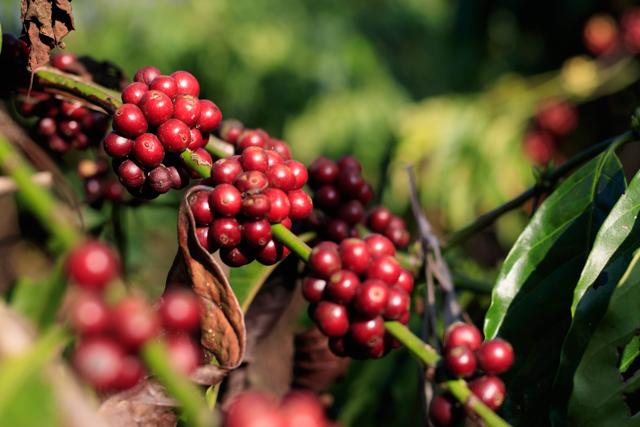
Retracing the saga of the coffee bean with the panache of a storyteller, she sets the scene with the history of the origins of coffee, its entry into India, early planting by village communities of the Mysore and Malabar provinces and the foray of British who scented commercial gains and began large scale plantations. In 1922, the plantations amalgamated into the Consolidated Coffee Estates. In 1990, CCE was acquired by the Tata Group to become Tata Coffee, the only corporate venture that deals with coffee from cultivation to processing, curing, packaging, sales and retail.

Nambisan then takes us through the Tata’s foray into the world of coffee outlining the essential contribution of estate workers, the problems and challenges they face and their resolutions. There is much about the company’s CSR and health care efforts. The section on the evolution of worker’s unions also gives readers a glimpse into the lives and working conditions of plantation workers who “constitute one of the largest groups of privately employed labour, with a total of 10 lakh workers spread out over Assam, West Bengal, Tamil Nadu, Kerala and Karnataka”. Given that the foreword is by a trustee of the Tata Trusts and that the author herself earlier worked with Tata Coffee, the book sometimes reads like a straightforward public relations exercise. Also, a mention of the flavourful and aromatic varieties of coffee farmed in Nagaland, and of emerging coffee growing trends in north-east India would have added to the book’s insights.

LISTEN MORE: Books and Authors podcast with Kavery Nambisan, author, Cherry Red, Cherry Black; The Story of Coffee in IndiaStill, the excellent photographs by Madhu Kapparath, profiles of coffee tasters and other major players in the field, and notes on the varied ways of brewing and making coffee from soft brew to French press and aeropress to filter or drip coffee that are part of this volume make this book a well-rounded review of coffee in India.
Swati Rai is a communication skills trainer and freelance writer
The views expressed are personal


